




An international, open-label trial demonstrated the overall survival benefits of administering tebentafusp to HLA-A*02:01-positive patients with metastatic uveal melanoma.


Predisposition to Early-Onset Merkel Cell Carcinoma Linked to Genetic Variants

Stigma, Discrimination Impact Sexual and Gender Minority Perspectives on Full-Body Skin Examinations, Study Finds
Watch the series now!

An international, open-label trial demonstrated the overall survival benefits of administering tebentafusp to HLA-A*02:01-positive patients with metastatic uveal melanoma.

CMS has announced new federal rules that require health insurers to streamline requests to cover treatments; nearly 50,000 veterans used the emergency suicide prevention program launched by the Department of Veteran Affairs in 2023; the FDA recently authorized the first artificial intelligence (AI)-powered medical device to help doctors detect the most common forms of skin cancer.

A retrospective cohort study found no significant associations between phototherapy without psoralens and the risk of skin cancer.
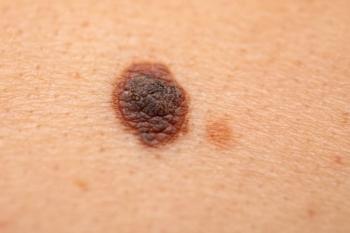
A single-institutional cohort study found that in patients with melanoma, regressive status could be used as a valuable predictive marker of prognosis and response to systemic therapy.

A retrospective study showcases the need for considering the impact of skin cancers in non-Hispanic American Indian/Alaska Native communities, who experience some of the highest incidences of melanoma in the US.

This retrospective cohort study demonstrates the heightened risks individuals with actinic keratoses have for developing skin cancers.

BRAF mutations were addressed in depth this year, having been mentioned in 3 of this year’s top 5 articles. Also discussed were a first-in-its-class combination treatment approval and potential indicators of increased skin cancer risk.

In this study, researchers treated 37 basal cell carcinoma (BCC) lesions from 30 patients, with follow-ups at 5 time points after baseline examination.

Moderna’s mRNA-4157/V940 combined with Merck’s pembrolizumab reduced melanoma recurrence and death; HHS proposed permanently implementing emergency opioid use disorder policies enacted in 2020; maternal death rates were 62% higher in 2020 in states that now have abortion restrictions.

Response, progression-free survival, overall survival, time-to-next-treatment, and toxicity outcomes were evaluated among patients with advanced cutaneous squamous cell carcinoma (cSCC) who received first-line treatment with immune checkpoint inhibitors.

From comparing outcomes, it is known that cemiplimab has the potential to improve responses among patients who have cutaneous squamous cell carcinoma (cSCC), although many important questions remain, explained Neil D. Gross, MD, FACS, head and neck surgeon and director of clinical research in the Department of Head and Neck Surgery at The University of Texas MD Anderson Cancer Center

Malignant cutaneous melanoma outcomes were investigated as they relate to diagnosis delay and potential influence from socioeconomic and demographic factors in Brazil, where skin cancer diagnoses represent 30% of all cancer diagnoses.

The study's goal was to clarify possible second and third skin cancer development patterns among organ transplant recipients who developed more than 1 instance of skin cancer and to better characterize this patient population by patient age and transplanted organ type.

While immunocryosurgery is known to be effective against primary nonsuperficial basal cell carcinoma (BCC), there is less data on its effectiveness in relapsed BCC.

Currently, there is no treatment approved for resectable cutaneous squamous cell carcinoma (cSCC), nor do we have biomarkers to predict treatment response, noted Neil D. Gross, MD, FACS, head and neck surgeon and director of clinical research in the Department of Head and Neck Surgery at The University of Texas MD Anderson Cancer Center

The increasing rate of melanoma diagnosis may not be due to actual disease, the authors of a new study posit; instead, it may be due to overdiagnosis of patients with an actual very low risk of death.
Neil D. Gross, MD, FACS, head and neck surgeon and director of clinical research in the Department of Head and Neck Surgery at The University of Texas MD Anderson Cancer Center, discusses the results of study he and his team conducted in the setting of resectable stage II to IV cutaneous squamous cell carcinoma.

This investigation compared the histologic features of basal cell carcinoma (BCC) between organ transplant recipients and the general population.

The risks of 4 types of skin cancers were investigated among patients who have neurofibromatosis type 1, a multisystem autosomal dominant genetic syndrome characterized by loss of neurofibromin.
Patients may be able to forgo radiation following use of cemiplimab to treat their resectable cutaneous squamous cell carcinoma (cSCC), as it is likely to demonstrate significant improvement in quality of life (QOL) for patients and enable less invasive surgeries, noted Neil D. Gross, MD, FACS, head and neck surgeon and director of clinical research in the Department of Head and Neck Surgery at The University of Texas MD Anderson Cancer Center.
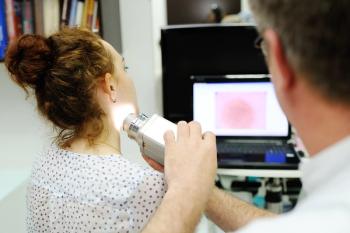
Dermoscopy is a relatively inexpensive and readily available tool that can improve outcomes and quality of life for patients who need surgical excision of nonmelanoma skin cancers, the authors found.

Electrochemotherapy in basal cell carcinoma (BCC) was evaluated for its utilization practicality, efficacy, and safety, as well as factors that may predict disease response to the treatment.
Neil D. Gross, MD, FACS, is head and neck surgeon and director of clinical research in the Department of Head and Neck Surgery at MD Anderson.
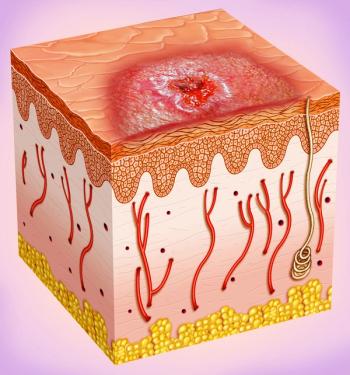
This new study explored the diagnostic utility and accuracy of 2-photon fluorescence microscopy (TPFM) among nonmelanoma skin cancers, which included basal cell carcinoma and squamous cell carcinoma.
This new study investigated risk factors for basal cell carcinoma (BCC) recurrence in the head and neck region.

259 Prospect Plains Rd, Bldg H
Cranbury, NJ 08512
© 2025 MJH Life Sciences®
All rights reserved.