

In an interview at AMCP Nexus 2026, Carmen Witsken, PharmD, of ACHP, outlined a proposed national risk pool for the costliest cell and gene therapies.
In an interview at AMCP Nexus 2026, Carmen Witsken, PharmD, of ACHP, outlined a proposed national risk pool for the costliest cell and gene therapies.

In part 2, Susan M. Wescott, RPh, MBA, discusses how payers navigate evidence gaps, prior authorization, and access to rare disease therapies.
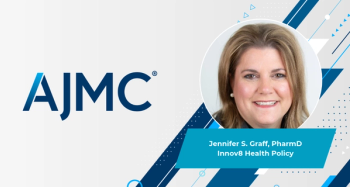
In part 2 of her AMCP Nexus 2026 interview, Jennifer S. Graff, PharmD, discusses improving patient experience data (PED) standardization and credibility.
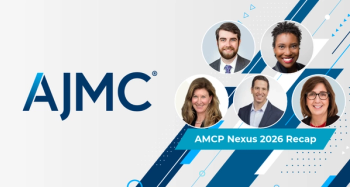
At AMCP Nexus 2026, experts discussed how drug pricing policy, AI, and high-cost cell and gene therapies may shape managed care in 2027.

In part 2, Leanna Baker, PharmD, MS, of Cencora discusses the ongoing costs, governance, and oversight needed for responsible AI adoption.

Maximum Fair Prices are reshaping Part D formularies, with plans favoring lower net-cost options, panelists said at AMCP Nexus 2026.
At AMCP Nexus 2026, Carmen Witsken, PharmD, discusses high upfront cell and gene therapy costs and the case for a national risk pool.

Crescent Moore, PharmD, PhD, discusses provider, coverage, stigma, and education barriers to menopause therapy access.

Pharmacists outline new oncologic therapeutics, from pancreatic cancer to myeloma, and what high prices and crowded markets mean for payers.

Pamala A. Pawloski, PharmD, outlines barriers to precision medicine adoption at AMCP Nexus 2026, calling for standardization and education.

Early modeling put sickle cell gene therapy coverage near 11 cents per member per month.

At AMCP Nexus 2026, payers said evidence, differentiation, and delivery now matter as much as FDA approval.
At AMCP Nexus 2026, Susan M. Wescott, RPh, MBA, discussed how health plans evaluate rare disease therapies amid limited data and high costs.

Adam Colborn, JD, discusses 340B reform, PBM policy, site-neutral payment, and other federal health policy issues to watch in 2027.

Claims data show evidence of HIV virus in 5 of 2913 long-acting cabotegravir users and higher adherence vs oral therapy.

James D. Chambers, PhD, MPharm, MSc, discusses US biosimilar adoption and opportunities to expand patient access and lower treatment costs.
Jennifer S. Graff, PharmD, said payers need clearer standards to assess the reliability and credibility of patient experience data.

Experts at AMCP Nexus say biosimilar launches should prompt payers to revisit step therapy and measure value beyond market share.

Three experts apply policy, pharmacy operations, and member-level lenses to the same prescriptions to show why cost at the counter decides adherence.
Managed care organizations should start AI adoption with simple tools that build governance for future growth, Leanna Baker, PharmD, MS, said.
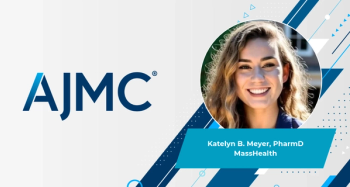
Katelyn B. Meyer, PharmD, discusses how payers can prepare for emerging specialty therapies, from cell and gene therapies to costly oncology drugs.

Claims data also tied the combination to better adherence and fewer hospital admissions, including in bipolar I disorder, vs olanzapine alone.

CEO Susan Cantrell previews AMCP Nexus 2026, discussing AI, drug pricing, emerging therapies, and a decade of change in managed care pharmacy.

AMCP Nexus 2026 brings managed care leaders to San Diego October 26-29 to tackle Medicare negotiation, drug pricing policy, AI, and patient access.
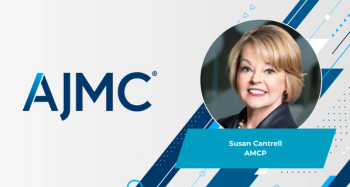
Managed care pharmacy leaders will gather at AMCP Nexus 2026 to discuss safe AI adoption, evolving drug pricing policy, and practical solutions.

Speakers at AMCP Nexus 2025 reviewed the oncology pipeline, highlighting expanded indications and new therapies advancing innovation, access, and value.

AMCP Nexus connects pharmacy leaders, drives policy change, and empowers members to enhance health care access and improve patient outcomes.

Kimberly Westrich, MA, discusses how patient engagement can revolutionize health care decision-making and break down barriers to accessing necessary medicines and care.

Innovative payer approaches and holistic support could help expand GLP-1 use and improve obesity care outcomes, experts claimed.

PBM legislation is rising nationwide, which experts emphasize could increase costs and hinder patient care.