




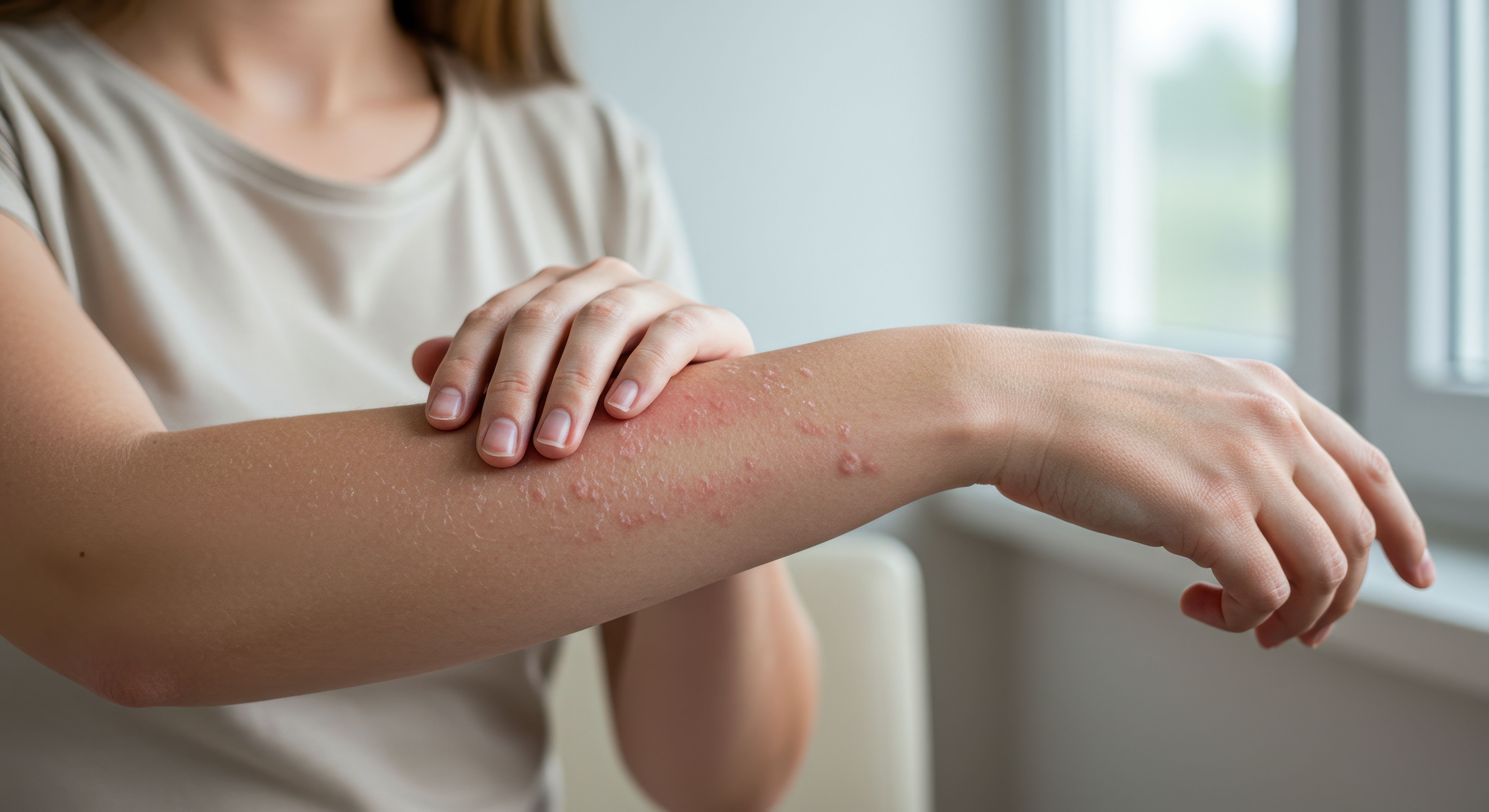

Allergy
Latest News
Advertisement
Latest Videos



Advertisement
More News

Expert guidance shows how to safely tailor aesthetic dermatology for allergic skin conditions like urticaria and eczema.
A new nasal spray for patients with chronic spontaneous urticaria could eliminate the need for injectable epinephrine.

The approval, dupilumab's ninth in the US, is supported by the phase 3 LIBERTY-AFRS-AIMS trial.
Higher baseline monocyte counts, along with preserved basophils and low C-reactive protein, independently predict complete remission on anti-IgE therapy for CSU.

Major and minor risk factors, including early eczema and delayed food introduction, shape childhood food allergy risk, a review found.

Study links elevated serum haptoglobin to chronic spontaneous urticaria activity, suggesting it predicts treatment response and complete disease control.

Aquestive Therapeutics receives a complete response letter for dibutepinephrine (Anaphylm), a sublingual epinephrine therapy.

Participants in the pilot program had high baseline knowledge about their chronic spontaneous urticaria, but the same was not always true of their physicians.

Patients with allergic rhinitis face prolonged symptoms and inadequate treatment, highlighting a need for better awareness and access to allergen immunotherapy.

CSU significantly impacts family quality of life, revealing the need for comprehensive care and support for both patients and their caregivers.

EHR penicillin allergy flags do not often match allergist assessments, highlighting the need for improved evaluation processes.

Acute exacerbations of chronic rhinosinusitis are poorly defined and often overtreated, calling for standardized diagnostic criteria and more evidence-based management.

Explore the latest breakthroughs in allergy treatments, including FDA approvals and emerging therapies that enhance patient care and address systemic challenges.

Chronic inducible cold urticaria is rare, but a new study suggests it can have significant impacts on patients’ daily lives.

A new study links immune markers and coping patterns to disease control in adolescents with chronic urticaria.

A recent study compares AI models DeepSeek-R1 and ChatGPT-4o in providing accurate, accessible information on urticaria, with DeepSeek showing superior performance.

Remibrutinib demonstrated rapid and sustained symptom relief for chronic spontaneous urticaria in a pooled analysis of REMIX-1 and REMIX-2.

Urticaria symptom reduction with remibrutinib was linked with improved quality of life and sleep for patients with chronic spontaneous urticaria.

Remibrutinib shows rapid and sustained relief for chronic spontaneous urticaria, offering a promising oral treatment option for patients.
Key factors influencing chronic urticaria duration highlight the importance of early identification and management in primary care settings.

There is a significant link between chronic spontaneous urticaria and cardiovascular disease risk, highlighting the need for routine assessments.

Combining ELR with CT-based measures predicts olfactory recovery in CRSwNP patients, highlighting eosinophils' role in disease severity and dysfunction.

Chronic spontaneous urticaria (CSU) and atopic disorders seem to share an immunological basis and may significantly benefit from type 2 inflammation–targeted therapies.
Guidelines that encouraged the exposure of peanuts in children were found to significantly reduce food allergies.
Allergen immunotherapy was associated with reduced medication use and improved asthma control for up to 9 years.
Advertisement
Advertisement
Trending on AJMC
1
MASH Fibrosis, Not Resolution, Predicts Mortality: Zobair Younossi, MD
2
FDA Approves Once-Monthly Subcutaneous Olanzapine for Schizophrenia
3
Multi-Hit TP53 Linked to Shorter Survival in Chronic-Phase MPN Cohorts
4
Navigating GLP-1 Access & Prior Authorizations: Amanda Velazquez, MD
5