
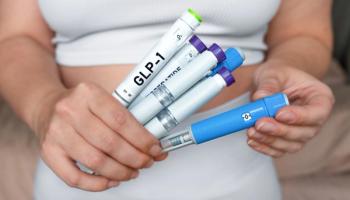
Incidence of diabetic macular edema and the need for glaucoma surgery were reduced after treatment with glucagon-like peptide-1 receptor agonists.
Incidence of diabetic macular edema and the need for glaucoma surgery were reduced after treatment with glucagon-like peptide-1 receptor agonists.

Medicaid expansion was associated with lower colorectal cancer mortality, with the largest reductions in Hispanic patients and stage IV disease.

TP53 mutations occurred in 3% of myeloproliferative neoplasms (MPNs) but 10% of myelofibrosis or blast-phase cohorts in a review of 11 cohort studies.

Amanda Velazquez, MD, discusses GLP-1 formulary strategies, overcoming prior authorization hurdles, and building scalable obesity care infrastructure.

Older adults on Medicare report the best access to care among 10 countries but more cost-related problems and higher out-of-pocket spending.

Patients with Sjögren disease diagnosed over a year after symptom onset had 2.3 times the odds of moderate or greater disease activity, a US survey found.

An estimated 44,052 sports eye injuries were treated in 2025 and 1262 pickleball eye injuries in 2024; 99% of lawnmower eye injuries were at home.

Pola-R-GemOx extends median overall survival to 19.5 months in transplant-ineligible R/R DLBCL, per POLARGO.

Teva's Weltruza, a once-monthly subcutaneous olanzapine injection, requires no loading doses, oral supplementation, or postinjection monitoring.

Even when physicians prescribe guideline-preferred therapies, step therapy and prior authorization can delay or restrict access to CLL therapies.

The FDA approves atezolizumab with a fluoropyrimidine and oxaliplatin as adjuvant therapy for stage III dMMR colon cancer based on the ATOMIC trial.

Washington, DC, clinicians shared how order sets, pharmacist-led dosing, and better handoffs can close iron deficiency gaps in heart failure care.

The study authors note there is an urgent need for "innovative value-based and alternative payment models of care."

The conference, held in New Orleans, Louisiana, by the American Academy of Ophthalmology, will offer 3 full days of content spanning from glaucoma to dry eye.

A JAMA analysis of 2021-2023 death records found heat-related mortality varied sharply by occupation and industry among working-age US adults.

Coverage of our peer-reviewed research and news reporting in the health care and mainstream press.

Bumetanide nasal spray is bioequivalent to oral bumetanide in 68 healthy adults; Esperion is targeting heart failure care before a 2027 CMS payment model.

The trade group says CMS lacks authority to impose GLOBE, which is set to begin January 1.

Biomarker-driven care is advancing in mantle cell lymphoma, though cost and infrastructure limit access in community oncology, according to a review.

Remibrutinib (Rhapsido; Novartis) is the only treatment with approved uses in both chronic spontaneous urticaria and symptomatic dermographism.

Leukemia survivors given high-risk ALL therapy had hip bone density about 90% of matched controls, without the partial normalization seen in other groups.

A legal fight over a single amino acid could set retatrutide's exclusivity window, its Medicare negotiation clock, and its competitive future.

Sacral neuromodulation is still considered the gold standard for refractory overactive bladder, with tibial nerve stimulation a less invasive option.

FDA approved tucatinib maintenance for HER2-positive metastatic breast cancer following induction therapy based on the 654-patient HER2CLIMB-05 trial.

A meta-analysis found teleophthalmology satisfaction comparable to in-person eye care, but showed a gap between recommending it and reusing it.

Lean MASLD shows milder histology than overweight and obese MASLD but similar mortality and event risk, with fibrosis tied to prognosis.

OneOncology's Edward "Ted" Arrowsmith, MD, MPH, explains how patient-reported outcomes and national disease groups can make cancer pathways more dynamic.

Hepatitis reports after vaccination were more often serious in children, but the data lack dose counts and cannot show vaccine-specific risk.

CMS finalized Transparency in Coverage updates as a researcher warns ghost rates and missing inpatient data limit payer price files.

Moderate coffee intake may lower cardiovascular risk, but energy drinks may harm the heart.