

COPD kills at rates rivaling heart failure and exceeding prostate and breast cancer, per a new study and US mortality data.
COPD kills at rates rivaling heart failure and exceeding prostate and breast cancer, per a new study and US mortality data.

A deep learning model detected colorectal cancer on noncontrast CT with 86.6% to 88.2% real-world sensitivity.

Late-breaking HELIOS-B subgroup data show mortality and CV benefits held regardless of baseline tafamidis use, per results at ESC Congress 2026.
gMG rescue therapy hinges on hospital access; grocery aid cuts diabetes complications; trials, CAR T strain oncology; myeloma faces logistics barriers.

Bioethicists say Kalshi's FDA and clinical trial betting markets risk bias, insider trading, and misleading signals about drug value.

Community oncologists are steadily adopting bispecific antibodies for myeloma, but advance planning and tocilizumab remain key to safe access.

Coverage of our peer-reviewed research and news reporting in the health care and mainstream press.

Keith Bellovich, DO, of Strive Health, discusses how the new CKM guideline unifies cardiology, nephrology, and endocrinology care.

August authors Jeff Romine, PhD, and Kofi Essel, MD, MPH, found grocery assistance linked to fewer diabetes complications and better medication adherence.

Bloating, abdominal pain, and tiredness were tied to clinical fear of recurrence in CRC survivors.

Whether these findings will translate into a change in treatment guidelines remains to be seen.

A researcher explains why cardiac diagnoses, not all-cause mortality, are the most reliable finding in her vaccine-safety study.

A randomized crossover trial found dose-dependent driving impairment from THC edibles at blood concentrations below common per se limits.

Five-year EXPLORER-LTE data show sustained LVOT gradient reductions and NYHA class improvements in patients with obstructive HCM.

Ropeginterferon alfa-2b-njft is expected to be available immediately.

Irritants, cleaning products, and mites tracked with SHE in 56,978 Dutch adults, although the exposure tool was built for occupational asthma.
A cardiovascular researcher explains why her team compared cardiac risks of COVID-19 infection and vaccination head-to-head.

Experts discuss what SCAN Health Plan's new Medicare Advantage (MA) partnership with Costco could mean for beneficiaries, competition, and costs.

Ninety-six percent of the study population also had confirmed chronic traumatic encephalopathy on autopsy.

Poor cardiovascular health, especially high BMI and poor sleep, is linked to a substantially higher risk of overactive bladder, new data show.
A VESALIUS-CV analysis found a 20% reduction in all-cause death with evolocumab in patients without prior MI or stroke, emerging after 1.5 years.
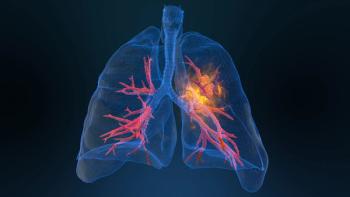
Review finds 91 new lung cancer screening and pulmonary nodule AI tools, but few get external validation or calibration, risking flawed LDCT decisions.

A newly validated scoring instrument extends alopecia areata assessment to the eyebrows, eyelashes, and beard.

Data show most older adults with newly diagnosed AML expect stable or improving physical function, while oncologists anticipate decline.

This extension to smaller drugmakers addresses a gap that has increasingly drawn attention from policy watchers.

Selinexor, an oral XPO1 inhibitor, delivers modest spleen volume reduction in ruxolitinib-refractory MF with minimal myelosuppression in ESSENTIAL trial news.

Updated systematic review finds GLP-1 therapies deliver substantial weight loss, with newer multiagonists and oral options expanding treatment choice.
A Chest study of 1576 patients finds a 20% emphysema threshold best predicts survival and lung function decline in fibrotic ILD.

FUSION trial data published show FFRCT added to CCTA safely cut unnecessary catheterizations.

Patients with myasthenia gravis (MG) lived 15 to 19 years longer than those with multiple sclerosis (MS) across 4 datasets.