

Christina Mattina
Advertisement

Christina is the associate editorial director of The American Journal of Managed Care® (AJMC®) and Population Health, Equity & Outcomes, and joined AJMC in 2016. She oversees the publication of the print journals, from manuscript submission to publication, and works with the editors in chief and editorial boards to promote the journals.
She has a BS in public health from Rutgers University. You can connect with Christina on LinkedIn.
Articles by Christina Mattina

The coronavirus disease 2019 (COVID-19) pandemic dominated headlines for much of 2020, and most of the top 5 multiple sclerosis articles of this year discussed the effects of COVID-19 on patients with this disease. Others touched on physician and patient assessments of relapse and potential new treatments for neural damage.

In 2020, articles published in The American Journal of Accountable Care® (AJAC) explored drivers of success in accountable care organizations, responses to payment reform efforts, and more.

In 2020, the peer-reviewed articles published in the pages of The American Journal of Managed Care® (AJMC®) that drew the most readers were largely, but not entirely, related to the coronavirus disease 2019 crisis.

This year, the most popular articles and interviews related to the role of inflammation in asthma and other conditions touched on the mechanisms of inflammation, patterns of inhaler use, and the real-world impacts of the monoclonal antibody dupilumab.

In a pair of sessions at the Quality Cancer Care Alliance Virtual Fall Leadership Summit, speakers discussed the promise of precision medicine for not only informing individuals’ cancer treatment decisions but also identifying individuals at high risk before disease develops.

In her presentation, Aimee Tharaldson, PhD, senior clinical pharmacist of emerging therapeutics at Express Scripts, discussed the upcoming pipeline of specialty drug approvals and their potential impact on the market.
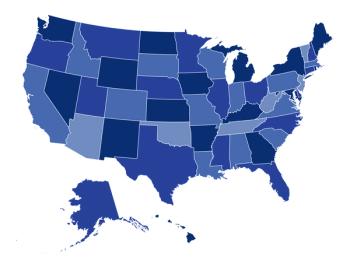
The pressure on state budgets exerted by new approvals of costly therapeutics has led many states to implement legislation aimed at regulating drug prices, but the success of these efforts is not uniform across the nation.

Pharmacists have an important role to play in the success of value-based payment models, according to panelists who discussed their health plan’s value initiatives at the Academy of Managed Care Pharmacy Nexus 2020 meeting.

In a panel discussion at the Academy of Managed Care Pharmacy Nexus 2020 meeting, experts discussed driving factors of and barriers to the use of real-world evidence by payers in oncology decision-making.

A panel discussion examined the changes in the health care landscape occurring due to the coronavirus disease 2019 (COVID-19) pandemic, particularly around pharmacists’ scope of practice, and which changes are likely to persist after the pandemic.

Marty Makary, MD, MPH, kicked off the Academy of Managed Care Pharmacy Nexus 2020 meeting with a call to action around reducing overprescribing, increasing price transparency, and recapturing the public’s trust in the health care system.

A preview of some of the topics that will appear at next week’s Academy of Managed Care Pharmacy (AMCP) Nexus 2020 meeting, which will be held virtually.

President Donald Trump is showing symptoms after testing positive for the virus that causes coronavirus disease 2019. He received an experimental antibody cocktail and was taken to Walter Reed Medical Center.

Coverage of the Population Health Delivery Council meeting, held virtually by The American Journal of Managed Care® on July 18.

Today, The American Journal of Managed Care® is speaking with 2 experts to discuss the root causes of racial inequities in cancer care. Dr John Carpten, professor at the University of Southern California Keck School of Medicine, outlines what needs to happen to improve cancer outcomes for minority populations and support minority scientists, and Dr Russell Ledet, president of The 15 White Coats and medical student at Tulane University School of Medicine, explains the steps to breaking down the barriers to medical school for those from marginalized communities.

Women with heart disease during their first pregnancy had a higher rate of maternal cardiac events and neonatal complications, especially if they also had pulmonary hypertension, according to study findings published in BMC Pregnancy and Childbirth. The study also identified factors that can predict which pregnant women with heart disease will develop heart failure.

We spoke with Dr Mark Fendrick, co-editor-in-chief of The American Journal of Managed Care®, and director of the University of Michigan Center for Value-Based Insurance Design, or V-BID, on how the principles of V-BID can be used to make a real difference for the millions of American families financially struggling with the impacts of coronavirus disease 2019 (COVID-19) and can help shape the new healthcare delivery landscape after the pandemic.

With the economic upheaval and unemployment brought by the coronavirus disease 2019 (COVID-19) pandemic, observers anticipate a large influx of new members into Medicaid programs. We spoke with Russ Fendley, former Medicaid commissioner for Kentucky, and Patrick Sturdivant, president of the Amerigroup Texas Medicaid plan, to find out how states and plans are preparing for this challenge and its lasting effects.

Kimberly Lovett Rockwell, MD, JD, and Alexis S. Gilroy, JD, the authors of a commentary in the April issue of The American Journal of Managed Care®, explain how telemedicine can help alleviate the burden on health systems brought by the coronavirus disease 2019 (COVID-19) pandemic and how regulations are shifting to enable use of the technology during the pandemic and beyond.

As the COVID-19 pandemic upends daily life and economies across the globe, investigators are hurrying to test and develop potential treatments for the coronavirus, with some showing promise and others being ruled out.

In 2019, the peer-reviewed research published in The American Journal of Managed Care® (AJMC®) that drew the most readers included studies on value-based arrangements, out-of-network payment policies, and more.
The December issue of The American Journal of Managed Care® (AJMC®) included studies on out-of-network cost sharing, unhealthy alcohol use, patient health literacy, and more. Here are 5 findings from research published in the issue.

Multiple sclerosis (MS) is known to be associated with lower health-related quality of life, and a new study adds evidence that depression and fatigue are the major drivers of this relationship.
The November issue of The American Journal of Managed Care® (AJMC®) included studies on a kidney disease intervention, perceptions of alternative financing models, population health screening, and more. Here are 5 findings from research published in the issue.

Reducing the use of metered-dose inhalers for asthma could shrink the carbon footprint while achieving cost savings if less expensive brands of dry powder inhalers are used, according to new research findings.

As increasing evidence suggests that a disrupted sleep-wake cycle can drive the development of Alzheimer disease and other neurocognitive disorders via β-amyloid accumulation, a new study finds that the association between β-amyloid accumulation and cognitive impairment can be mediated by sleep disruption even after the onset of cognitive decline.

Veterans with posttraumatic stress disorder (PTSD), whether or not they had experienced a traumatic brain injury (TBI), were more likely to experience rapid eye movement (REM) sleep behavior disorder than veterans without TBI or PTSD, according to the findings of a new study.

Several species of bacteria that can transmit respiratory infections have varying levels of response to the disinfecting agents used in municipal water treatment systems, with no one water disinfection strategy achieving complete microbial control, according to new findings.

Using and adhering to positive airway pressure therapy was associated with fewer inpatient and overall acute care visits and a lower likelihood of having costs from those visits among patients with moderate or severe obstructive sleep apnea.
Advertisement
Advertisement
Advertisement
Trending on AJMC
1
Medicare Drug Price Negotiations Yield Uneven Out-of-Pocket Savings
2
Rusfertide Keeps Working Where Hydroxyurea Fades: Andrew Kuykendall, MD
3
Lymphoma Outcomes Hinge on Oncology, Not Viral Load In People With HIV
4
CMS Rule Ends Medicaid, CHIP Funding for Pediatric Gender Care
5