|
Introducing BRUKINSAÃÆ’Æ’Æ’ÃĠ’ÃÆ’Æ’’ÃÆ’’Ã’¢"ÃÆ’Æ’Æ’’ÃÆ’Æ’’ÃÆ’’Ã’¢ (zanubrutinib) - the new FDA‑approved Bruton’s tyrosine kinase (BTK) inhibitor.
|
|
|
IMPORTANT SAFETY INFORMATION
|
|
WARNINGS AND PRECAUTIONS
|
|
Hemorrhage
|
|
Fatal and serious hemorrhagic events have occurred in patients with hematological malignancies treated with BRUKINSA monotherapy. Grade 3 or higher bleeding events including intracranial and gastrointestinal hemorrhage, hematuria and hemothorax have been reported in 2% of patients treated with BRUKINSA monotherapy. Bleeding events of any grade, including purpura and petechiae, occurred in 50% of patients treated with BRUKINSA monotherapy.
|
|
Bleeding events have occurred in patients with and without concomitant antiplatelet or anticoagulation therapy. Co-administration of BRUKINSA with antiplatelet or anticoagulant medications may further increase the risk of hemorrhage.
|
|
Monitor for signs and symptoms of bleeding. Discontinue BRUKINSA if intracranial hemorrhage of any grade occurs. Consider the benefit-risk of withholding BRUKINSA for 3‑7 days pre- and post-surgery depending upon the type of surgery and the risk of bleeding.
|
|
Please see Important Safety Information below.
|
|

|
PATIENT SUPPORT
|
|
|
Dedicated Oncology Nurse Advocates provide personalized support for each patient’s needs
|
|
|
What sets the myBeiGene program apart from other programs:
|
|
|
-
|
It is staffed with nurses who have prior experience working with oncology patients
|
|
-
|
Practices and their patients get a dedicated Oncology Nurse Advocate assigned to them
|
|
-
|
We seek to offer comprehensive patient support, including connecting patients to helpful resources that can address their personal needs
|
|
|
Call myBeiGene or enroll online
|
|
|
About BeiGene
|
|
BeiGene is a global, commercial-stage, research‑based biotechnology company focused on molecularly‑targeted and immuno-oncology cancer therapeutics. With a team of more than 2700 employees in the United States, China, Europe, and Australia, BeiGene is advancing a pipeline consisting of novel oral small molecules and monoclonal antibodies for cancer. BeiGene is also working to create combination solutions aimed to have both a meaningful and lasting impact on cancer patients.
|
|
|
IMPORTANT SAFETY INFORMATION
|
|
WARNINGS AND PRECAUTIONS
|
|
Hemorrhage
|
|
Fatal and serious hemorrhagic events have occurred in patients with hematological malignancies treated with BRUKINSA monotherapy. Grade 3 or higher bleeding events including intracranial and gastrointestinal hemorrhage, hematuria and hemothorax have been reported in 2% of patients treated with BRUKINSA monotherapy. Bleeding events of any grade, including purpura and petechiae, occurred in 50% of patients treated with BRUKINSA monotherapy.
|
|
Bleeding events have occurred in patients with and without concomitant antiplatelet or anticoagulation therapy. Co-administration of BRUKINSA with antiplatelet or anticoagulant medications may further increase the risk of hemorrhage.
|
|
Monitor for signs and symptoms of bleeding. Discontinue BRUKINSA if intracranial hemorrhage of any grade occurs. Consider the benefit-risk of withholding BRUKINSA for 3‑7 days pre- and post-surgery depending upon the type of surgery and the risk of bleeding.
|
|
Infections
|
|
Fatal and serious infections (including bacterial, viral, or fungal) and opportunistic infections have occurred in patients with hematological malignancies treated with BRUKINSA monotherapy. Grade 3 or higher infections occurred in 23% of patients treated with BRUKINSA monotherapy. The most common Grade 3 or higher infection was pneumonia. Infections due to hepatitis B virus (HBV) reactivation have occurred.
|
|
Consider prophylaxis for herpes simplex virus, pneumocystis jiroveci pneumonia and other infections according to standard of care in patients who are at increased risk for infections. Monitor and evaluate patients for fever or other signs and symptoms of infection and treat appropriately.
|
|
Cytopenias
|
|
Grade 3 or 4 cytopenias, including neutropenia (27%), thrombocytopenia (10%) and anemia (8%) based on laboratory measurements, were reported in patients treated with BRUKINSA monotherapy.
|
|
Monitor complete blood counts during treatment and treat using growth factor or transfusions, as needed.
|
|
Second Primary Malignancies
|
|
Second primary malignancies, including non-skin carcinoma, have occurred in 9% of patients treated with BRUKINSA monotherapy. The most frequent second primary malignancy was skin cancer (basal cell carcinoma and squamous cell carcinoma of skin), reported in 6% of patients. Advise patients to use sun protection.
|
|
Cardiac Arrhythmias
|
|
Atrial fibrillation and atrial flutter have occurred in 2% of patients treated with BRUKINSA monotherapy. Patients with cardiac risk factors, hypertension, and acute infections may be at increased risk. Grade 3 or higher events were reported in 0.6% of patients treated with BRUKINSA monotherapy. Monitor signs and symptoms for atrial fibrillation and atrial flutter and manage as appropriate.
|
|
Embryo-Fetal Toxicity
|
|
Based on findings in animals, BRUKINSA can cause fetal harm when administered to a pregnant woman. Administration of zanubrutinib to pregnant rats during the period of organogenesis caused embryo-fetal toxicity including malformations at exposures that were 5 times higher than those reported in patients at the recommended dose of 160 mg twice daily. Advise women to avoid becoming pregnant while taking BRUKINSA and for at least 1 week after the last dose. Advise men to avoid fathering a child during treatment and for at least 1 week after the last dose.
|
|
If this drug is used during pregnancy, or if the patient becomes pregnant while taking this drug, the patient should be apprised of the potential hazard to a fetus.
|
|
ADVERSE REACTIONS
|
|
The most common adverse reactions in > 10% of patients who received BRUKINSA were decreased neutrophil count (53%), decreased platelet count (39%), upper respiratory tract infection (38%), decreased white blood cell count (30%), decreased hemoglobin (29%), rash (25%), bruising (23%), diarrhea (20%), cough (20%), musculoskeletal pain (19%), pneumonia (18%), urinary tract infection (13%), hematuria (12%), fatigue (11%), constipation (11%), and hemorrhage (10%).
|
|
DRUG INTERACTIONS
|
|
CYP3A Inhibitors: When BRUKINSA is co-administered with a strong CYP3A inhibitor, reduce BRUKINSA dose to 80 mg once daily. For coadministration with a moderate CYP3A inhibitor, reduce BRUKINSA dose to 80 mg twice daily.
|
|
CYP3A Inducers: Avoid coadministration with moderate or strong CYP3A inducers.
|
|
SPECIFIC POPULATIONS
|
|
Hepatic Impairment: The recommended dose of BRUKINSA for patients with severe hepatic impairment is 80 mg orally twice daily.
|
|
INDICATION
|
|
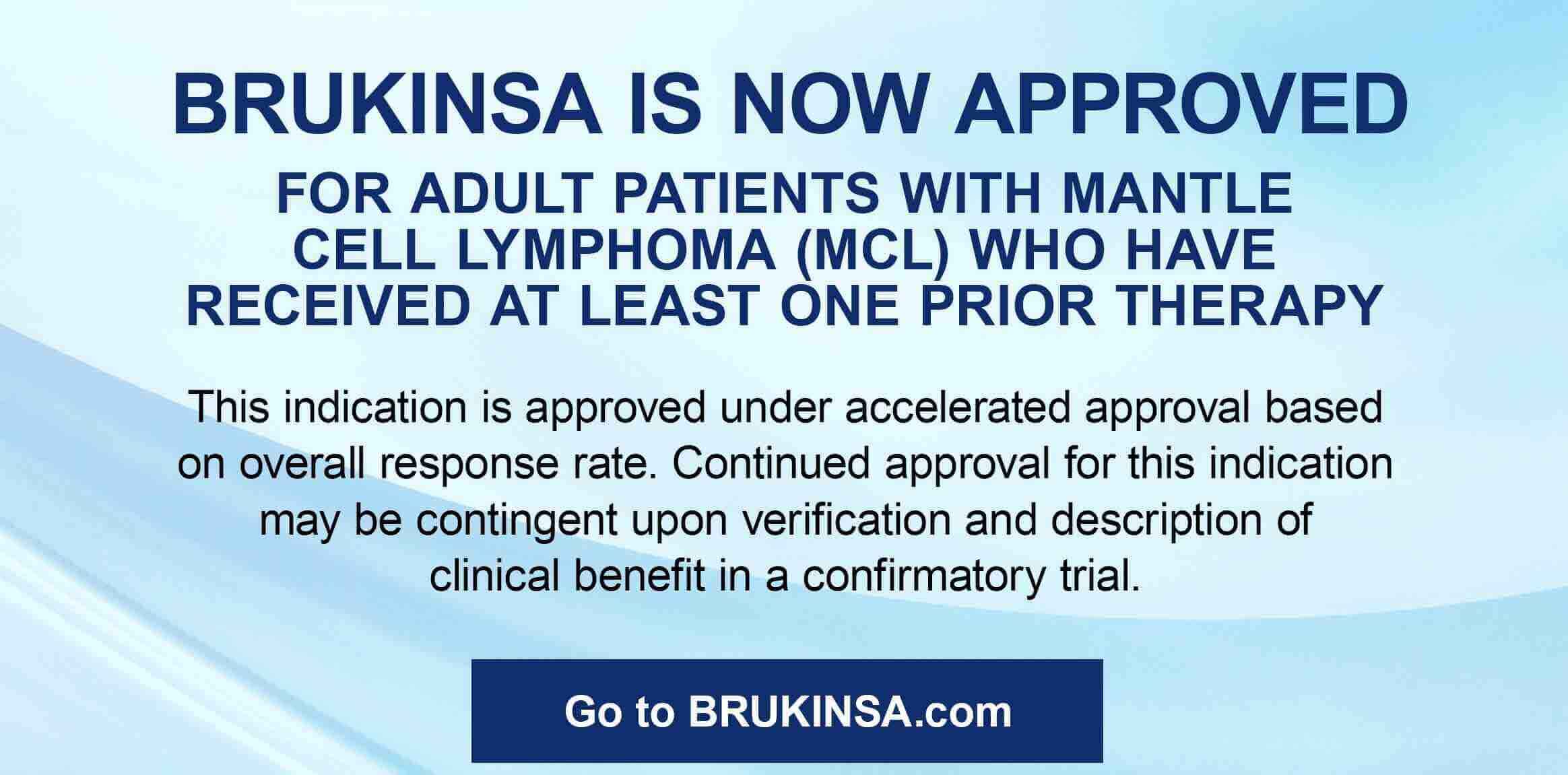
BRUKINSA is a kinase inhibitor indicated for the treatment of adult patients with mantle cell lymphoma (MCL) who have received at least one prior therapy.
|
|
This indication is approved under accelerated approval based on overall response rate. Continued approval for this indication may be contingent upon verification and description of clinical benefit in a confirmatory trial.
|
|
Please see full Prescribing Information including Patient Information.
|
|
|
|
BeiGene USA, Inc., 2955 Campus Drive, Suite 200, San Mateo, CA 94403
|
|
BRUKINSA, myBeiGene, the myBeiGene logo, and BeiGene are trademarks owned by BeiGene, Ltd.
|
|
ÃÆ’Æ’Æ’ÃĠ’’ÃÆ’Æ’Æ’’ÃÆ’Æ’’ÃÆ’’Ã’© BeiGene, Ltd. 2019 All Rights Reserved. 0819‑BRU‑PRC‑014 11/2019
|
|
Privacy Policy | Terms of Use | Contact
|
|
|