
Michael Kolodziej, MD, vice president and chief innovation officer at ADVI Health, Inc, on whether payers will get more comfortable paying for one-time, curative therapies with high price tags.
Michael Kolodziej, MD, vice president and chief innovation officer at ADVI Health, Inc, on whether payers will get more comfortable paying for one-time, curative therapies with high price tags.
New tools enabling data access can help patients choose the most appropriate site of care for their needs, representing a significant change in the care delivery paradigm, according to Vanessa Sammy, MPA, MHSA, senior director of commercial strategy and implementation for Remedy Partners.

Melinda Magyari, MD, PhD, consultant neurologist, the Danish Multiple Sclerosis Center, Copenhagen University Hospital, discusses the current body of data on treating pediatric multiple sclerosis (MS).
Ruxolitinib should be added to treatment of patients with graft-versus-host disease (GVHD) are not improving on steroids or whose symptoms return after tapering, said David Snyder, MD, associate chair of the Department of Hematology & Hematopoietic Cell Transplantation at City of Hope.
Nina Chavez, MBA, FACMPE, chief operating officer, New Mexico Oncology Hematology Consultants, Ltd., discusses if she thinks biosimilars will play a role in lowering costs in coming years.
Understanding the cultural backgrounds and beliefs of patients with MS allows clinicians to provide effective care, said Aliza Ben-Zacharia, DNP, ANP, associate director at the Center for Nursing Research and Innovation at Mount Sinai.
Providing patients with financial counseling related to their potential treatment costs alleviates financial burdens and promotes efficient care, said Rhett Wilkerson, BA, director of patient financial services dedicated to American Oncology Network at Florida Cancer Specialists & Research Institute.
Prithviraj Bose, MD, of MD Anderson Cancer Center discusses treatment options for patients progressing with myelofibrosis.

James Hamrick, MD, senior medical director at Flatiron Health, discusses some of the biggest challenges with trying to understand what constitutes value for patients and then turning that into actionable information.
Providing providers with relevant data on quality of care and profitability allows them to adjust their practices efficiently, said Erich Mounce, chief operating officer, OneOncology.
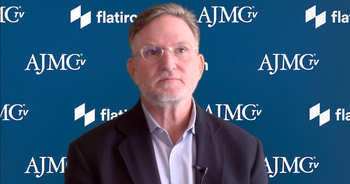
Bradley Prechtl, MBA, chief executive officer of Florida Cancer Specialists and the American Oncology Network, discusses how partnerships help community practices achieve growth.
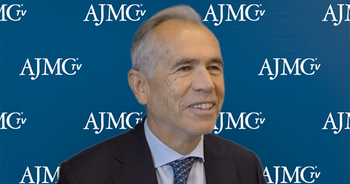
Alberto Ascherio, MD, DrPh, professor of epidemiology and nutrition at the Harvard T. H. Chan School of Public Health and professor of medicine at the Harvard Medical School, explains that, in addition to known environmental factors that affect multiple sclerosis (MS) risk, novel factors, such as childhood obesity, are also emerging.
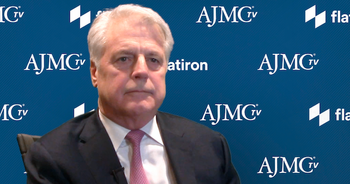
Population health management and coordination of care are integral to value-based contracting, explained Richard Snyder, MD, executive vice president of Facilitated Health Networks and chief medical officer at Independence Blue Cross.
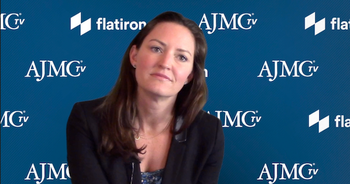
Carolyn Starrett, senior vice president, Provider Solutions, Flatiron Health, discusses efforts by Flatiron to help streamline practice operations in community practices.
The progressive illness, emotional management, and cognitive remediations serve as the major unmet needs in MS treatment today, said Aliza Ben-Zacharia, DNP, ANP, associate director at the Center for Nursing Research and Innovation at Mount Sinai.
Consolidating unified interests for improved cancer care can enhance efficiency and quality of care for patients, said Tracy Bahl, MBA, president and chief executive officer of OneOncology.
A majority of patients with acute graft-versus-host disease (GVHD), but not all, have significant responses to the addition of ruxolitinib, said David Snyder, MD, associate chair of the Department of Hematology & Hematopoietic Cell Transplantation at City of Hope.
Community practices looking to sustain growth are going to need to use technology, explained Terrill Jordan, chief executive officer of Regional Cancer Care Associates.
New trials are looking at what could be the next therapy or one that layers on top of present therapies to treat lung diseases, said Lisa Lancaster, MD, assistant professor of medicine at Vanderbilt Health.
Michael Kolodziej, MD, vice president and chief innovation officer at ADVI Health, Inc., weighs in on the role of commercial payers in value-based care.
By continuing to gather data on specific genomic data and profiles, we can heighten knowledge of applied treatment information on patient conditions, said Bobby Green, MD, chief medical officer at Flatiron.
We really believe that biosimilars line up as a value accretion for every constituency, whether it’s the patient, the practice, or the payer, said Lee Schwartzberg, MD, FACP, executive director, West Cancer Center.
Utilizing data, that we have generated from software solutions in our partnerships or use, will allow OneOncology to pair each practice center with effective technology, said Robin Shah, chief commercial officer of OneOncology.
Nina Chavez, MBA, FACMPE, chief operating officer, New Mexico Oncology Hematology Consultants, Ltd., explains how high-cost therapies create a challenge for practices to succeed under value-based care models like the Oncology Care Model (OCM).
Melinda Magyari, MD, PhD, consultant neurologist, the Danish Multiple Sclerosis Center, Copenhagen University Hospital, explains the treatment paradigm for pediatric-onset multiple sclerosis (MS).
Tesh Khullar, senior vice president & advisor, Flatiron Health, outlines changes that could impact community oncologists when it comes to reimbursement for biosimilars.
Clinical workflow features being implemented by Flatiron will help address both coordination of care and physician burnout, explained Amila Patel, PharmD, BCOP, technical lead, Clinical Oncology, Flatiron Health.
Prithviraj Bose, MD, of MD Anderson Cancer Center discusses the risk of patients being treated with JAK inhibitors developing non-Hodgkin lymphoma.
Lawrence N. Shulman, MD, director of the Center for Global Cancer Medicine at the Abramson Cancer Center, and professor of Medicine at the Hospital of the University of Pennsylvania, discusses how value-based care can advance the quality of oncology care that it isn't currently.
Having the most up-to-date information on potential reimbursement and drug costs allows providers to educate patients and create payment plans that fits their needs, said Rhett Wilkerson, BA, director of patient financial services dedicated to American Oncology Network at Florida Cancer Specialists & Research Institute.