Nearly half of working-age adults were inadequately insured in 2026, and half went without needed care due to cost, a Commonwealth Fund survey found.
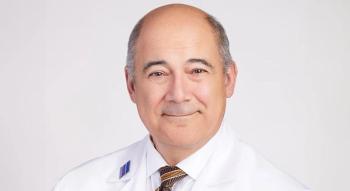
Project ECHO can be used to improve access to care in rural and underserved areas by sharing knowledge, said Sanjeev Arora, MD, FACG, MACP, director and founder of Project ECHO and a professor of medicine at University of New Mexico.
Project ECHO can be used to improve access to care in rural and underserved areas by sharing knowledge, said Sanjeev Arora, MD, FACG, MACP, director and founder of Project ECHO and a professor of medicine at University of New Mexico.
Transcript
What are some of the impacts of Project ECHO?
If a patient wants treatment, they can get treatment anywhere in New Mexico, and even in 2003 when I started Project ECHO, it was not a shortage of medicines—the medicines were available for every patient that I had—it was a shortage of knowledge. But now we have the right knowledge at the right place at that right time, and people can get access to treatment and the cure rates are very high and access is really good for hepatitis C.
Now, my dream is that I can have the same kind of access for many, many other health conditions, including cancer. So, for example, there is now a lot of evidence that patients in rural areas have higher mortality from cancer. We also know that African American women have the same mortality from breast cancer in the ‘70s as white women. Now, African American women die—43% more likely to die from breast cancer if they have it than white women. So, we want to reduce this disparity, because right now it’s very difficult to get best-practice care to underserved areas, to rural areas, because the right experts are not there. The right knowledge is not there.