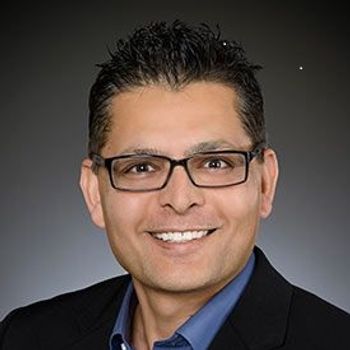
The editor in chief of Evidence-Based Oncology, who was recently named medical director of Precision Medicine for The US Oncology Network, discussed milestones met and those still to be achieved.
Despite the impact of targeted treatment in oncology, much work remains to bring these therapeutics to all patients, says Bhavana (Tina) Bhatnagar, DO.
During the November 13
Here she speaks to the overall impact of targeted treatment in oncology, but that much work remains to bring these specialized therapeutics to all patients.
This transcript has been lightly edited for clarity; captions were auto-generated.
Transcript
How have biomarker-driven targeted therapies changed survival outcomes or quality of life across different cancer types?
I think precision oncology has changed the lives of many patients. It's always gratifying for me as an oncologist to be able to offer patients treatments that are specifically targeted toward their disease. One particular patient who comes to mind is a gentleman I took care of who had
We ended up testing his leukemia cells for the presence of certain genetic mutations and found out he had a mutation in a gene called FLT3, which is mutated in about one-third of people with AML. Fortunately, there are medications directed toward the FLT3 mutation called FLT3 inhibitors, and I was able to obtain a FLT3 inhibitor for this patient and get him safely out of the hospital and into full remission, with an excellent quality of life and a very long remission on a pill for a cancer that would have otherwise been fatal.
Where has precision medicine achieved the most success to date, and where is there still much work to be done?
In my mind, I think the biggest successes of precision medicine are the ability to be able to provide targeted therapies that usually have fewer toxicities than our standard chemotherapy regimens, because they go directly after the cancer cells as opposed to chemotherapy that is kind of like a blanket treatment for the cancer and also unfortunately affects healthy cells as well. I think it’s paved the way for lots of new therapeutics that have really helped our patients.
The other area where precision oncology has been really helpful is with prognostication. We’ve been able to use next-generation sequencing studies in order to better risk-stratify patients across a broad range of cancers, and that's kind of helped modify or give us a better understanding of how a patient's cancer is likely to behave beyond just the clinical data that we routinely collect.
What are some of the principal bottlenecks limiting equitable access to precision medicine?
All these precision oncology platforms are amazing, but they become limiting when people aren't able to access them. I think one of the biggest challenges is being able to make sure that patients in rural populations have access to precision oncology and are getting their tissue tested for the presence of various gene mutations.
I think as a community we need to make sure that we are focusing our efforts. We have to work collectively with policy makers, with our institutions, with our patients, to make sure that equitable access is achieved for patients regardless of where they live and that various social determinants of health and barriers are also addressed, because patients come from all different walks of life and I think, as their physician, it's important to know who they are as a person and what kinds of challenges that they might have that might prevent them from being able to get really what's considered gold-standard care.