

Artificial intelligence (AI) is emerging as a tool that can improve patient outcomes and provider care efficiency, says Douglas Flora, MD, FACCC, of St. Elizabeth Healthcare.

Hayden is an associate editor for The American Journal of Managed Care® (AJMC®). She joined the AJMC team in 2021, where she produces written and video content covering multiple disease states.
She has a BA in journalism & media studies from Rutgers University. You can connect with Hayden on LinkedIn.
Artificial intelligence (AI) is emerging as a tool that can improve patient outcomes and provider care efficiency, says Douglas Flora, MD, FACCC, of St. Elizabeth Healthcare.

Long-term effects of COVID-19 include lingering symptoms that take months to improve, more severe illness for cancer survivors, and a higher risk of death after infection for people living in rural areas.

A new report shows most Americans believe the government is too involved in health care regulation and want to see a ban on pharmaceutical company advertisements in the US.
Using artificial intelligence (AI) to help expedite processes for physicians can help them spend more face time with patients and stay up-to-date with the medical literature, says Douglas Flora, MD, FACCC.

Jorge García, PharmD, MS, MBA, MHA, discusses key takeaways from ACCC Capitol Hill Day and innovative strategies in pharmacy optimization.

Furosemide injection was previously approved to treat congestion from fluid buildup in adults with chronic heart failure.
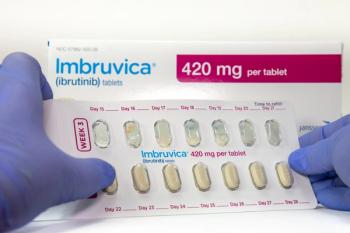
Ibrutinib remains a key treatment for relapsed chronic lymphocytic leukemia (CLL), but findings suggest that combining it with other therapies can improve response rates and may allow for treatment discontinuation in some patients.

The Republican bill for the congressional budget narrowly passes the House of Representatives, advancing to the Senate floor.

Susan Escudier, MD, FACP, discusses the impact of insurance coverage gaps, transportation barriers, and financial hardships on cancer care access and emphasizes the need for payers to better support patients at high risk.

When added to chemotherapy, researchers found no significant difference in overall or progression-free survival between PD-1 and PD-L1 inhibitors.
Susan Escudier, MD, FACP, explains some of the ways Texas Oncology mitigates financial toxicity and improve clinical trial access for underserved patients.

Maine, Rhode Island, and Vermont were the only 3 states to not report any pregnancy-associated firearm-related deaths from 2018 to 2022, according to National Center for Health Statistics data.

If enacted in 2022, the Fair Pricing Act could have saved patients up to $213.4 million in out-of-pocket costs, research says.

Patients treated in community settings were more likely to be older, less likely to be White, and had worse survival rates, highlighting disparities in specialized cancer care.

SEER data show that small cell lung cancer (SCLS) incidence has steadily declined due to reduced smoking rates, but survival outcomes have seen only minimal improvement, underscoring the need for more effective treatments.

A single-center study suggests the surgery is safe and effective even when tumors are large or located in high-risk areas.

A study showed that using measurable residual disease (MRD) to guide ibrutinib-venetoclax therapy significantly improved progression-free survival in chronic lymphocytic leukemia (CLL) compared with standard chemoimmunotherapy.

Research found that ibrutinib reduces red blood cell aggregation in patients with chronic lymphocytic leukemia (CLL), while obinutuzumab/venetoclax does not significantly alter blood viscosity.

According to research, PSAT1, PSRC1, COLEC12, HP, and PLLP may play a role in small cell lung cancer metabolism, immune response, and tumor progression, though more research is needed.

According to a review of hospital-based cross-sectional studies, almost half the type 2 diabetes population is micronutrient deficient.

The pause has raised concerns among health officials and state leaders, as the vague wording leaves billions in Medicaid funding at risk, potentially disrupting coverage for millions of Americans.
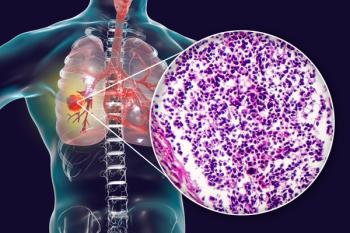
Newer treatments target pathways like Delta-like ligand 3, poly-ADP-ribose polymerase, and histone deacetylase to address small cell lung cancer's aggressive nature and resistance to conventional therapy.

Alcohol consumption can elevate cancer risk through mechanisms such as DNA damage, hormonal changes, and oxidative stress, with risks increasing alongside consumption levels.

Trilaciclib significantly reduced chemotherapy-induced myelosuppression in extensive-stage small cell lung cancer, which authors say minimizes the need for supportive care.

Patients with visual impairments face major physical and financial barriers when seeking emergency care.

Cemiplimab significantly reduced the risk of recurrence or death in patients with high-risk cutaneous squamous cell carcinoma (CSCC) post-surgery.

Small cell lung cancer (SCLC) is strongly linked to smoking, with about 80% of lung cancer deaths attributed to tobacco use.

However, metformin did not protect Black patients against squamous cell carcinoma specifically.

The Commission proposed using new measures beyond body mass index (BMI) to define when obesity is a disease.

A report from the Federal Trade Commission (FTC) has determined that pharmacy benefit managers (PBMs) are linked to significant cost increases for cancer, HIV, and other critical specialty drugs.