


Speakers at an Institute for Value-Based Medicine event with Vanderbilt University Medical Center highlighted the novel therapies and techniques being used to improve outcomes for patients with head and neck cancer.
Speakers at an Institute for Value-Based Medicine event with Vanderbilt University Medical Center highlighted the novel therapies and techniques being used to improve outcomes for patients with head and neck cancer.

Providers have to know how to manage patients who are hesitant to switch to a biosimilar and payers who have specific preferences about which biosimilar to use.

In just the last 2 years there have been updates in classification, risk assessment, and response criteria in myelodysplastic syndromes (MDS), but additional efforts are needed to improve these, and there remains a need for better therapies.

In a few short years, biosimilars have driven down total cost of care in oncology through providing competition for expensive drugs, explained Christine Pfaff, RPh, senior regional director of operations, American Oncology Network (AON).

Among adults 40 years and older with chronic obstructive pulmonary disease (COPD), there is a higher prevalence of cardiovascular diseases (CVDs) compared with a general population without COPD.

A survey of gastroenterologists, dermatologists, and rheumatologists found Amjevita had the most recognition, followed by Cyltezo, the only interchangeable biosimilar on the US market.
In part 2 of this 2-part podcast, a panel of experts discusses challenges with biosimilar uptake, interchangeability studies, patient and provider education.

One-fourth of patients who switched to an infliximab biosimilar retransitioned back to the originator, but they were more likely to subsequently discontinue treatment due to an unwanted response after switching back.

While regional variations were identified in rates of breast reconstruction, complications, and cost for patients with breast cancer, these differences did not seem to be associated with any implicit bias.

The AHEAD Model will operate for 11 years and aim to shift health care to community-based settings.

Drug spending for products facing generic or biosimilar competition decreased during the same time period.

The Medicare Shared Savings Program (MSSP) generated its second highest annual savings since the program began more than a decade ago.

Biosimilars can improve access to treatment for patients who might not have been able to access biologics previously, explained Laura Wingate, executive vice president, Education, Support, & Advocacy, Crohn's & Colitis Foundation.
In part 1 of this 2-part podcast, a panel of experts discusses the clinical manifestations of inflammatory diseases and the potential for biosimilars to treat these diseases.

The FDA has approved the first biosimilar to treat multiple sclerosis, Sandoz's injection treatment natalizumab-sztn (Tyruko).

The respiratory syncytial virus (RSV) vaccine Abrysvo is approved for use in pregnant individuals to prevent RSV in infants up to 6 months of age.

The revisions to the ACO REACH model are expected to add predictability and stability while advancing health equity.
Greater attention needs to be on educating patients who are switching from a reference product they are successful on to a biosimilar than a patient who is starting a treatment with a biosimilar at the beginning of their disease journey, explained Laura Wingate, executive vice president, Education, Support, & Advocacy, Crohn's & Colitis Foundation.

The program, which scales an accountable care organization (ACO) model across all major payers in Vermont, reduced Medicare spending and hospitalizations while improving patient care.

Patients were twice as likely to get a colorectal cancer screening and 50% more likely to get a breast cancer screening in their first year of Medicare coverage.

Amjevita’s revenue was down 63% in the second quarter (Q2) compared with the first quarter of 2023, when the biosimilar launched.

Adults younger than 50 years with colorectal cancer (CRC) who experience postpresentation delays in treatment did not appear to have worse outcomes, according to a study in Ontario, Canada.
There is a right way and a wrong way to inform a patient about a switch from the reference product to a biosimilar, explained Laura Wingate, executive vice president, Education, Support, & Advocacy, Crohn's & Colitis Foundation.
Coverage of ASCO sessions and posters that addressed lessons from the Oncology Care Model and concerns about the Enhancing Oncology Model, which launched shortly after the annual meeting ended.

Some populations face longer diagnostic delays for hidradenitis suppurativa (HS), but medical education can help improve knowledge of common dermatologic diseases and reduce delays in diagnosis, said Haley Naik, MD, FAAD, associate professor of dermatology, University of California, San Francisco, School of Medicine.

The playbook from the 3 organizations highlights 5 best practices for data sharing from organizations with real-world experience in value-based care arrangements.
Despite having 8 adalimumab biosimilars on the market now, patients may only see 1 or 2 available through their insurance, explained Laura Wingate, executive vice president, Education, Support, & Advocacy, Crohn's & Colitis Foundation.
Some of the many barriers patients with hidradenitis suppurativa (HS) face include accessing knowledgeable providers, insurance coverage of treatment, and the way the health care system is set up, said Haley Naik, MD, FAAD, associate professor of dermatology, University of California, San Francisco, School of Medicine.
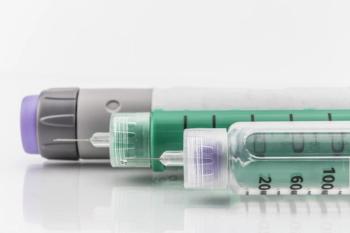
A new analysis finds branded insulin glargine (Lantus) still has a majority of total market volume and new drug starts despite competition from Semglee, an interchangeable biosimilar.
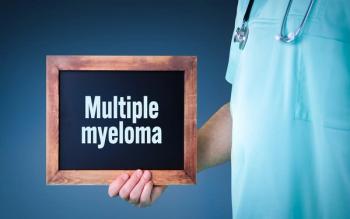
Bispecific antibodies or chimeric antigen receptor (CAR) T-cell therapies are both associated with an increased risk of infection for patients with multiple myeloma (MM), explained Hans Lee, MD, of The University of Texas MD Anderson Cancer Center.