

The study's primary end point, overall survival, showed that patients taking CC-486 had a 31% lower risk of death than those taking placebo.
The study's primary end point, overall survival, showed that patients taking CC-486 had a 31% lower risk of death than those taking placebo.
The French biotech Servier has an agreement with Allogene Therapeutics, through Pfizer, to market its allogenic chimeric antigen receptor (CAR) T-cell product in the United States if it receives FDA approval.
Symptoms of myeloproliferative neoplasms (MPNs) have a large impact on quality of life for patients and it is important to be able to link them, said Ruben Mesa, MD, director of UT Health San Antonio MD Anderson Cancer Center.
Results presented at ASH support giving ibrutinib as first-line therapy in chronic lymphocytic leukemia (CLL), and future results may offer insights on whether patients can stop therapy once they have undetectable minimal residual disease (MRD).
Karmanos Cancer Institute, in Detroit, Michigan, established a specialty pharmacy to help alleviate the financial burden many patients face when paying for their oral novel therapeutics.
While there are more novel therapies available to treat chronic lymphocytic leukemia (CLL), there are still unanswered questions about how to use these therapies in sequences, said Lindsey Roeker, MD, clinical fellow at Memorial Sloan Kettering Cancer Center.
Results from Avalere Health show that once Medicare patients get through the experience and expense of CAR T-cell therapy, they do well and costs drop significantly.
Children with acute myeloid leukemia (AML) who come from neighborhoods with lower income have poorer outcomes and may have access to care issues, said Lena Winestone, MD, assistant professor of pediatrics at the University of California, San Francisco.
To avoid the toxicities associated with use of chemotherapy, there has been progress in developing and utilizing chemotherapy-free therapies to treat mantle cell lymphoma, said Michael Wang, MD, professor in the Department of Lymphoma and Myeloma at MD Anderson.
Successors to the first generation of chimeric antigen receptor (CAR) T-cell treatments will attack multiple targets and address the complexity of the manufacturing process by bringing uniformity to the creation of therapies, presenters said at the 61st American Society of Hematology Annual Meeting and Exposition in Orlando, Florida.
Despite their growing prevalence, there is still a lack of biosimilar education amongst stakeholders, said Robert Rifkin, MD, FACP, medical director, biosimilars and associate chair, hematology research, McKesson Specialty Health.
The biggest barrier to positive clinical outcomes in multiple myeloma is access, explained Robert Rifkin, MD, FACP, medical director, biosimilars and associate chair, hematology research, McKesson Specialty Health.
Jennifer R. Brown, MD, PhD, director, Chronic Lymphocytic Leukemia Center, Dana-Farber Cancer Institute, and associate professor of medicine at Harvard Medical School, discusses how genomic sequencing plays a role in determining prognosis and treatment for patients with chronic lymphocytic leukemia (CLL).
Theresa Keegan, PhD, MS, associate professor, hematology and oncology, University of California at Davis Comprehensive Cancer Center, outlines barriers and facilitators to clinical trial participation among adolescents and young adults (AYAs).
As treatment moves to pill-based regimens in chronic lymphocytic leukemia (CLL), the cost for patients is increasing, explained Jeff Sharman, MD, medical oncologist, Willamette Valley Cancer Institute and Research Center; medical director, The US Oncology Network.
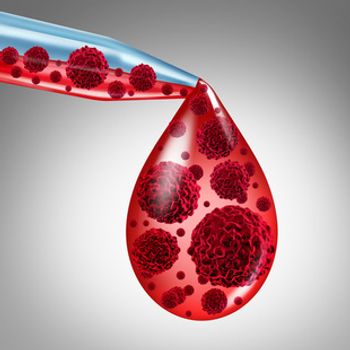
During the 60th American Society of Hematology Annual Meeting & Exposition held December 1-4 in San Diego, California, Norman Sharpless, MD, director, National Cancer Institute (NCI), brought attention to several advances made in hematologic malignancies over the past year and highlighted 4 areas of focus going forward.
Although there haven't been as many new drug approvals for multiple myeloma as there were last year, there are many new agents entering the market and exciting new discoveries, said Robert Rifkin, MD, FACP, medical director, biosimilars and associate chair, hematology research, McKesson Specialty Health.
Patients with Down syndrome are at an increased risk for developing leukemia, but how much of an increased risk depends on age, explained Irene Roberts, MD, professor of pediatric hematology, MRC molecular hematology unit and pediatrics, MRC Weatherall Institute of Molecular Medicine.
Ibrutinib combined with obinutuzumab had better progression-free survival (PFS) at 30 months than the standard chemoimmunotherapy regimen, chlorambucil plus obinutuzumab, regardless of high-risk genomic features in patients with chronic lymphocytic leukemia (CLL) or small lymphocytic leukemia (SLL) who had never been treated.
While several associations between constitutional syndromes, such as Down syndrome, and predisposition to cancers have been recognized, recommendations for surveillance or clear association between the 2 are lacking.
According to the results of Alliance A041202, an international multicenter phase 3 trial, ibrutinib produces superior progression-free survival (PFS) compared with standard chemoimmunotherapy in older patients with chronic lymphocytic leukemia (CLL) and adding rituximab does not improve the ibrutinib response.
It’s incredibly important that patients with Hodgkin lymphoma understand their diagnosis, their treatment options, and their prognosis, explained Alison J. Moskowitz, MD, medical oncologist, clinical director, lymphoma inpatient unit, Memorial Sloan Kettering Cancer Center.
Jeff Sharman, MD, medical oncologist, Willamette Valley Cancer Institute and Research Center; medical director, The US Oncology Network, discusses the standard of care for chronic lymphocytic leukemia (CLL) in the first-line setting and the relapsed setting during the American Society of Hematology 60th Annual Meeting & Exposition in San Diego, California.
Health resource utilization data gathered from the TRANSCEND-NHL trial have found that longer stays in the intensive care unit have a significant impact on the cost of care due to cytokine release syndrome (CRS) following treatment with chimeric antigen receptor (CAR) T cells.
We’re beginning to understand that mutational profiles can tell us something about the character of the leukemia, said Elizabeth Griffiths, MD, associate professor of oncology, department of medicine, Roswell Park Comprehensive Cancer Center.
There have been substantial efforts to increase both access to and participation in clinical trials among adolescents and young adults (AYAs), but their representation remains low, explained Theresa H.M Keegan, PhD, MS, associate professor, hematology and oncology, University of California at Davis Comprehensive Cancer Center.
Patients with sickle cell disease (SCD) typically face episodic emergency department (ED) and inpatient encounters, and innovative interventions are necessary to improve adherence to hydroxyurea treatment among youth suffering from SCD. These were the findings of 2 studies presented during an outcomes research session at the 60th American Society of Hematology Annual Meeting & Exposition.
A multicenter retrospective study that evaluated the efficacy and safety of chimeric antigen receptor (CAR) T-cell treatment, axicabtagene ciloleucel (axi-cel; Yescarta), in a real-world setting found a similar response as well as toxicity compared with the ZUMA-1 clinical trial.
From December 1-4, hematology professionals from across the globe will convene in San Diego, California for the American Society of Hematology annual meeting to present and discuss their research and latest developments in malignant and non-malignant hematology. Here’s what to look out for during the meeting.

Guidelines can help address issues of cost and variation, especially in complex diseases, said Derek Raghavan, MD, PhD, FACP, FRACP, president, Carolinas HealthCare System's Levine Cancer Institute.

259 Prospect Plains Rd, Bldg H
Cranbury, NJ 08512
© 2025 MJH Life Sciences®
All rights reserved.