
Primary end point results from the phase 2 GEM-TECTAL trial, presented at IMS 2026 in Glasgow, Scotland, support further study of a transplant-free, bispecific-based frontline strategy for patients with the hardest-to-treat disease.
Primary end point results from the phase 2 GEM-TECTAL trial, presented at IMS 2026 in Glasgow, Scotland, support further study of a transplant-free, bispecific-based frontline strategy for patients with the hardest-to-treat disease.
Five-year results from cohort A of CARTITUDE-2, presented at the International Myeloma Society Annual Meeting, show long, treatment-free remissions in lenalidomide-refractory patients who had 1 to 3 prior lines of therapy.
The expert knowledge presented at this year’s International Myeloma Society (IMS) annual meeting focused on minimal residual disease testing and status, defining and treating high-risk disease, CEPHEUS trial findings, and an investigational off-the-shelf chimeric antigen receptor T-cell therapy.
Attendees at the International Myeloma Society 21st Annual Meeting & Exposition got an early look at data for an investigational allogeneic chimeric antigen receptor (CAR) T-cell product from healthy donor cells to prevent graft-versus-host disease.
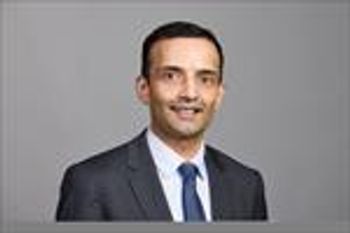
Ajai Chari, MD, covered both recent FDA approvals and pipeline products, such as non-BCMA chimeric antigen receptor (CAR) T-cell therapies and trispecifics, during a symposium on Immunotherapy at the International Myeloma Society 21st Annual Meeting & Exposition.
Speakers at the 2024 International Myeloma Society (IMS) conference share the updates from the myeloma space that they were most excited about this year.

Investigators from Florida Cancer Specialists & Research Institute explored questions surrounding minimal residual disease (MRD) negativity testing in an abstract presented at the International Myeloma Society 21st Annual Meeting & Exposition.
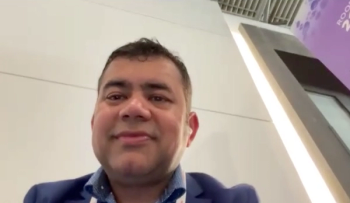
Binod Dhakal, MD, associate professor, division of hematology and oncology, Medical College of Wisconsin and lead investigator of the CARTITUDE-4 study, presented updated data at the 2024 International Myeloma Society conference.
The trial is seen as a complement to the MAIA trial, which had shown a significant overall survival benefit with daratumumab for patients with newly diagnosed multiple myeloma.
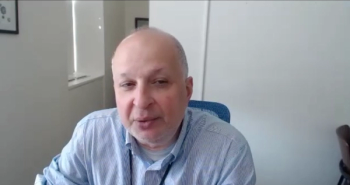
Ashraf Badros, MB, ChB, professor at the University of Maryland School of Medicine, director of the Multiple Myeloma Service, and vice chair of the Clinical Research Committee for the Program in Oncology, compares the AURIGA trial with other studies on maintenance therapy for patients with multiple myeloma.
HDP-101, a novel antibody-drug conjugate, targets BCMA with a synthetic amanitin payload that causes tumor cell death.
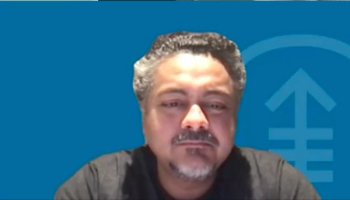
Saad Z. Usmani, MD, MBA, FACP, myeloma specialist and cellular therapist at Memorial Sloan Kettering Cancer Center, presented the results of the CEPHEUS trial and emphasized the positive impact daratumumab has on patients with multiple myeloma.
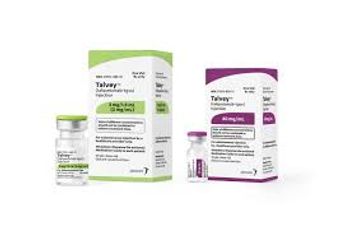
An oral session Friday at the International Myeloma Society 21st Annual Meeting & Exposition offered updates for the TRIMM-2 and RedirecTT-1 trials.
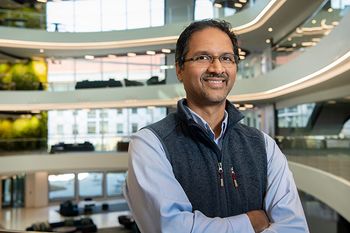
Anant Madabhushi, PhD, of Emory University, told attendees at the International Myeloma Society 21st Annual Meeting & Exposition how artificial intelligence's (AI) full potential in cancer care depends on its algorithms being validated by completed clinical trials.
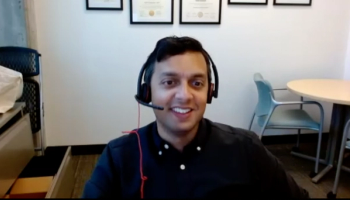
Rahul Banerjee, MD, FACP, assistant professor in the Division of Hematology and Oncology, University of Washington, dissects the limited data on T-cell therapies for multiple myeloma, infectious complications, and access to specialized treatment centers.

A new consensus definition for high-risk myeloma patients and promising results from trials dedicated to their care may offer a "paradigm shift" in treatment, experts say at the International Myeloma Society 21st Annual Meeting & Exposition.
Anant Madabhushi, PhD, executive director for the Emory Empathetic AI for Health Institute, proposes AI-based solutions to address health care disparities, emphasizing systemic racism and phenotypic variations.
Rahul Banerjee, MD, FACP, assistant professor in the Division of Hematology and Oncology, at the University of Washington, determines the optimal use of minimal residual disease (MRD) in individual patient management, including decisions about continuing or stopping treatment.

April's vote of the FDA Oncology Drug Advisory Committee to support use of MRD-negative CR as an end point for accelerated approval represents a triumph of science, persistence, and collaboration, said panelists at the International Myeloma Society 21st Annual Meeting & Exposition.
Daratumumab plus VRd and frontline daratumumab plus VTd produced deep, durable responses in patients with transplant-eligible multiple myeloma in updates to the PERSEUS and CASSIOPEIA trials, respectively.

Speakers on precursor disease addressed distinctions between MGUS and smoldering multiple myeloma, risk stratification, and new thinking on the role of immunological aging, especially how it affects Black patients.
The 21st annual meeting of the International Myeloma Society (IMS) takes place September 25-28, 2024, in Rio de Janeiro, Brazil.
Anant Madabhushi, PhD, executive director for the Emory Empathetic AI for Health Institute, discusses the potential of artificial intelligence (AI) for myeloma research at the 2024 International Myeloma Society conference.