
PIMJETMI® (pimicotinib) Formulary Central
SPONSORED CONTENT
PIMJETMI® (pimicotinib) Clinical Overview & Helpful Tools
IMPORTANT SAFETY INFORMATION
INDICATION & USAGE
PIMJETMI (pimicotinib) is indicated for the treatment of adult patients with symptomatic tenosynovial giant cell tumor (TGCT) for which surgical resection may cause worsening functional limitations or severe morbidity.
SUMMARY & WARNINGS AND PRECAUTIONS
PIMJETMI (pimicotinib) is associated with the following Warnings & Precautions: Hepatotoxicity; Embryo-Fetal Toxicity; & Increased Serum Creatinine without Affecting Renal Function. The most common (>20%) adverse reactions were pruritus, rash, face edema, periorbital edema, fatigue, nausea, headache, & peripheral edema. The most common (>30%) lab abnormalities were creatine phosphokinase increased, lactate dehydrogenase increased, aspartate aminotransferase increased, lipase increased, cholesterol increased, amylase increased, & alanine aminotransferase increased.
Please see below for additional Important Safety Information and click here for full Prescribing Information.
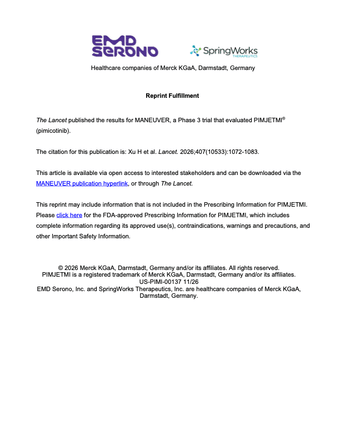
Clinical Trial Publication on PIMJETMI
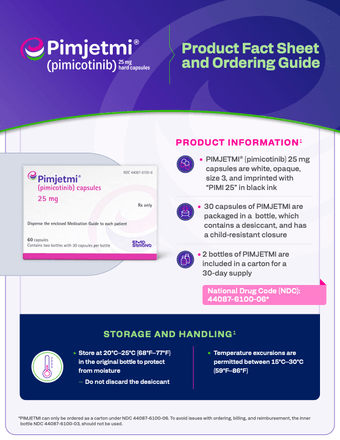
PIMJETMI Fact Sheet and Ordering Guide
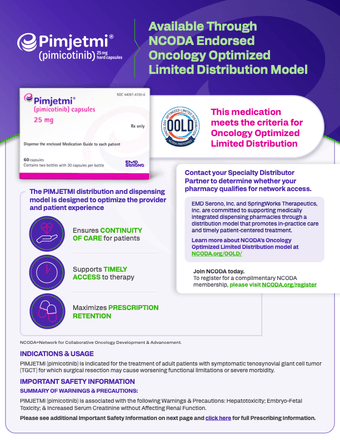
PIMJETMI Distribution and Acquisition Flashcard
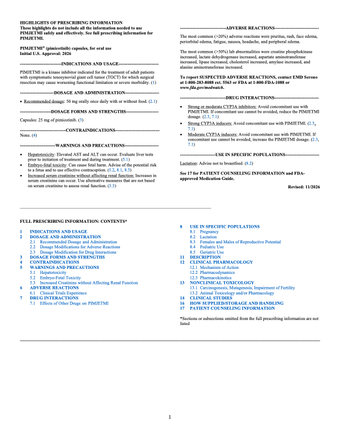
PIMJETMI Prescribing Information
PIMJETMI SpringWorks CareConnections® HCP Overview Brochure

Utilization Management Considerations
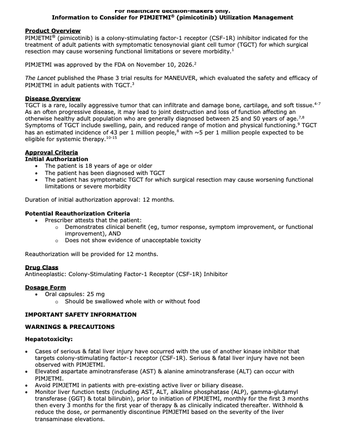
PIMJETMI Sample Utilization Management Policy
Click HERE to learn more about PIMJETMI, indicated for the treatment of adult patients with symptomatic tenosynovial giant cell tumor (TGCT) for which surgical resection may cause worsening functional limitations or severe morbidity.
IMPORTANT SAFETY INFORMATION (cont’d)
WARNINGS & PRECAUTIONS
Hepatotoxicity:
- Cases of serious & fatal liver injury have occurred with the use of another kinase inhibitor that targets colony-stimulating factor-1 receptor (CSF-1R). Serious & fatal liver injury have not been observed with PIMJETMI.
- Elevated aspartate aminotransferase (AST) & alanine aminotransferase (ALT) can occur with PIMJETMI.
- Avoid PIMJETMI in patients with pre-existing active liver or biliary disease.
- Monitor liver function tests (including AST, ALT, alkaline phosphatase (ALP), gamma-glutamyl transferase (GGT) & total bilirubin), prior to initiation of PIMJETMI, monthly for the first 3 months then every 3 months for the first year of therapy & as clinically indicated thereafter. Withhold & reduce the dose, or permanently discontinue PIMJETMI based on the severity of the liver transaminase elevations.
Embryo-Fetal Toxicity:
- PIMJETMI can cause fetal harm when administered to pregnant women. Advise pregnant women on the potential risk to the fetus.
- Advise females of reproductive potential & males with female partners of reproductive potential to use effective contraception during treatment with PIMJETMI & for 2 weeks after the last dose.
Increased Serum Creatinine without Affecting Renal Function:
- Increases in serum creatinine can occur with the use of PIMJETMI. These increases in serum creatinine may not be associated with changes in renal function. Increases in creatinine reversed upon PIMJETMI discontinuation. During PIMJETMI treatment, use alternative measures that are not based on serum creatinine to assess renal function.
Adverse Reactions:
The most common (>20%) adverse reactions were pruritus, rash, face edema, periorbital edema, fatigue, nausea, headache, & peripheral edema.
The most common (>30%) lab abnormalities were creatine phosphokinase increased, lactate dehydrogenase increased, AST increased, lipase increased, cholesterol increased, amylase increased, & ALT increased.
Drug Interactions:
- Strong & Moderate CYP3A Inhibitors: Avoid concomitant use of strong & moderate CYP3A inhibitors with PIMJETMI. If concomitant use cannot be avoided, reduce the PIMJETMI dosage (see Dosage & Administration).
- Strong & Moderate CYP3A Inducers: Avoid concomitant use of strong & moderate CYP3A inducers with PIMJETMI. If concomitant use of a moderate CYP3A inducer cannot be avoided, increase the PIMJETMI dosage (see Dosage & Administration).
Lactation: Advise females not to breastfeed during treatment with PIMJETMI & for 2 weeks after the last dose.
Please click here for full Prescribing Information for PIMJETMI.
© 2026 Merck KGaA, Darmstadt, Germany and/or its affiliates. All rights reserved.
US-PIMI-00106 11/26
PIMJETMI is a trademark of Merck KGaA, Darmstadt, Germany and/or its affiliates. All other trademarks are the property of their respective owners.
EMD Serono, Inc. and SpringWorks Therapeutics, Inc. are healthcare companies of Merck KGaA, Darmstadt, Germany.