

Adults with moderately to severely active Crohn disease can now start risankizumab with an on-body injector at home.
Adults with moderately to severely active Crohn disease can now start risankizumab with an on-body injector at home.

Satralizumab, a first-in-class IL-6 receptor inhibitor, was approved for adults with thyroid eye disease based on the phase 3 SatraGO program.
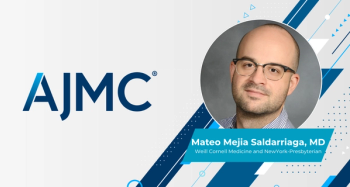
Weill Cornell's Mateo Mejia Saldarriaga, MD, discusses patient preference for on-body isatuximab and how to sequence CAR T and bispecifics in myeloma.
Teva's Weltruza, a once-monthly subcutaneous olanzapine injection, requires no loading doses, oral supplementation, or postinjection monitoring.

FDA cut required monitoring for tarlatamab’s first 2 doses from 22-24 hours to 6-8 hours, easing a barrier to community cancer care.

The third-gen PCKS9 inhibitor was approved in December 2025 as adjunctive treatment alongside diet and exercise for adults with hypercholesterolemia.

Moving to a subQ formulation makes sense, if you want to be 100% convenient for patients and the centers that treat them, explains Xavier Leleu, MD, PhD.

The autoinjector delivers subcutaneous furosemide with IV-equivalent exposure in under 10 seconds for adults with heart failure or CKD-related edema.
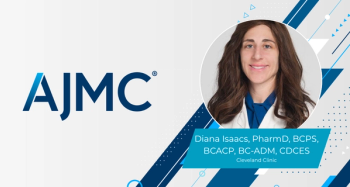
Diana Isaacs, PharmD, BCPS, BCACP, BC-ADM, CDCES, explains how GLP-1-based therapies are reshaping diabetes, obesity, and cardiometabolic care and what that means for coverage decisions.

FDA clears hands-free on-body injector for isatuximab in multiple myeloma, cutting treatment time and reactions while matching IV efficacy.


Karilyn Larkin, MD, weighs in on how decitabine/cedazuridine/venetoclax could transform the AML treatment experience—and the new responsibilities it places on patients.

Taiho submitted the supplemental new drug application in April 2025 for decitabine/cedazuridine and venetoclax, and the FDA accepted it for review in July 2025.

The FDA now permits outpatient monitoring for epcoritamab’s first full dose in R/R DLBCL, as EPCORE-NHL-6 data support safe bispecific antibody access.
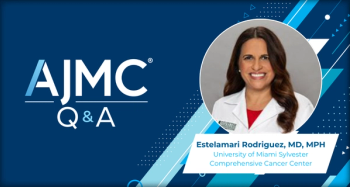
Subcutaneous amivantamab offers faster treatment, fewer infusion reactions, and improved convenience for patients with EGFR-mutated NSCLC, says Estelamari Rodriguez, MD, MPH.

Today's approval enables once-monthly SC amivantamab dosing for patients with EGFR-mutant NSCLC, reducing clinic visits without compromising efficacy or safety.