Initial frontal fibrosing alopecia treatment was largely similar in Black and White patients, though tetracycline use was higher in Black patients.
HHS does not intend to take enforcement action against pharmacies compounding BPC-157 and 5 other unapproved peptides if they meet 10 conditions.
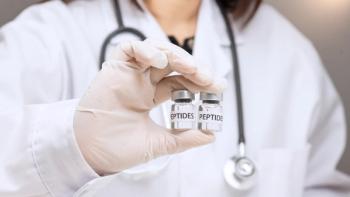
Pharmacies and physicians that compound 6 unapproved peptides, including BPC-157, are not expected to face HHS enforcement action if they meet 10 conditions, according to a draft policy announced this week.1,2
The policy, which HHS frames as enforcement discretion, applies to state-licensed pharmacies, federal facilities, and licensed physicians.1 It is not an FDA approval. None of the 6 peptides is FDA-approved or on the bulk drug substances list under section 503A of the Federal Food, Drug, and Cosmetic Act, which governs compounding by licensed pharmacists and physicians for individual patients. The FDA has not yet proposed adding them to that list.1,2 Compounded drugs are not FDA-approved, so the FDA does not review their safety, effectiveness, or quality before they are marketed.1
The notice announcing the policy, signed by HHS Secretary Robert F. Kennedy Jr, is scheduled for Federal Register publication on October 30.2 The policy is a draft and is not binding on HHS or the public.
Appendix A lists BPC-157, epitalon, KPV, MOTS-c, semax, and TB-500.1 Discretion applies only to specific forms and routes of administration:
HHS lists 10 conditions.1 Bulk substances must come from an FDA-registered original manufacturer that complies with current good manufacturing practice and carry a certificate of analysis showing identity, purity, potency, and the absence of contaminants such as endotoxins and heavy metals. Compounders must report serious adverse events and product quality issues to FDA's MedWatch program and to the relevant states.
Each product may contain only 1 active ingredient, which must be one of the 6 peptides, and must be labeled as a compounded drug product that is not for resale. Any copackaged delivery device must be an FDA 510(k)-cleared syringe, and compounders of oral products must document adequate bioavailability. A patient-specific prescription is still required.
In the policy, HHS said it aims to discourage widespread use of research-use-only peptides from foreign manufacturers by offering patients "a more controlled alternative."
The policy follows a
Appendix B acknowledges that FDA's Center for Drug Evaluation and Research recommended against listing each of the 6.1 For TB-500, epitalon, and semax, HHS described the center's safety concerns as inferential or mechanistic rather than observed, and for KPV it said the concerns reflected an absence of information. HHS also cited new certificate of analysis data and documented historical use for each peptide.
FDA briefing materials found that available studies, including 5 studies of BPC-157, were short, small, and insufficient to establish safety or effectiveness.3
Use is rising despite that gap. In a preprint
Flynn McGuire, MD, of the University of Utah, who was not involved in the analysis, noted that it lacked a comparison group and that about half of users were also taking other drugs or undergoing other interventions. The FDA's adverse event reporting system has logged 10 serious reports tied to BPC-157 since 2021, 8 of them in 2026, though such reports do not establish causation.
Catherine Varney, DO, obesity medicine director at UVA Health,
Compounded drugs generally fall outside standard pharmacy benefit coverage, so patients would likely keep paying out of pocket.3 In August, Shawn Hodges, PharmD, CEO of Revelation Pharma, a network of compounding pharmacies,
The policy stays in place for each peptide until the FDA addresses it in a final rule, and HHS may revisit the policy, including if a safety signal or product quality issue arises.1,2 Written comments are due 2 weeks after Federal Register publication under Docket No. HHS-OASH-2026-0496.2
Formal notice-and-comment
References