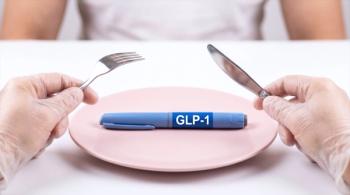
Report urges payment reform, food policy changes, and wider treatment access, warning that drugs alone can't fix obesity's root causes.
Once weekly tirzepatide significantly reduces body mass index in adolescents with obesity compared with placebo.
Once weekly tirzepatide, added to healthy lifestyle intervention, reduced body mass index (BMI) by 18.5% over 72 weeks among adolescents with
"In adolescents with obesity or overweight with obesity-related complications, tirzepatide, in addition to healthy lifestyle intervention, led to significant reductions in percent change in BMI compared with placebo at 72 weeks," wrote the researchers of the study.
Data from the CDC's National Health and Nutrition Examination Survey put obesity prevalence at 22.9% among US youth aged 12 to 19 years in August 2021 to August 2023.2 The FDA has approved orlistat, liraglutide, semaglutide, and phentermine-topiramate for long-term obesity treatment in adolescents, while tirzepatide, a dual glucose-dependent insulinotropic polypeptide and glucagon-like peptide-1 receptor agonist, is approved for obesity in adults.1
The phase 3, double-blind SURMOUNT-ADOLESCENTS trial (
The estimated treatment difference in BMI change was −19.0 percentage points (95% CI, −23.9 to −14.1; P < .001). At week 72, 79.6% of the tirzepatide group achieved at least a 5% reduction in BMI vs 28.5% of the placebo group, and 48.1% vs 7.9% reached at least a 20% reduction. More than half (53.5%) of tirzepatide recipients had a BMI below the 95th percentile obesity threshold at week 72, compared with 7.1% with placebo.
All 10 key secondary outcomes favored tirzepatide, including body weight (estimated treatment difference, −20.1 kg [−44.3 lb]), waist circumference, and a physical comfort quality-of-life score. Blood pressure, lipid, and glycemic measures also improved, though these additional end points were not adjusted for multiple comparisons.
Adverse events (AEs) occurred in 95.4% of tirzepatide-treated participants and 82.4% of those receiving placebo. Gastrointestinal events were most common with tirzepatide (81.5% vs 54.9%), including vomiting (50.9% vs 13.7%), nausea (50.0% vs 23.5%), and diarrhea (45.4% vs 25.5%). Most were mild to moderate and occurred more often during dose escalation. AEs led 9.3% of the tirzepatide group to discontinue treatment, vs none in the placebo group, and serious AEs occurred in 7.4% and 3.9%, respectively.
Depression or suicidal ideation was reported as an AE in 4.6% of tirzepatide recipients and 2.0% of placebo recipients; none were serious, and all participants who reported suicidal ideation had a psychiatric history. Growth and pubertal progression were similar between groups.
Limitations included the need for longer-term data, limited racial and ethnic diversity, and the fact that 62% of female and 43% of male participants had already reached sexual maturity at baseline.
"Despite substantial BMI [body mass index] reduction, height SDS [standard deviation score] remained stable, and pubertal (Tanner stage) progression was similar between the treatment groups over 72 weeks and consistent with expected growth and maturation for adolescents, suggesting no apparent disruption of expected growth or maturation during the trial," wrote the researchers. "Nevertheless, ongoing follow-up of pubertal progression and expected growth rate should be maintained as is recommended in clinical practice guidelines."
References