Oncologists weighted how to choose, manage, and deliver new therapeutics beyond major academic centers.
Subcutaneous amivantamab offers faster treatment, fewer infusion reactions, and improved convenience for patients with EGFR-mutated NSCLC, says Estelamari Rodriguez, MD, MPH.
In December 2025, the
Approximately 2 months later, the agency
In a recent interview with The American Journal of Managed Care® (AJMC®), Estelamari Rodriguez, MD, MPH, discussed the clinical significance of these approvals and how the sub-Q formulation compares with IV administration. She also explored the potential impact on patient
Rodriguez is the associate director of community outreach for thoracic oncology and assistant director of diversity, equity, and inclusion at the University of Miami Sylvester Comprehensive Cancer Center.
This transcript has been lightly edited for clarity.
AJMC: The FDA recently approved a sub-Q formulation of amivantamab and hyaluronidase for EGFR-mutated NSCLC and later approved a once-monthly dosing schedule. How significant are these developments for the NSCLC treatment landscape?
Rodriguez: EGFR is a more common mutation [that is] found in all ages. We really don't pick mutations by clinical characteristics; you should test every patient. But this is a big game-changer for patients who, when we were offering them amivantamab in the first-line setting, had to come every 2 weeks for infusions.
The first infusions were very long because there was an infusion-related reaction that required the patients to come twice in the first week to be observed for potential hives and other symptoms of infusion-related reactions.
One of the things we learned with the sub-Q formulation is that you come in, you're treated quickly, it's a 5-minute sub-Q formulation, and you heavily decrease these infusion-related reactions from 66% to 13%.
But I think what is really critical is that patients now have more time away from the clinic, so that time toxicity of coming to the cancer center is reduced, [which] improves the quality of life for patients, especially those who are younger, many of whom are working.
AJMC: What should clinicians know about the safety and tolerability of the sub-Q formulation, and how does it compare with the prior IV approach?
Rodriguez: What is really exciting about the sub-Q formulations [is that], based on the PALOMA-3 trial, which is an earlier trial, we knew that these are similar, noninferior responses for these patients—so the same efficacy and safety. And there's a hint of better efficacy in the sub-Q formulation, so we're excited and have transitioned all our patients from IV to sub-Q formulation for that added potential efficacy.
But I think the most critical part is to make this a treatment that patients can tolerate better from the get-go and that they can stay on. The sub-Q formulation doesn't reduce the skin toxicity, but it does allow [for fewer] infusion-related reactions…and allows patients not to come into the cancer center as often.
AJMC: How might these new approvals impact access to care for underserved populations, including those in rural or resource-limited settings?
Rodriguez: I think sub-Q formulations really help, not only for patients having less toxicity, but they are [also] more convenient and more patient-centric, so patients don't have to take as long. Patients who live in rural communities that are underserved [previously] had to drive an hour every 2 weeks. Now, they may still have to drive for the sub-Q formulation, but in the future, there may be ways of giving these treatments closer and closer to home for patients. We look forward to these drugs being available for patients while keeping their quality of life the same by not having to take as much time.
From an equity perspective, coming less often is going to require less driving for patients and less time out of work, or getting family members to bring you, so all of that makes the cost of the drug [lower] for patients.
AJMC: How do you anticipate the sub-Q formulation will affect treatment delivery in clinical practice, including clinic workflow and resource utilization?
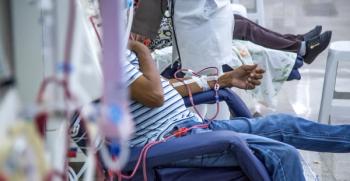
Rodriguez: It's a big difference between having a patient sit and get treated in the clinic for a couple of hours until you monitor them. That takes a lot of space from the treatment units as you're getting more patients in. With the sub-Q formulation, we have been able to develop chairs for this.
Patients are coming in faster, and fast-tracking them to the sub-Q unit gets the patients in and out much faster. So we think it's a great thing for patients. It is also efficient for the cancer center to be able to treat more patients the same day so that we don't have patients and nurses being restricted to 1 chair. It’s a 5-minute infusion. The first day, you monitor them a little bit longer, but after that, they're not monitored as long, so they can go back home.
References