

The session at ACCC's 50th Annual Meeting & Cancer Center Business Summit featured discussions on patient navigation, addressing patients' sexual health, needs of LGBTQ+ patients, and more.
The session at ACCC's 50th Annual Meeting & Cancer Center Business Summit featured discussions on patient navigation, addressing patients' sexual health, needs of LGBTQ+ patients, and more.

Stephen Speicher, MD, Flatiron Health, highlights the organization's frameworks for ensuring ethical artificial intelligence (AI) usage, emphasizing the importance of providers and health systems asking critical questions when considering AI tools.
Dalia Rotstein, MD, MPH, assistant professor of medicine at the University of Toronto, lists barriers to multiple sclerosis (MS) research and care delivery.
The Americas Committee for Treatment and Research in Multiple Sclerosis (ACTRIMS) Forum 2024 opened with discussions on the novel concepts emerging in multiple sclerosis (MS) research, such as the associations between synaptic loss and hypoxia with disease progression.

Marisa McGinley, DO, explains how technology can help improve access to multiple sclerosis (MS) care.
Mila Felder, MD, FACEP, emergency physician and vice president for Well-Being for All Teammates, Advocate Health, talks about tailoring the Stanford Model of Professional Fulfillment to support the postpandemic oncology workforce.
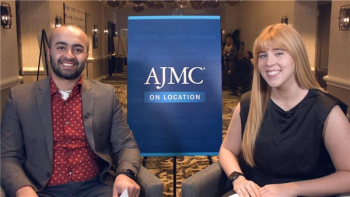
Interviews with Kirollos Hanna, PharmD, BCPS, BCOP, of Minnesota Oncology and Mayo Clinic College of Medicine, and Alti Rahman, MHA, MBA, of American Oncology Network, from day 1 of the Association of Cancer Care Centers 50th Annual Meeting & Cancer Center Business Summit (ACCC AMCCBS).

Coverage from the Association of Cancer Care Centers’ 50th Annual Meeting & Cancer Center Business Summit.

Quality Improvement (QI) projects require a series of distinct steps and timely data collection that will allow clinics to see if changes are yielding results, a consultant told attendees at a preconference workshop at ACCC.

The newly rebranded Association of Cancer Care Centers (ACCC) celebrates its 50th year at this week's business meeting.
The Americas Committee for Treatment and Research in Multiple Sclerosis (ACTRIMS) will host its ninth annual meeting in West Palm Beach, Florida, from February 29 to March 2, 2024, to address a plethora of barriers faced by patients and clinicians managing multiple sclerosis (MS).
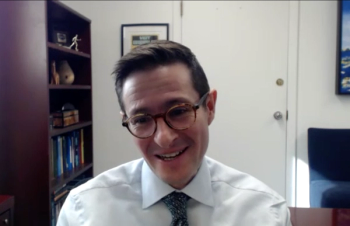
Daniel Ontaneda, MD, PhD, Americas Committee for Treatment and Research in Multiple Sclerosis (ACTRIMS) Forum 2024 chair, discussed what attendees can expect at this year's meeting, as well as how the theme of "Breaking Barriers in MS" will be implemented.
Experts discussed the Enhancing Oncology Model and themes in the movement toward value-based care in oncology during Patient-Centered Oncology Care 2023.

The former NFL running back shared his story of overcoming cancer and encouraged an audience of oncologists, pharmacists, payers, and policy leaders to continue pushing to advance cancer treatment.
Coverage from the panel discussion, "Can Clinical Pathways Have Burnout, Too?" at Patient-Centered Oncology Care 2023.
Coverage from "Navigating the PBM Landscape: How a Heath Care Economist Sees It," at Patient-Centered Oncology Care 2023.
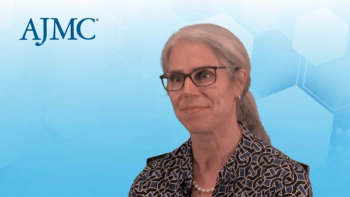
UnitedHealthcare is incorporating real-world evidence into pathways design and policy formulation, leveraging its members' data to evaluate the impact of different regimens on health resource utilization and costs, explains Lucy Langer, MD, MSHS, national medical director of oncology and genomics at UnitedHealthcare.

The findings suggest patient-reported outcomes—namely fatigue—may be helpful in identifying patients at a higher risk of death and other adverse outcomes but warrant further research.
Abstracts from the 65th American Society of Hematology (ASH) Annual Meeting and Exposition provided new insight into multiple treatments for patients with multiple myeloma (MM), chronic lymphocytic leukemia (CLL), and follicular lymphoma (FL).

The study’s senior author discusses how the combined mechanisms of action produced benefit in progression-free survival.
One expert said the results have the potential to change the standard of care for some patients with the most common type of liver cancer.
The PD-1 inhibitor is being studied in multiple cancers; FDA is reviewing an application of a combination with rivoceranib in unresectable hepatocellular carcinoma.
Molly Mendenhall, BSN, RN, director of quality and compliance at Oncology Hematology Care, Inc (OHC), discussed a 1-year quality improvement project implemented by OHC to standardize comprehensive biomarker testing in patients with non–small cell lung cancer (NSCLC).

Treatment with both PD-1 and TIGIT immunotherapy alongside chemotherapy demonstrated improved progression-free (PFS) and overall survival (OS) compared with chemotherapy alone in patients with esophageal squamous cell carcinoma (ESCC).

Jeff McIntyre, MA, of the Global Liver Institute (GLI), discusses the importance of the health care community understanding non-alcoholic steatohepatitis (NASH) and how to mitigate its global impact.
Especially during shortages, Kirollos S. Hanna, PharmD, BCPS, BCOP, FACCC, director of pharmacy services at Minnesota Oncology, says practices should carve out areas where going to a different therapeutic approach isn't considered off-pathway.
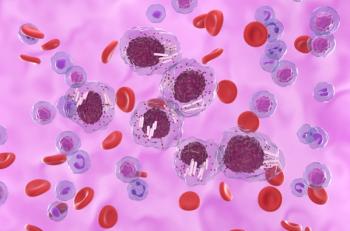
A real-world study found that patients treated with Bruton tyrosine kinase inhibitors had lower rates of treatment discontinuation and health care resource utilization compared with other first- and second-line treatment regimens.

Findings from the phase 3 SEQUOIA trial favored zanubrutinib over bendamustine plus rituximab in most biomarker-based subgroups of patients with chronic lymphocytic leukemia (CLL) or small lymphocytic lymphoma (SLL) without deletion of the 17p chromosome.
Margaret Liang, MD, MSHPM, gynecologic oncologist and health services researcher and director, Gynecologic Oncology Fellowship Program, Cedars-Sinai Cancer Center, discusses financial toxicity in cancer care and how institutions can help alleviate the financial burden for patients.

259 Prospect Plains Rd, Bldg H
Cranbury, NJ 08512
© 2025 MJH Life Sciences®
All rights reserved.