

Adzynma is the first product to be approved for the treatment of the rare blood disorder that has 90% mortality when left untreated.
Adzynma is the first product to be approved for the treatment of the rare blood disorder that has 90% mortality when left untreated.

Jorge Garcia, PharmD, MS, MHA, MBA, FACHE, discussed how infusion therapy can be administered as ambulatory drug infusion and its relation to biosimilars.

A senator opposes the Biden drug price negotiation plan and proposes a new model to help manage weight loss drug costs; Black children are underdiagnosed with attention-deficit/hyperactivity disorder (ADHD) compared with their White peers; lawmakers and witnesses said that policy makers must balance innovation with potential harms when it comes to artificial intelligence (AI) in health care.

Compared with infants born at term, infants born preterm following exposure to HIV had no observed increase in acquisition of HIV.

In a recent review, researchers overviewed the challenging aspects of treating pulmonary arterial hypertension (PAH), highlight the genetic and etiological variability, and advocate for research to expand personalized medicine.

Coverage of our peer-reviewed research and news reporting in the health care and mainstream press.

Residents grew more knowledgeable and more comfortable with using pre-exposure prophylaxis (PrEP) drugs for prevention against HIV after training was included in their residency program.

Recor Medical announced the FDA approval of its Paradise Ultrasound Renal Denervation system for the treatment of hypertension on November 7, 2023.

Only patients with PD-L1–positive tumors may receive treatment with pembrolizumab plus trastuzumab and chemotherapy for HER2-positive gastric or gastroesophageal junction adenocarcinoma following the FDA’s amendment.

Sophia Humphreys, PharmD, MHA, BCBBS, spoke about how she views formulary management as a team approach.
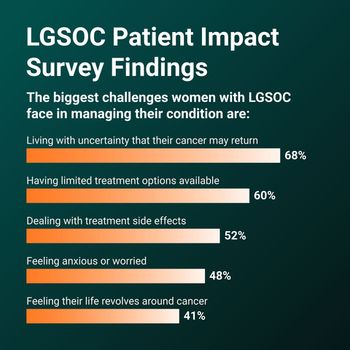
An online survey of patients from multiple countries has shed light on their challenges in getting proper care for ovarian cancer.

Posters presented at the 2023 Fall Clinical Dermatology Conference evaluated how label warnings may affect new treatment initiation and real-word switching patterns for patients starting risankizumab.

Understanding the needs of gender-diverse patients and patients receiving gender-affirming hormones is crucial to equitable care and properly addressing patients' needs.

This retrospective review compared appendicular lean mass (ALM) and ALM index among patients with Duchenne muscular dystrophy (DMD) or Becker muscular dystrophy (BMD).
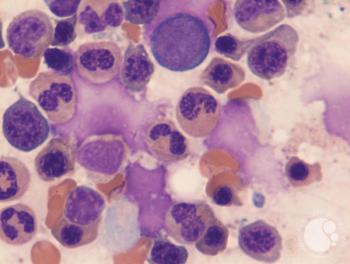
Given the likelihood of MDS to progress to acute myeloid leukemia (AML), the authors state, “There are certain settings where ‘AML-like’ therapies are appropriate in MDS, particularly given our evolving understanding of the overlapping biology of these malignancies.”

HADLIMA is currently indicated for psoriatic arthritis, plaque psoriasis, and hidradenitis suppurativa, among others.
A study suggests that human papillomavirus (HPV) screenings should be updated due to effective HPV vaccines; a new study shows that osimertinib (Tagrisso, AstraZeneca) reduced both the 5-year risk of recurrent cancer and the risk of death in patients with stage 1B to 3A lung cancer; a new smartphone-controlled technology could help those who suffer from migraines.

The FDA has approved fruquintinib (Fruzaqla) for the treatment of adult patients with metastatic colorectal cancer who have been previously treated with fluoropyrimidine-, oxaliplatin-, and irinotecan-based chemotherapy, an anti-VEGF therapy, and, if RAS wild-type and medically appropriate, an anti-EGFR therapy.

Industry stakeholders and patient advocacy groups are raising concerns with CMS due to high denial rates for non-invasive ventilators (NIVs) by Medicare Advantage plans.

Investigators propose potential payment models for gene therapies that consider equitable patient access and payer reimbursement.

Pooled phase 3 data presented at North American Society for Pediatric Gastroenterology, Hepatology & Nutrition 2023 support the benefit-risk profile of the ileal bile acid transport inhibitor in treating the rare liver disease.

A retrospective analysis suggested that administering rituximab to patients with rheumatoid arthritis complicated by lymphoma, systemic vasculitis, or extra-articular lesions was associated with improved outcomes.

Tirzepatide is already approved to treat type 2 diabetes, and is now approved for chronic weight management in adults with obesity or overweight with at least 1 weight-related condition.

Smoking intensity was shown to be associated with larger microvasculature dropout areas in patients with glaucoma, particularly those with more severe disease.

Three new novel treatments have shown promise in the treatment of multiple sclerosis (MS), including the potential to target neuroinflammation at its source.
Medicare may cover full cost of preexposure prophylaxis drugs; rules aim to prevent excessive compensation in Medicare Advantage (MA) market; health officials advocate for widespread syphilis testing and intervention.

When patients are undergoing treatment for cancer, clinicians should be aware of the potential to develop myasthenia gravis from immune checkpoint inhibitors (ICI), new research stresses, with ongoing surveillance and risk factor identification becoming necessary steps.

High levels of phenotypic age acceleration (PhenoAgeAccel) were found to have a more significant effect on lung function in patients with chronic obstructive pulmonary disease (COPD), older patients, and White patients.

Researchers provide progression-free survival outcomes for a pancreatic cancer vaccine and safety and efficacy results for a peptide vaccine alone or in combination with pembrolizumab.

Caecal cancer and ascending colon cancer had slower rates of metastasis to main nodes compared with transverse colon cancer.

259 Prospect Plains Rd, Bldg H
Cranbury, NJ 08512
© 2025 MJH Life Sciences®
All rights reserved.