

Experts at the Community Oncology Conference discuss innovative patient navigation programs, emphasizing technology's role and the importance of human connection in cancer care.
Experts at the Community Oncology Conference discuss innovative patient navigation programs, emphasizing technology's role and the importance of human connection in cancer care.

Experts emphasize the need for enhanced clinical trial infrastructure in community oncology to ensure equitable access to innovative therapies for all patients.
Oncology leaders from Alliance Cancer Specialists, American Oncology Network, CHI St. Vincent, Memorial Sloan Kettering Cancer Center, and New York Cancer & Blood Specialists discussed the power of collaboration in cancer care, highlighting partnerships that enhance patient outcomes and resource sharing in community practices.

This article appears in the April issue of Evidence-Based Oncology.

It’s hard for practicing oncologists to stay on top of the latest clinical data, but good partnerships and clinical decision support tools can assist.
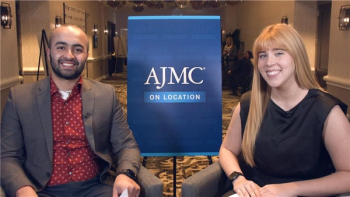
Interviews with Kirollos Hanna, PharmD, BCPS, BCOP, of Minnesota Oncology and Mayo Clinic College of Medicine, and Alti Rahman, MHA, MBA, of American Oncology Network, from day 1 of the Association of Cancer Care Centers 50th Annual Meeting & Cancer Center Business Summit (ACCC AMCCBS).
From the panel discussion, "The Burden They Carry," a discussion of the impact of financial toxicity over the duration of the cancer journey.
Coverage of the Institute for Value-Based Medicine session with Zangmeister Cancer Center, Columbus, Ohio.
In a few short years, biosimilars have driven down total cost of care in oncology through providing competition for expensive drugs, explained Christine Pfaff, RPh, senior regional director of operations, American Oncology Network (AON).

In 2023, the United States was in the midst of the largest drug shortage in a decade, including lifesaving platinum-based medications to treat a variety of cancers.
The Enhancing Oncology Model (EOM) attracted more than 2800 practitioners across 561 sites of care; a group of practices in the American Oncology Network enrolled under a single tax ID number.

Two abstracts presented at the 2023 American Society of Clinical Oncology annual meeting evaluated biosimilar adoption across oncology practices and highlighted the role payers play in preventing or promoting adoption.
News from our Strategic Alliance Partners.
An analysis presented during the 64th American Society of Hematology Annual Meeting and Exposition showed that patients with multiple myeloma were able to experience improved responses to the proteasome inhibitor ixazomib after switching from bortezomib.
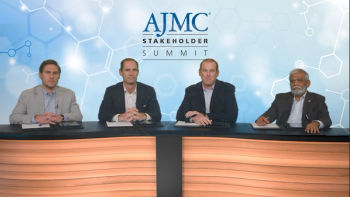
Constructive advice on improving the Enhancing Oncology Model (EOM) from our expert panel.
The Enhancing Oncology Model allows pooling of groups of practices for quality measurement, which was not permitted under the OCM.
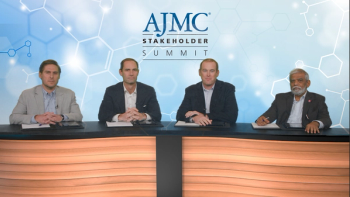
Asking for help to prepare for the Enhancing Oncology Model (EOM) and 2-sided risk is advised, say panelists experienced with the Oncology Care Model (OCM).
As terms for Monthly Enhanced Oncology Services (MEOS) payments are set to change under the EOM, panelists worry that the barriers to entry to value-based care will be too high for practices that did not participate in the OCM.
Panelists see the 5-year period of the Enhancing Oncology Model as reasonable; they would like see some progress toward permanent value-based payment structures.
Addressing cancer patients' lack of housing or food insecurity affects care outcomes, but how can the Center for Medicare and Medicaid Innovation build this into a reward structure?
Cutting the amount of Monthly Enhanced Oncology Services payments and limiting qualifying tumor types will curtail revenue to practices. But after the financial results in the Oncology Care Model, that's by design.
Unlike the Oncology Care Model, the Enhancing Oncology Model will focus on 7 common cancer types, which experts say offers advantages and disadvantages for practices.