The announcement of a "strategic refresh" for payment models under the Center for Medicare and Medicaid Innovation offered no details on what practices should expect when the Oncology Care Model (OCM) expires in 2022.
The announcement of a "strategic refresh" for payment models under the Center for Medicare and Medicaid Innovation offered no details on what practices should expect when the Oncology Care Model (OCM) expires in 2022.

Michael E. Chernew, PhD, co-editor-in-chief of The American Journal of Managed Care®, discussed cost and sustainability issues specific to commercial insurance, Medicare, and Medicaid at the National Alliance 2021 Annual Forum held in a hybrid format in Washington, DC.

Michael Thompson, president and chief executive officer of the National Alliance of Healthcare Purchaser Coalitions, speaks on the growth of telehealth and value-based care amid the COVID-19 pandemic, and the influence they will have on care delivery strategies in the years to come.

Roundtable discussions between health care purchasers and physician practices highlight their aligned interest in having patients managed by a primary care physician, with other topics such as behavioral health, social determinants of health, and telehealth referenced as well.
Michael Thompson, president and CEO of the National Alliance of Healthcare Purchaser Coalitions, discussed findings of his organization’s Pulse of the Purchaser survey that signaled a return to a stabilized business environment.
Through direct roundtable discussions between health care purchasers and physician practices, efforts have been made to align care provided in the community with the wants and needs of employees and patients.

A survey of employer and purchaser members of the National Alliance of Healthcare Purchaser Coalitions found that over half expect a transition to a more stabilized business environment by the third quarter of this year, as well as increased benefit offerings on mental health access and virtual care delivery.

The Midwest Business Group on Health's program this week on behavioral health will explore strategies that employers have implemented to address rising anxiety and financial stressors in the workforce amid the coronavirus disease 2019 pandemic.

To address rising prices of private health insurance, employers are considering several strategies, including narrow networks and decreased reliance on intermediaries.

Amid disruption precipitated by the coronavirus disease 2019 (COVID-19) pandemic, a survey by the National Alliance of Healthcare Purchaser Coalitions shows employers are maintaining or accelerating their health benefit strategies for 2021 and 2022.

Millennials among those most vulnerable; show a 101% higher risk of depression than middle-aged counterparts.
Chronic state of anxiety and stress negatively impacting workers’ cognitive performance.

By increasing access and awareness of mental health services, employers can assist in addressing concerns precipitated by pandemic and racial injustice to curb potentially severe and persistent mental illness, said Joe Grasso, PhD, clinical director of partnerships at Lyra Health.

As part of the National Alliance of Healthcare Purchaser Coalitions Employer Town Hall series on the coronavirus disease 2019 (COVID-19), speakers discussed how employers are helping employees and their families to maintain mental health and wellness, with additional input on those managing existing mental health conditions.

In a webinar moderated by Thomas Parry, PhD, president of the Integrated Benefits Institute, an employer panel discussed value, application, and barriers to strategies involving the integration of employee needs and interests into benefit programs.

Co-pay accumulator adjustment programs can have different effects for individuals with varying health plan types or income levels, explained Bruce Sherman, MD, chief medical officer of the National Alliance of Healthcare Purchaser Coalitions.
According to Bruce Sherman, MD, chief medical officer of the National Alliance of Healthcare Purchaser Coalitions, there are several ways that employers can alleviate the impacts of co-pay accumulator adjustment programs on their employees, including by increasing awareness of the programs, expanding preventive drug lists, subsidizing benefits for low-income workers, and considering the true financial impact of these programs.
While co-pay accumulator programs may appear to save employers money, they may lead to medication nonadherence if a prescription becomes too expensive for a patient to fill, which could potentially result in higher expenditures, cautioned Bruce Sherman, MD, chief medical officer of the National Alliance of Healthcare Purchaser Coalitions.
Co-pay accumulator adjustment programs are meant to ensure that individuals are responsible for the full amount of their insurance deductible, which should help promote healthcare consumerism, according to Bruce Sherman, MD, chief medical officer of the National Alliance of Healthcare Purchaser Coalitions.

Making benefit design more nuanced through the inclusion of employee variables could help increase the impact of value-based insurance design for employers, said Bruce Sherman, MD, chief medical officer of the National Alliance of Healthcare Purchaser Coalitions.
An array of different techniques, including direct primary care, are being used by employers to manage healthcare costs while keeping care affordable for employees, according to Bruce Sherman, MD, chief medical officer of the National Alliance of Healthcare Purchaser Coalitions.
Employers’ decisions around purchasing healthcare plans should focus on a broader measure of value, including employee productivity, not just cost, according to Bruce Sherman, MD, chief medical officer of the National Alliance of Healthcare Purchaser Coalitions.
Progress toward value-based payment models is moving slowly, so employers and healthcare systems need to recognize the value of taking on risk and encourage surrounding entities in their communities to do the same, said Bruce Sherman, MD, chief medical officer of the National Alliance of Healthcare Purchaser Coalitions.

High-deductible health plans have been popular, but it’s becoming clear they are not right for all employees, said Michael Thompson, president and chief executive officer of the National Alliance of Healthcare Purchaser Coalitions.
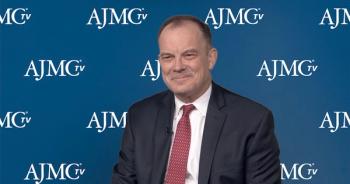
In the past few years, benefit designs have led to a reduction of both low-value and high-value care, and moving forward, new designs have to be tied more directly to value-based reimbursement, said Michael Thompson, president and chief executive officer of the National Alliance of Healthcare Purchaser Coalitions.
Employers have become more aware of how key an issue mental health is for employees and they are relieving some of the perceived stigma by making it okay to talk about mental health issues, said Michael Thompson, president and chief executive officer of the National Alliance of Healthcare Purchaser Coalitions.
Currently, employers choose health plans based on administrative costs and provider discounts, but they need to start engaging around value-based reimbursement, said Michael Thompson, president and chief executive officer of the National Alliance of Healthcare Purchaser Coalitions.
Employers are looking for ways to advocate for their employees and invest in places that will reduce downstream costs, said Michael Thompson, president and chief executive officer of the National Alliance of Healthcare Purchaser Coalitions.
In response to Senator Lamar Alexander's, R-Tennessee, request for recommendations on ways to reduce waste in the US healthcare system, the National Alliance of Healthcare Purchaser Coalitions has submitted recommendations.