
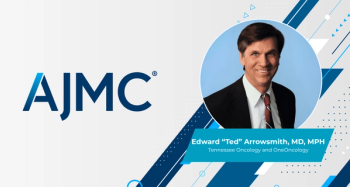
OneOncology's Edward "Ted" Arrowsmith, MD, MPH, explains how patient-reported outcomes and national disease groups can make cancer pathways more dynamic.
OneOncology's Edward "Ted" Arrowsmith, MD, MPH, explains how patient-reported outcomes and national disease groups can make cancer pathways more dynamic.

CAR T-cell therapy must be treated as a complete "vein-to-vein" episode, with community practices needing to take control of cases for a period of time.

Panelists say drug price negotiation, Medicaid changes, prior authorization, and 340B reform strain community oncology.
FACT Accreditation lets Tennessee Oncology bring community oncology CAR T-cell therapy closer to home, expanding access for non-Hodgkin lymphoma patients.
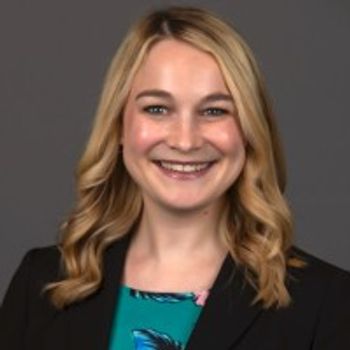
Tennessee Oncology appoints Kate Baker as medical director of supportive cancer care services, to expand services boosting symptom relief, survivorship resources, and whole-person support.
OpenEvidence plugs into OneOncology tools, delivering fast oncology evidence, genomic context and clinical-trial matches at the point of care.

Panel experts at Nashville’s IVBM event discussed matching cancer therapy intensity to disease, easing access barriers, and reforming pharmacy/PBM policies.
As CAR T-cell therapy expands into outpatient and community settings, Reimagine Care and The Center for Cancer and Blood Disorders are creating a monitoring infrastructure to support patients and caregivers alike.
Seven oncology leaders reflect on lasting gains in patient care, cost awareness, and collaboration, and what was lost when CMS walked away.

Community oncology practices are building bispecific programs in diverse configurations to retain patients and scale safely.
ASCO highlights MorningSun results: subcutaneous mosunetuzumab offers a chemotherapy-free option for elderly patients with DLBCL, improving quality of life beyond R-CHOP.

Why colocation of mental health in community oncology practice boosts adherence, eases distress, and thrives with payer-backed reimbursement.
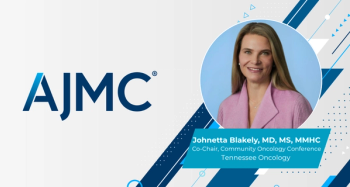
COA's annual conference hits Orlando April 28, focusing on AI, targeted therapy innovation, and state-level oncology advocacy, explains cochair Johnetta Blakely, MD, MS, MMHC.
Todd Doyle, MD, of OneOncology, warns that commercial payers lag on updating bundled codes, which has slashed radiation oncology revenue and risks community cancer access in 2026.

Discussions at this February IVBM evening covered advances in biomarker testing in lung cancer to the real-life challenges of maintaining diversity in clinical trials.

Cencora’s fast-tracked acquisition of OneOncology could boost community cancer care access and bring advanced therapies closer to patients.

Experts discuss the impact of biomarker testing on GU and lung cancers, as well as myeloma, emphasizing its role in personalized treatment and patient care advancements.
Advancements in 2025 in non-Hodgkin lymphoma treatments focused on bringing CAR T-cell therapy and bispecific antibodies into the community setting.
Leaders of OneOncology share how the managed services organization empowers independent oncology practices through advanced technology, clinical trials, and value-based care, enhancing patient-focused cancer treatment.

Artificial intelligence (AI) holds the potential to democratize precision oncology, but it must be implemented thoughtfully.
Broader integration of artificial intelligence (AI) in precision oncology depends on overcoming barriers such as trust and transparency, according to Davey Daniel, MD.

Explore cutting-edge discussions on patient-centered oncology, value-based care, AI innovations, and survivorship strategies Thursday and Friday at PCOC 2025 in Nashville.

Patient-Centered Oncology Care (PCOC) conference co-chairs Kathy Oubre, MS, and Davey Daniel, MD, explain how the event unites experts to explore evolving oncology care and patient-centered strategies.
Community oncology leaders navigate challenges in value-based care under the Enhancing Oncology Model, facing performance payment uncertainties and evolving drug markets.
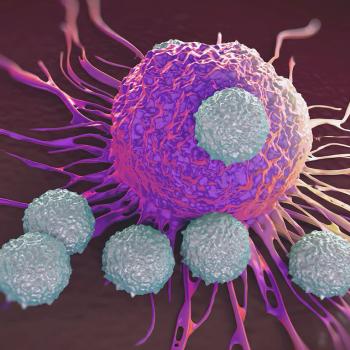
The FDA's removal of REMS for CAR T-cell therapies enhances access for community oncology, paving the way for innovative treatments and improved patient outcomes.
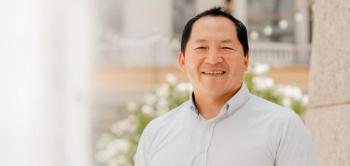
OneOncology appoints Ian Wong as COO, enhancing its mission to provide accessible, high-quality cancer and urology care through innovative practices.
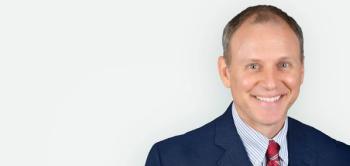
OneOncology appoints Michael Byrne, DO, to enhance access to CAR T-cell therapy, revolutionizing cancer treatment in local practices nationwide.

Artificial intelligence (AI) transforms oncology by enhancing clinical decision-making, improving patient outcomes, and shaping future health care training, as discussed by experts at Tennessee Oncology's “Tech Innovations in Community Oncology."
During the “Tech Innovations in Community Oncology” meeting from Tennessee Oncology, oncologists explore artificial intelligence (AI) tools like DeepScribe to enhance documentation efficiency, reduce burnout, and improve patient engagement in clinical settings.
Artificial intelligence (AI) transforms oncology by enhancing decision-making, improving patient care, and streamlining operations, while addressing challenges in data accuracy and equity, said speakers at the Tennessee Oncology “Tech Innovations in Community Oncology."