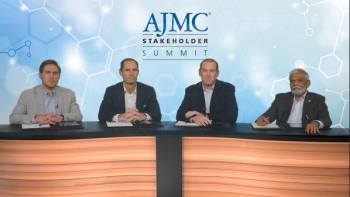
Unlike the Oncology Care Model, the Enhancing Oncology Model will focus on 7 common cancer types, which experts say offers advantages and disadvantages for practices.
Unlike the Oncology Care Model, the Enhancing Oncology Model will focus on 7 common cancer types, which experts say offers advantages and disadvantages for practices.
Coverage from the first day of the inaugural OneOncology Physician Leadership Conference, held November 11-13, 2022, in Nashville, Tennessee.
Coverage from the Institute for Value-Based Medicine® session with Astera Cancer Care in Edison, New Jersey, held November 3, 2022.
Coverage from the Institute for Value-Based Medicine® session with Astera Cancer Care in Edison, New Jersey, held November 3, 2022.
In a sign that value-based care is here to stay, some practices that did not participate in the Oncology Care Model (OCM) have applied for the Enhancing Oncology Model (EOM).
The Center for Medicare and Medicaid Innovation (CMMI) was a strong collaborator during the Oncology Care Mode (OCM), but the timing of the Enhancing Oncology Model came as a surprise.
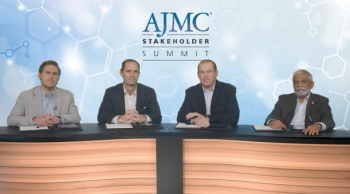
Experts from US Oncology, Tennessee Oncology, AON, and COA dig into the details of implementing the Enhancing Oncology Model, set to take effect July 1, 2023.
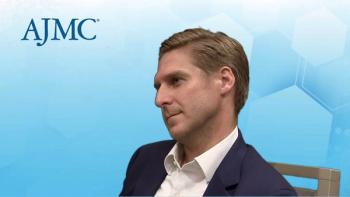
Stephen M. Schleicher, MD, MBA, chief medical officer at Tennessee Oncology, addresses the “huge problem” of financial toxicity among patients with cancer, which can be attributed in part to both the high price of targeted treatments and even from ordering only necessary testing.
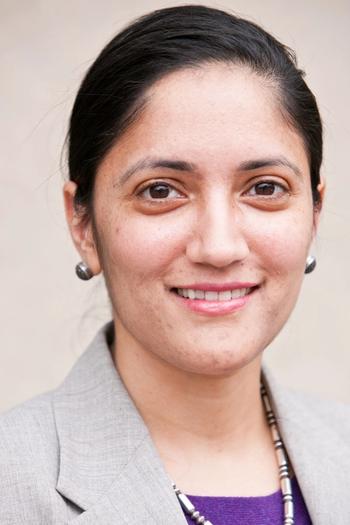
Former Obama administration official Kavita Patel, MD, MS, told a gathering of the OneOncology Physician Leadership Conference that policy leaders and members of Congress need input on the realities of oncology practice finances.
Edward Licitra, MD, PhD, who is CEO of Astera Cancer Care, based in East Brunswick, New Jersey, and Edward “Ted” Arrowsmith, MD, of the Chattanooga office, Tennessee Oncology, shared ideas during a panel discussion at the OneOncology Physician Leadership Conference, held Friday through Sunday in Nashville, Tennessee. Sheri Chatterson, MSM, MBA, CFHP, vice president of payer relations at OneOncology, led the discussion.
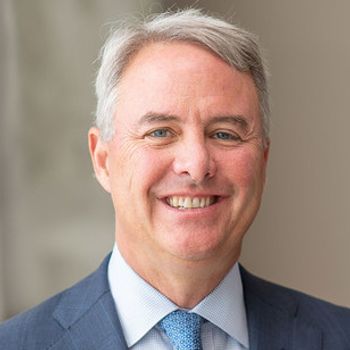
Jeff Patton, MD, CEO of OneOncology, kicks off the first annual Physician Leadership Conference by outlining the competitive challenges for community practices and leads a discussion with Adam Boehler, former head of the Center for Medicare and Medicaid Innovation.
The disease groups that make up the OneOncology clinical pathways program cover 90% of patients with cancer and develop best practices for treating cancer in the majority of patients, said Edward “Ted” Arrowsmith, MD, MPH, managing partner and director of research, East Tennessee Division, Tennessee Oncology.
The OneOncology Annual Conference is being held November 11-13 in Nashville, Tennessee, and brings together practice leaders, physicians, and advanced practice providers to discuss the business of oncology and scientific advancements, explained Davey Daniel, MD, chief medical officer of OneOncology.
Representatives across 12 disease groups make up a council that sets clinical recommendations for oncology care and those decisions are being pushed out in the electronic medical record for decision support at the point of care, said Jeffrey Patton, MD, CEO, OneOncology, and executive chairman of the board, Tennessee Oncology. Patton will lead off OneOncology's Physician Leadership Conference, which runs November 11-13 in Nashville.
340B was developed with positive intentions, but has resulted in unintended consequences, said Edward J. Licitra, MD, PhD, chairman and chief executive officer, Astera Cancer Care.
Making value-based payment models work in cancer care requires close attention to the financial and quality measures and a commitment to culture change, said experts gathered October 25 at the Community Oncology Alliance Payer Exchange Summit.
The Enhancing Oncology Model (EOM) will be the successor to the Oncology Care Model.

Edward Arrowsmith, MD, MPH, medical director for clinical pathways for OneOncology, discussed treatment challenges in EGFR Exon 20 insertion+ non-small cell lung cancer (NSCLC) and best practices in use of clinical pathways.

Adam Boehler, former director of the Center for Medicare and Medicare Innovation (CMMI), and Kavita Patel, MD, a senior health policy advisor to former President Barrack Obama, will each deliver remarks focused on the future of healthcare and value-based care.

Key stakeholders involved in the delivery of cancer care in New Jersey discuss strategies driving innovation in oncology and remaining challenges impeding their integration at the 70th Annual Roy A. Bowers Pharmaceutical Conference.
The abstracts address the latest research addressing clinical innovation, care delivery, health equity, clinical trial diversity, measuring patient and caregiver experience, provider efficiency, clinical outcomes, quality care, and safety in oncology.
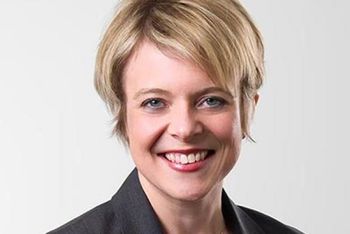
Each disease group guides and approves OneOncology clinical pathways to reflect evidenced-based national guidelines, which are updated often as new trial results are published or presented at major scientific meetings.

OneOncology is using a community-based platform approach to catalyze broader access to care for patients with cancer while also advancing scientific discovery.
The Institute of Value-Based Medicine® (IVBM), hosted by Tennessee Oncology, brought health care leaders together on April 21 in Nashville, Tennessee, to discuss oncology care delivery—and to see colleagues in person, some for the first time since 2020.
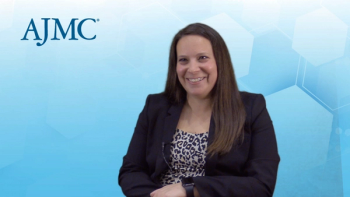
After the Oncology Care Model (OCM) expires at the end of June, Tennessee Oncology will take what it learned from the model and apply it to commercial value-based care arrangements and potentially the next Medicare model, said Leah Owens, DNP, RN, executive director of care transformation at Tennessee Oncology.
Stephen M. Schleicher, MD, MBA, chief medical officer, Tennessee Oncology, previews the Nashville meeting of The American Journal of Managed Care®'s Institute for Value-Based Medicine® (IVBM), co-hosted by Tennessee Oncology.
Davey Daniel, MD, chief medical officer, OneOncology, speaks on the knowledge, infrastructure, and payer-related barriers that are limiting the use of genomic testing in the management of patients with lung cancer.
Across OneOncology, says Edward Arrowsmith MD, MPH, clinical pathways offer a vehicle for physicians to agree on best practices and to implement them across the network. Early this year, Arrowsmith became medical director for Clinical Pathways, OneOncology.

OneOncology, a national platform for independent oncology practices, announced 2 partnerships this week.