





Clinical
Latest News
Advertisement
Latest Videos






CME Content


Advertisement
More News

Astrasentan becomes the first and only endothelin A receptor antagonist to focus on proteinuria reduction in primary immunoglobulin A (IgA) nephropathy.

The topical ocular drug is an investigational new drug candidate that requires more well-controlled studies to establish efficacy, according to the FDA.

Dan Nardi, MS, CEO of Reimagine Care, claims that on-demand cancer treatment via telehealth is the future of oncology care delivery.

In part 3 of a discussion with Andrew Kuykendall, MD, Moffitt Cancer Center, he talks of rusfertide’s ability to enable patients to live a more viable life and free them from being tethered to the need for regular phlebotomies.
The long-term impact of disruptions in oncology care during the COVID-19 pandemic will become more apparent in the coming years, according to Dan Nardi, MS, of Reimagine Care.

These are data to week 26 on the monoclonal antibody and antineoplastic agent; data out to week 52 of the MINT trial will be presented in a late-breaking oral session at the upcoming American Academy of Neurology Annual Meeting.

Panelists discuss how immunoglobulin A (IgA) nephropathy represents a complex glomerular disease characterized by IgA deposition in the mesangium, with a wide spectrum of clinical presentations ranging from benign hematuria to progressive kidney failure requiring comprehensive management strategies.
A panelist discusses how new data from the 2025 American Academy of Dermatology Annual Meeting (AAD 2025) demonstrates tildrakizumab’s efficacy in treating nail psoriasis, with the 100-mg dose showing significant improvements in mNAPSI 75 and ViSENPsO responses at week 28 compared with placebo, potentially addressing a critical unmet need in psoriasis treatment.

Anna Mueller, MD, Mount Sinai, presented the findings at the American College of Cardiology 2025 Annual Scientific Session and explained that broader adoption of imaging assessments will depend on further research.

Another study testing sotatercept as an early intervention for pulmonary arterial hypertension (PAH) is anticipated to determine the effect on outcomes, Marc Humbert, MD, PhD, University Paris-Saclay, explains in an interview.

At the American College of Cardiology 2025 Annual Scientific Session, John W. Ostrominski, MD, of Brigham and Women’s Hospital, dives into the nuanced safety profile of finerenone for high-risk patients with heart failure.

Findings from the American College of Cardiology 2025 Annual Scientific Session show oral semaglutide reduces the risk of heart attack, stroke, and cardiovascular death by 14% in patients with type 2 diabetes and atherosclerotic cardiovascular disease or chronic kidney disease.

Christian T. Ruff, MD, MPH, of Brigham and Women's Hospital, discusses new data comparing abelacimab with rivaroxaban in patients with atrial fibrillation presented at the American College of Cardiology 2025 Annual Scientific Session.

Geoffrey Rutledge, MD, PhD, of HealthTap, envisions a future where all patients have a virtual care doctor as their first point of contact with the health care system.

Although the widespread adoption of remote patient monitoring during the COVID-19 pandemic expanded care access, particularly for underserved communities, challenges persist in sustaining this access.

Data from the ATLAS research comprises a series of trials that have yielded years of long-term, comprehensive data on the safety and efficacy of fitusiran (Qfitlia; Sanofi).
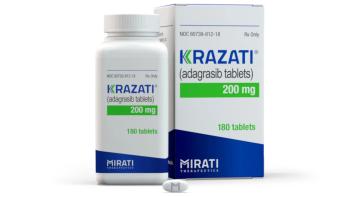
Phase 2 results reported at the European Lung Cancer Conference show a favorable signal for overall survival for the first-line treatment of KRAS-mutated non–small cell lung cancer (NSCLC). A phase 3 trial is enrolling now.
Geoffrey Rutledge, MD, PhD, of HealthTap, emphasizes that when care can be delivered virtually, it is more efficient and effective to do so.

Experts discuss how institutions can develop standardized operational workflows that accommodate multiple bispecific products with different administration requirements, particularly as more products become available.

Panelists discuss how clinicians are addressing antimicrobial stewardship in urinary tract infection (UTI) management through implementation of evidence-based guidelines, delayed prescribing strategies, shorter treatment durations, targeted narrow-spectrum antibiotics based on local resistance patterns, increased use of culture-guided therapy, nonantibiotic preventive approaches, and enhanced patient education about appropriate antibiotic use.

Panelists discuss how health care institutions are leveraging strategic referral networks and telemedicine technologies to bridge geographical barriers, connect rural patients with specialized dementia care, establish hub-and-spoke models with community partners, and implement virtual cognitive assessments to dramatically improve both access and quality of care for patients with Alzheimer disease in underserved areas.
Panelists discuss how overcoming barriers to effective Alzheimer disease cognitive screening requires addressing multiple challenges including time constraints in clinical settings, inadequate reimbursement models, limited provider training, integration of screening tools into existing workflows, and patient concerns about diagnosis implications.
Panelists discuss how patients with recurrent urinary tract infections (UTIs) describe significant burdens including constant anxiety about symptom onset, disruption to work and social life, financial strain from frequent office visits and medications, frustration with treatment-resistant infections, embarrassment discussing symptoms, sexual dysfunction, relationship difficulties, and substantial mental health impacts such as depression and diminished quality of life.

A panelist discusses how clinicians should systematically adopt evidence-based hidradenitis suppurativa (HS) guidelines while maintaining flexibility to tailor treatments to individual patient needs, severity levels, and comorbidities. This involves regular monitoring of updated recommendations, implementing standardized assessment tools, and considering patient-specific factors such as lifestyle, preferences, and treatment response history to optimize therapeutic outcomes through a personalized medicine approach.
Experts discuss what partnerships between academic and community settings look like with regard to bispecifics, highlighting the role academic centers play in supporting community practices with bispecific therapy protocols.
Advertisement
Advertisement