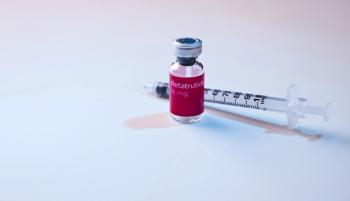
A legal fight over a single amino acid could set retatrutide's exclusivity window, its Medicare negotiation clock, and its competitive future.
A new $20 billion national strategy targets long-standing gaps in women's health research, care, and funding.
A $20 billion, 10-year federal investment could close the gap in women’s health research and care.1 That’s the goal of the newly launched National Strategy to Close the Women's Health Gap, unveiled July 15, 2026, by the American College of Obstetricians & Gynecologists, Society for Women’s Health Research (SWHR), and the Women First Research Coalition.
Despite women comprising more than half the US population, women’s health is still understudied and underserved. Initially, the HHS planned to defund the Women’s Health Initiative (WHI) regional centers.2 However, soon after, the defunding decision was reversed.
“These studies represent critical contributions to our better understanding of women's health,” said a statement from Andrew Nixon, a spokesman for the Department of Health and Human Services.
WHI is the largest women’s health study in US history, running since 1991. Spanning across 40 clinical centers, the initiative enrolled more than 161,000 women (ages 50 to 79) and has globally influenced clinical practice and public health policy. The estrogen plus progestin hormone therapy trial led to the prevention of an estimated 126,000 breast cancer cases and 76,000 cardiovascular disease cases over a decade, saving more than $35 billion in medical costs.3
“The WHI’s groundbreaking research has not only improved the health of older women, one of the fastest-growing segments of the US population, but has also advanced health aging in the overall population,” JoAnn Manson, MD, MPH, DrPH, a principal investigator of the WHI and chief of the Division of Preventive Medicine at Brigham and Women’s Hospital, said in an April 2025
The divide in women’s health care carries over clinically. Women remain underrepresented in heart disease trials, such as trials for arrhythmia, coronary heart disease, and heart failure. In 1977, the FDA issued guidelines deterring the participation of women of reproductive age in clinical trials in case of harm to fetuses. Due to the misconception that heart disease was a predominantly male condition, treatments and developments lack understanding of how heart disease impacts women differently. It wasn’t until the 1990s the National Institutes of Health (NIH) began to include women in federally funded research.4
However, the gap is still prevalent: a review of 706 heart failure with reduced ejection fraction (HFrEF) trials found that only 26% of participants were women. Though female participation slowly increased in the trials, the median percentage of women in HFrEF trials remained under 50%, raising qustions about how well trial findings apply to women given known sex-based differences in heart failure.
The underrepresentation in trial data carries over into how women’s symptoms are treated in the exam room, where misdiagnosis remains common, particularly for heart failure with preserved ejection fraction.
“I think that women's symptoms…in the cardiology world are discounted,” Martha Gulati, MD, director of the Davis Women's Heart Center at Houston Methodist DeBakey Heart and Vascular Center, told
The National Strategy to Close the Women’s Health Gap aims to bring equitable access, coverage, and treatment to women’s health care, as women face higher annual out-of-pocket cost and live 25% of their lives in poorer health compared with men. The $20 billion, 10-year investment is divided into 5 priority areas:research and innovation ($7 billion), workforce ($7 billion), data infrastructure ($4 billion), regulatory coordination ($1 billion), and public awareness ($1 billion).1
The strategy continues the work of the 1993 NIH Revitalization Act, which mandated the inclusion of women in federally funded clinical research, though disparities have persisted more than three decades later.7 This new framework for women's health plans to better coordinate research, modernize regulatory processes, and close persistent data and workforce gaps.
“This strategy offers Congress a roadmap to improve health outcomes, drive innovation, and build a healthier future for women, families, and communities,” said Kathryn Schubert, MPP, CAE, SWHR president and CEO.
Months before advocates asked Congress to consider the National Strategy to Close the Women's Health Gap, HHS considered defunding WHI, almost cutting $2.6 billion from NIH contracts. The new $20 billion ask will need to move through that same funding environment. 1
“A lack of female-focused research means both doctors and women routinely dismiss critical cardiac symptoms, like jaw pain and fatigue, as simple stress, anxiety or exhaustion, while clinicians are statistically more likely to misdiagnose these events as anxiety or musculoskeletal issues,” said Nadim A. Geloo, MD, FACC, FSCAI, medical director of structural heart at Virginia Heart in an interview with
“…I think it really is going to take a multi-pronged approach to improving this. Number one, from a scientific perspective, we just have to be really engaged and thoughtful about how we can make sure we are giving women the opportunity to participate in our research studies…” said Kathryn Lindley, MD, FACC, associate professor of medicine and associate professor of obstetrics and gynecology at Vanderbilt University Medical Center.9
References