News|Articles|October 7, 2026

5 Things to Know if Retatrutide Is Classified as a Biologic

Fact checked by: Maggie L. Shaw

A legal fight over a single amino acid could set retatrutide's exclusivity window, its Medicare negotiation clock, and its competitive future.

Retatrutide, an investigational once-weekly glucose-dependent insulinotropic polypeptide/glucagon-like peptide-1 (GLP-1)/glucagon receptor triple agonist, will be submitted to the FDA via a biologics license application (BLA) in the first quarter of 2027 even though the agency has so far declined to classify the molecule as a biologic.1 Eli Lilly and the agency have been in federal court over the question since September 2024.

"We believe retatrutide is a biologic application," Eli Lilly’s CEO Dave Ricks, MBA, told analysts on the company's second-quarter earnings call in August.

The outcome will shape how long retatrutide can be sold without competition, when Medicare can negotiate its price, and if lower-cost alternatives could ever reach the market. Here are 5 things managed care stakeholders should know about what a biologic classification would mean.

1. Court Backed the FDA's Amino Acid Count but Reopened the "Analogous to a Protein" Question

Under the FDA's regulatory definition, a protein, and therefore a biologic, is an alpha amino acid polymer with a defined sequence greater than 40 amino acids. In a March 18, 2024, designation letter, the FDA classified retatrutide as a drug, concluding that only alpha amino acids count toward that threshold; Eli Lilly argued that all of retatrutide's amino acids, including its non-alpha amino acids, should be counted, which puts the molecule at 41.2 The agency also rejected Eli Lilly's fallback argument that retatrutide is at least "analogous to a protein."

Eli Lilly sued in the US District Court for the Southern District of Indiana on September 3, 2024, citing the Supreme Court's Loper Bright decision, which ended judicial deference to agencies' interpretations of ambiguous statutes.3 In September 2025, the court sided with the FDA on the amino acid count, agreeing that the regulation requires more than 40 alpha amino acids. It set aside the agency's finding that retatrutide is not analogous to a protein, however, and sent that question back to the FDA, noting the agency could still lawfully reach the same conclusion.2 Eli Lilly has appealed.1

Retatrutide: the "Trillion-Dollar" Drug

For more on retatrutide's phase 3 data and market outlook, see AJMC®'s earlier coverage.

2. Regulatory Exclusivity Would Jump From 5 Years to 12

A BLA confers 12 years of market exclusivity after approval compared with 5 years for a new drug application (NDA), a difference that could be worth billions to Eli Lilly.1 Exclusivity is separate from patent protection, but it sets a floor on how long competitors are barred from relying on the originator's safety and efficacy data.

The classification fight also carries near-term timing risk. Eli Lilly has said it has the data it needs to file for obesity, obstructive sleep apnea, and knee osteoarthritis pain, but if the FDA does not accept a BLA, the drug's path to market could be delayed.

3. Medicare Price Negotiation Would Be Pushed Back 4 Years

Under the Inflation Reduction Act (IRA), drugs approved through NDAs become eligible for selection for Medicare price negotiation 7 years after approval vs 11 years for biologics, meaning negotiated prices take effect roughly 9 and 13 years after approval, respectively.4 Eli Lilly began seeking a biologic designation for retatrutide in November 2023, 3 months after CMS named the first 10 drugs selected for negotiation.5

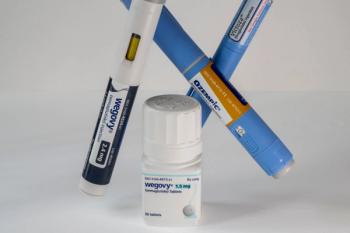
Semaglutide shows what is at stake. The drug, sold under the Novo Nordisk’s brand names Ozempic, Wegovy, and Rybelsus, was selected in the second negotiation cycle, and CMS set a price of $274 for a 30-day supply, a 71% discount off the list price, effective January 2027.6 As a biologic, retatrutide would avoid that pressure for 4 additional years. That gap could narrow, however: an April 2025 executive order called for eliminating the IRA's so-called pill penalty, although any change would require action from Congress.7

4. Follow-On Competition Would Shift From Generics to Biosimilars

If retatrutide is approved as a drug, eventual competitors could reach the market through the abbreviated generic pathway, the same route the FDA used to approve the first generic liraglutide (referencing Victoza; Novo Nordisk) in December 2024, 1 month after the first generic exenatide.8 As a biologic, competitors would instead have to pursue the biosimilar pathway. Retatrutide could have an easier time staving off lower-priced biosimilars than generics, in part because of differences in patent disclosure rules.9 For payers, that likely means formulary leverage from follow-on products would arrive later and build more slowly than it has for older GLP-1 receptor agonists.

5. Compounding Would Be Closed Off for Good

Retatrutide cannot be legally compounded today: it has no applicable United States Pharmacopeia or National Formulary monograph, is not a component of an approved drug, and appears on neither the 503A nor 503B bulk substances list, the FDA's lists of ingredients compounders may use.10 As an approved drug, it could theoretically become eligible for compounding during a future shortage, as semaglutide and tirzepatide did. Biological products licensed under the Public Health Service Act, however, fall outside the compounding exemptions, so a biologic classification would make the lockout permanent. Eli Lilly has already filed lawsuits against medical spas, at least 1 compounding pharmacy, and other vendors selling unapproved retatrutide.

Earlier challenges to FDA classification decisions, including Teva Pharmceutical’s effort to have glatiramer acetate deemed a biologic, were decided under the Chevron deference that Loper Bright overturned.5 Courts now interpret the statute themselves, but as the retatrutide ruling shows, they can still leave scientific questions to the FDA.2 An Eli Lilly win could open the door for other peptide sponsors to challenge drug designations, and future incretins sitting near the 40-amino acid line could face the same fight.1

Three developments are worth watching over the coming months: a ruling on Eli Lilly's appeal, the FDA's renewed determination on whether retatrutide is analogous to a protein, and the company's planned first-quarter 2027 submission. For payers budgeting for the next wave of obesity therapies, the outcome will determine how long retatrutide's launch price holds.

References

  1. Armstrong A. Lilly, FDA retatrutide biologic dispute comes to a head as submission nears. BioSpace. August 5, 2026. Accessed October 7, 2026. https://www.biospace.com/fda/lilly-fda-retatrutide-biologic-dispute-comes-to-a-head-as-submission-nears
  2. Eli Lilly and Company v Kennedy, No. 1:24-cv-01503-TWP-KMB (SD Ind September 30, 2025). Accessed October 7, 2026. https://www.govinfo.gov/content/pkg/USCOURTS-insd-1_24-cv-01503/pdf/USCOURTS-insd-1_24-cv-01503-0.pdf
  3. Burgess B. Eli Lilly files suit challenging the FDA's drug classification of retatrutide. Big Molecule Watch. September 24, 2024. Accessed October 7, 2026. https://goodwinlaw.com/en/insights/blogs/2024/09/eli-lilly-files-suit-challenging-the-fdas-drug-classification-of-retatrutide
  4. Golden A, Olvera K, Samuel J. Inflation Reduction Act price negotiation. Freshfields. Accessed October 7, 2026. https://blog.freshfields.us/post/102hvnf/inflation-reduction-act-price-negotiation
  5. Kelly C. US FDA biologics designation as price protection: Lilly charts new course with retatrutide. Pink Sheet. September 2024. Accessed October 7, 2026. https://pink.citeline.com/PS155226/US-FDA-Biologics-Designation-As-Price-Protection-Lilly-Charts-New-Course-With-Retatrutide
  6. Myshko D. CMS negotiates a 70% discount for Ozempic and Wegovy. Managed Healthcare Executive®. November 26, 2025. Accessed October 7, 2026. https://www.managedhealthcareexecutive.com/view/cms-negotiates-a-70-discount-for-ozempic-and-wegovy
  7. Kansteiner F. Trump throws pharma 'bread crumb' concession with call to end IRA pill penalty. Fierce Pharma. April 16, 2025. Accessed October 7, 2026. https://www.fiercepharma.com/pharma/trumps-move-end-ira-pill-penalty-lauded-industry-watchers-lawmakers-patient-groups-raise
  8. FDA approves first generic of once-daily GLP-1 injection to lower blood sugar in patients with type 2 diabetes. News release. FDA. December 23, 2024. Accessed October 7, 2026. https://www.fda.gov/news-events/press-announcements/fda-approves-first-generic-once-daily-glp-1-injection-lower-blood-sugar-patients-type-2-diabetes
  9. Russel J. Lilly seeks court ruling that could mean big money for new weight-loss drug. Indianapolis Business Journal. September 2024. Accessed October 7, 2026. https://www.ibj.com/articles/lilly-seeks-court-ruling-that-could-mean-big-money-for-new-weight-loss-drug
  10. Brooks D. An amino acid dispute between Eli Lilly and the FDA could delay cheaper retatrutide by years. Medical Daily. August 24, 2026. Accessed October 7, 2026. https://www.medicaldaily.com/retatrutide-biologic-classification-dispute-exclusivity-cost-477677

Related to this article