Speakers at CHEST 2026 walked through the first CHEST guideline for non-CF adult bronchiectasis, including which preventive therapy to start first.
The meeting covered several topics in eye care, including how artificial intelligence (AI) can play a part in eye care.
The
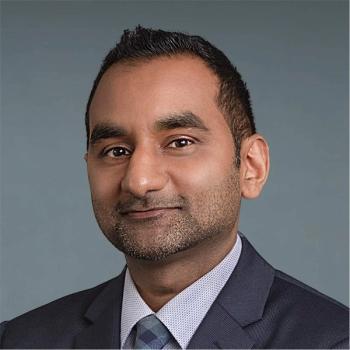
During a session held on October 11, Grayson W. Armstrong, MD, MPH, Director of Ophthalmology Emergency Services at Mass General Brigham, gave a presentation on how AI could be used to advance health equity in ophthalmology, primarily using case studies to demonstrate its usefulness.
Armstrong talked about how he had previously done fellowships in telemedicine and medical retina. “And in doing all those things in a city like Boston, you would assume that there are enough doctors and enough technology to tackle the health disparities that come our way,” he said. “But despite this, we still see patients…walk into our institute completely blind in one eye.”
There are approximately 159,000 people in Massachusetts who live with diabetic retinopathy (DR), and most do not know they have it until it is too late, said Armstrong. A total of 91% of patients are unaware of their diagnosis of DR, and another 88% of patients with diabetes have not gone to their annual eye exam. Patients who identify as Hispanic or Black had a higher rate of DR compared with other subgroups.
At Massachusetts Eye & Ear, doctors have employed a new approach to screening for DR that involves using AI. Grant funding was used to install digital diagnostic AI cameras in multiple clinics. These AI tools were able to take a fundus photo before the AI reviewed the photo, gave a real-time result within 30 seconds, and gave it to the primary care physician and the patient immediately. The AI cameras were installed in 20 clinics across the Mass General Brigham system.
“At each facility, we had to identify community partners, understand patient baselines to see how many people actually had diabetes and if it was a clinic that actually needed our help,” explained Armstrong. “We needed to integrate these cameras into a large-scale IT integration. We needed to confirm that once we saw the patient, there were people that would accept them on the back end and that there was a referral network in place.”
All clinics included had at least 500 people in their network who had a diagnosis of diabetes. Educational handouts, pamphlets, and posters were created and distributed to inform patients about the AI tool. The AI tools were installed over the course of 3 years in the 20 clinics.
Just more than 4000 exams have been conducted since the installment of the examination tools. “The rate of [DR] positivity was 18%, and the rate of diagnosability, meaning the camera’s actually able to take a photograph and see enough to make a decision, was 72%,” Armstrong said.
With the success of the tool, Armstrong explained that they are now aiming to use AI photographs and iCare tonometry to also screen for glaucoma at the same time, as patients with diabetes are at a higher risk of glaucoma as well. “We think that using [AI] in these models of care, it actually may be cost-effective, and, in the future, we can change the paradigm for screening for these diseases,” he said.
Virtual reality field tests will also be used to screen for glaucoma to detect actual deficits in vision. This, said Armstrong, will keep clinics from being overburdened by false positives. There are 217 people who are enrolled in the study to test the efficacy of these tests, with 24 who have been referred for evaluation.
“At present, if you use thoughtful AI, you can reduce health barriers in the communities in which we serve, and you can actually make a difference using these tools without the ophthalmologist being present. Because, let’s be real, there’s not enough ophthalmologists in the world. But we can actually make a difference otherwise,” Armstrong concluded.