SaTScan detects an acute HCV outbreak cluster in California, showing the potential of automated surveillance, though real-time testing is needed.
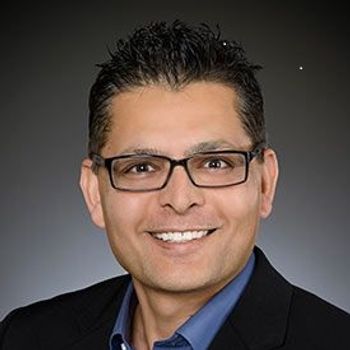
Paul Nghiem, MD, PhD, discusses individualized therapies and the evolving role of AI in improving outcomes for actinic keratosis and related skin conditions.
Treating actinic keratosis and early basal keratosis calls for a balance of science and art, with clinicians emphasizing tailored approaches based on each patient’s needs, says Paul Nghiem, MD, PhD, professor, University of Washington Medical Center. As digital tools like artificial intelligence (AI) offer new possibilities—and potential pitfalls—dermatologists must rethink how to best integrate innovation into personalized care.
This transcript was lightly edited; captions were auto-generated.
Transcript
How do you determine the most appropriate treatment strategy across early, locally advanced, and metastatic disease?
The determination of how you treat actinic or early basal [keratosis] really is part of science and part of art. You really need to take into account what the patient-specific situation is, and that's what dermatologists do. Luckily, we do have 5 or 6 or 7 options there, and there isn't one size fits all, definitely not. The more you know about the relative advantages and disadvantages if you're dealing with one lesion versus an entire field, and immune suppressed versus not, you just need to take all those things into account. And some mixture of sometimes liquid nitrogen, but personally, I'm a little bit more of a fan of low-dose, less aggressive 5-fluorouracil to start with, and that works in a lot of patients. I really don't believe that you have to treat them super aggressively and get rid of all these precancers all at once. It took 70 years to get them. You don't need to get rid of them in 7 weeks. I like to treat to redness and then give them a break and then start again. And they do great. It takes a little bit longer, but then they don't have down days. They don't have a week when they can't go out, and they aren't as uncomfortable. That's my personal philosophy in managing; it's not an emergency.
What recent advances in systemic therapies or targeted approaches have most influenced your management of advanced nonmelanoma skin cancers, and how do you see these options evolving in the near future?
A lot of people are giving the answer of what's most exciting coming, probably as AI. And I do think there's a lot of overhype in AI. But as we talk about if you're a dermatologist, you often see situations that you're not that familiar with. I do think now that [on] many of the platforms, you can say, ‘I've got a guy with this specific situation with extremely extensive involvement on his left arm or whatever, and an organ transplant. What are my options?’ And it will not give you the answer, but I find that it often gives you things you haven't thought about, and it will tell you maybe some of the disadvantages you hadn't thought about as well. I can say that for Merkel cell carcinoma, I am very excited about the ability of AI to connect people to information they wouldn't have had otherwise. Now, you’ve got to use it responsibly, but I see a lot of patients being mismanaged by people who aren't taking care of it and have not sought out multidisciplinary care. And I think between the patients and the doctors, as information is more easily accessible, that's going to be the most exciting thing.