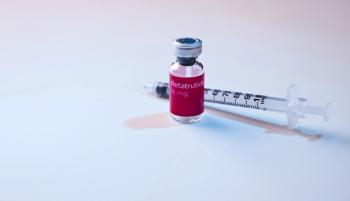
A legal fight over a single amino acid could set retatrutide's exclusivity window, its Medicare negotiation clock, and its competitive future.
A mock jury study suggests AI-assisted double reads may reduce perceived radiologist liability in malpractice cases.
The use of
A
Prior research is consistent with this study’s findings, as public confidence in AI, regardless of its efficacy in radiology, may reduce radiologist culpability, as judged by mock jury members.
In this particular study, 282 participants aged 18 and older completed an online study with the given scenario. More specifically, the hypothetical case was of a 50-year-old patient who visited the emergency department with acute neurological symptoms and signs of a possible stroke. A CT was then obtained to ensure there was no brain bleed before the treating physician administered a blood thinner called ‘t-PA,’ which could worsen a brain bleed.
The radiologist concluded that there was no evidence of a brain bleed despite the AI system correctly flagging the case as abnormal. Then, once the t-PA was administered, it exacerbated the brain bleed, leading to irreversible damage.
Participants were randomized to 1 of 2 vignettes or scenarios. The first vignette was the single-read condition, where the radiologist was aware of the AI flagging the CT and still interpreted the scan as “no evidence of brain bleed.” The 2nd vignette was the double-read condition in which the radiologist interpreted the CT scan twice: once without AI and then again with AI feedback, in which the determination remained the same: “No evidence of brain bleed.”
The hypothetical jurors randomized to the first vignette condition were more likely to side with the patient or plaintiff (106 of 142, [74.7%]; 95% CI, 66.8-88.2) when compared with participants randomized to the second vignette condition (74 of 140, [52.9%]; 95% CI, 44.6-61.0).
Before reviewing the case, participants were informed that radiologists “owe a duty of care to the patients they diagnose. This means that when they review images, radiologists must use the level of care, skill, and knowledge ordinarily used by radiologists under the circumstances of the case they will consider.”
Prior research has shown that participants were less likely to think a radiologist failed in their duty of care for a wrong interpretation when the doctor’s conclusion matched the AI system, especially when jurors knew about AI error rates. However, in the present study, the proportion of participants siding with the plaintiff in the double-read condition was nearly the same as in scenarios where AI was not used at all.1
Taken together, these findings raise important questions about evolving standards of care as AI becomes more integrated into clinical workflows and public familiarity with the technology grows.¹
However, AI systems used independently have demonstrated lower sensitivity than interpretations performed by either single radiologists or double-radiologist readings, meaning they may detect fewer cancers when operating alone.² This distinction highlights the importance of understanding AI as a support tool rather than a replacement for physician expertise.
Although the study’s findings suggest that AI involvement could influence perceptions of radiologist liability in malpractice cases, further research is needed to determine the extent to which these perceptions translate to real-world legal outcomes. Questions also remain about whether, and how, AI use should factor into malpractice determinations, particularly as the technology continues to evolve and its clinical performance improves.
This study is limited by its generalizability and inability to predict real-world outcomes. It’s also unknown if a double-read condition will reduce liability when AI fails to detect an abnormality.
“These findings could have important real-world implications,” the study authors concluded. “AI invites challenging questions regarding medical malpractice among radiologists. This finding has important implications for radiology leadership and policymakers.”
References
1. Bernstein MH, Sheppard B, Burno MA, Lay PS, Baird GL. The radiologist-AI workflow and the risk of medical malpractice claims. Nat Health. 2026. doi:10.1038/s44360-026-00085-2
2. McCrear S, Verboom S. Uncertainty metrics in AI-assisted mammograms screenings: Sarah Verboom, PhD Candidate. AJMC®. August 21, 2025. Accessed March 10, 2026.