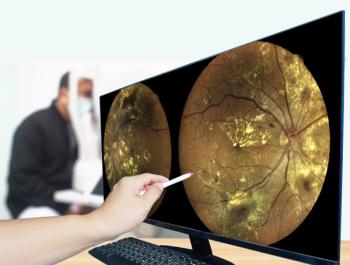
The meeting covered several topics in eye care, including how artificial intelligence (AI) can play a part in eye care.
The 2026 COA Payer Exchange and Innovation Summit began with a panel on AI and the ever-changing digital infrastructure in community oncology.
Community oncology has always had to adapt quickly, but rarely has the pace of change felt as urgent as it does today. That was the throughline of a panel discussion during the 2026
Plasencia opened by framing the panel’s purpose: to kick off the summit “with a robust discussion around innovative AI solutions and lessons from community oncology, because that’s what we’re all passionate about here.”
Plasencia turned first to why COA recently
“COA has always risen to the challenge of meeting us where we are, helping us share information, and collaborating to find the right solutions together. It was really clear that practices were seeing a lot of vendor point solutions that could help them in certain aspects of cancer care, and that they were actually in every aspect,” she said. “I say that it’s like the movie Everything Everywhere All at Once. There wasn’t a standardized way that we were approaching the problem and sharing information.”
The committee’s work has since produced a playbook to help practices of every size evaluate vendors on security, compliance, operational lift, return on investment, and change management. Patt distilled the process into 4 steps, as follows:
Asked where AI is already making a meaningful difference vs where the hype still outpaces reality, Patt was direct: “I don’t think there is hype, actually, right now…. I’m very excited about the palpable changes that I see.”
She pointed to tools such as DeepScribe, which physicians use for dictation, and Canopy’s electronic patient-reported outcomes (PRO) platform, which she said allows nurses to spend approximately 80% of their time practicing as nurses rather than acting as secretaries. Beyond documentation, she highlighted clinical trial matching, infrastructure for
“It’s a nudge,” Patt said. “It’s offering choice architecture, not telling anyone what to do, because we’re all independent clinicians and autonomous creatures.”
Lanoue then presented findings from
“There’s a big difference between strategy vs implementation, execution, and adoption,” Lanoue said.
She identified 3 areas where the index showed real progress underway, as follows:
What surprised Lanoue the most, she said, was how wide the want-vs-execution gap really was. She was also careful to push back on a common misconception about automation’s purpose.
“‘You’re getting AI so you can get rid of all these people at work,’ and it’s actually not the case. You’re transferring the workload for basic operational bureaucratic functions for AI to take over so that your staff can actually do what is the most important thing, which is to take care of patients,” she said. “Technology can’t just go in and disrupt the workflow. We have to ensure that the technology is the first step to building the infrastructure to make the workflow better, so it’s more patient-centered.”
The conversation then turned to what separates a durable AI investment from a passing pilot. Patt argued that practices should demand channel solutions rather than isolated tools: A system that identifies a somatic mutation should also support prior authorization and clinical decision-making because “it’s not that the other things aren’t important, because they are, but it’s rather that we don’t have energy and time to be so liberal with who we are going to work with.”
She also stressed the value of vendors with genuine community oncology experience, noting that the tech industry’s tendency to “sell your pipeline as if it’s in action now” doesn’t match the transparency her field expects. “We expect a different level of authenticity and candor,” she said.
Lanoue agreed, adding that her team learned this lesson directly: After testing 6 or 7 AI vendors head-to-head, the company with the flashiest presentation failed under real-world conditions, whereas an unassuming vendor delivered. Her top criterion going forward is scalability.
“Do they have the flexibility? Do they understand your practice? Can they scale up? Can they actually fit into the broader ecosystem? Can they integrate into the electronic health record?” she asked.
Patt added that true partners need to help practice manage change itself, not just deploy software. Switching electronic PRO vendors, she noted, doubled her practice’s enrollment simply because the new partner understood how to engage patients.
Clinical trials emerged as one of the panel’s most urgent themes. Community oncology treats a majority of patients with cancer in the US, yet trial accrual lags, with Patt noting that “community oncology is where the patients are, so we have to solve for this problem.” Lanoue described emerging AI tools that geotarget patients to matching trials, sometimes finding multiple eligible studies a physician might otherwise miss.
Patt called for clinical decision support that flags trial-eligible patients before an appointment rather than after, along with regulatory flexibility from the FDA allowing telemedicine-based eligibility screening and remote lab work for
Both connected this infrastructure work to a broader shift already underway: the delivery of increasingly complex therapies, including bispecific and CAR T-cell therapy, in outpatient community settings once reserved for hospitals. Patt cited her practice’s remote patient monitoring partnership with Canopy, which uses biometric data and nurse follow-up to anticipate complications such as cytokine release syndrome before they escalate.
Asked by Plasencia what success might look like 3 years from now, Patt described a future built on agentic AI systems that guide patients seamlessly from referral through treatment, closing the delays that leave patients feeling that “care appears fragmented.” Lanoue’s ambition was more numerical: raising US clinical trial participation from 8% to 10% today, toward 50%, and reversing the current pattern in which novel therapies reach academic centers long before they reach community practices.
During the audience Q&A, Sibel Blau, MD, president/executive chair at Northwest Medical Specialties, PLLC, raised recent reporting on AI risk. Patt acknowledged her concerns, but emphasized that keeping humans in the loop remains essential, particularly in medicine.
“Nobody wants doctors to be replaced by AI,” she said. “We just want AI to give us more knowledge at our fingertips and greater reach, and I think that the human-in-the-loop element is really critical to safety.”
Lanoue closed by noting that J&J’s patient research found trust and relationships, not just clinical capability, are why patients choose to stay in community oncology—a reminder that even the most sophisticated technology must ultimately serve the human relationships at the center of cancer care.
Reference