
Opinion|Videos|December 3, 2024
Examining FMT for Patients With Recurrent C Difficile infections
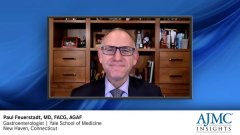
Author(s)Paul Feuerstadt, MD, FACG, AGAF
Key Takeaways
- FMT restores gut microbiota balance by transferring stool from healthy donors, mainly for recurrent C. difficile infections.
- Recent data shows FMT's high efficacy in preventing recurrent C. difficile, outperforming standard antibiotic treatments.
The panelist discusses how fecal microbiota transplantation (FMT) involves transferring stool from healthy donors to restore gut microbiota in patients with recurrent Clostridioides difficile infection, though safety concerns include potential pathogen transmission and careful donor screening requirements, while OpenBiome’s standardized frozen FMT preparations have helped advance accessibility but should be used according to current FDA guidance for investigational use.
Advertisement
Episodes in this series

Video content above is prompted by the following:
- Describe how FMT works and for which patients this can be used.
- What has recent data shown about the efficacy of FMT in preventing recurrent C difficile?
- What are the safety concerns when using FMT?
- Discuss the recent updates of an investigational FMT therapy from OpenBiome, and how this impacts your clinical decision-making.
Advertisement
Related to this article

Early MASH risk stratification, drug choice, and aligned coverage could improve outcomes, explained Zobair Younossi, MD.

These phase 3 EXCALIBER-RRMM findings build on earlier MRD-negative complete response results supporting FDA approval of the iberdomide-based regimen.

Admilparant 60 mg met the ALOFT-IPF primary end point, significantly improving FVC change vs placebo at 52 weeks in idiopathic pulmonary fibrosis.

At a roundtable in Cleveland, kidney experts said IgA nephropathy and FSGS often go unrecognized, calling for EHR flags and better referral channels.
AI quantitative CT (UCLA QILD, Brainomix e-Lung) predicts FVC decline and drug response in PPF, strengthening biomarkers beyond spirometry in INBUILD.

The conference session featured updates on several clinical trials, including the BRUNELLO trial, for treatment of diabetic macular edema (DME).

Panelists engaged in a debate regarding using complement inhibitors in geographic atrophy, gauging public sentiment with a deciding vote.

A session at AAO 2026 highlighted how big data and minimally invasive glaucoma surgery (MIGS) could be utilized to help patients receive peak care.
Advertisement
Advertisement
Trending on AJMC
1
Coroner Reports Pennsylvania's Sixth Measles-Associated Death
2
CMS Rule Ends Medicaid, CHIP Funding for Pediatric Gender Care
3
Panel Calls for Earlier Detection, Clearer Pathways in Rare Glomerular Disease
4
MedHaul Closes Care Gaps With Single Stop for Getting Patients to Appointments
5