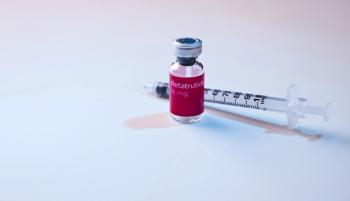
Remibrutinib (Rhapsido; Novartis) is the only treatment with approved uses in both chronic spontaneous urticaria and symptomatic dermographism.
Twice-yearly depemokimab cuts asthma exacerbations in phase 3 trials for patients aged 12 and older with severe eosinophilic asthma.
The FDA has approved depemokimab-ulaa (Exdensur; GSK) as an add-on maintenance therapy in patients aged 12 years and older with severe
“Physicians in the US now have the option to provide sustained protection from exacerbations for patients living with severe asthma with an eosinophilic phenotype in just 2 doses a year,” Kaivan Khavandi, senior vice president and global head of respiratory, immunology, and inflammation research and development at GSK, said
The approval is supported by phase 3 SWIFT-1 (
Severe asthma affects an estimated 2 million Americans, with approximately half continuing to experience frequent exacerbations that drive hospitalizations, emergency department visits, and rising health system costs. Despite evidence that biologics can improve disease control, only about 20% of eligible patients in the US currently receive these therapies, leaving many at heightened risk for exacerbations and disease progression.
Treatment burden, including frequent injections, remains a key barrier to uptake and persistence. Longer dosing intervals have been associated with a greater willingness among patients to consider biologic therapy, and 73% of physicians report that extended-interval dosing would be beneficial, suggesting that twice-yearly options may help reduce access barriers, improve adherence, and potentially lower costly acute care utilization over time.
These phase 3A, randomized, placebo-controlled replicate trials assessed the efficacy and safety of depemokimab in patients with severe asthma and an eosinophilic phenotype, defined by elevated blood eosinophil counts (300 cells/µL or greater in the prior 12 months or 150 cells/µL or greater at screening) and a history of exacerbations despite treatment with medium- or high-dose inhaled glucocorticoids.2
Participants were randomized in a 2:1 ratio to receive depemokimab 100 mg subcutaneously or placebo at weeks 0 and 26, in addition to standard of care. The primary endpoint was the annualized rate of asthma exacerbations over 52 weeks. Secondary endpoints, analyzed hierarchically to control for multiplicity, included changes from baseline in St. George’s Respiratory Questionnaire scores, forced expiratory volume in 1 second, and patient-reported asthma symptoms at week 52.
Across the trials, 792 patients were randomized, and 762 were included in the full analysis, with 502 assigned to depemokimab and 260 to placebo. In SWIFT-1, the annualized rate of asthma exacerbations was significantly lower with depemokimab (0.46; 95% CI, 0.36-0.58) compared with placebo (1.11, 95% CI, 0.86-1.43). In SWIFT-2, the annualized rate was 0.56 (95% CI, 0.44-0.70) with depemokimab compared with 1.08 on placebo (95% CI, 0.83-1.41).
There were no significant between-group differences in the change from baseline in St. George’s Respiratory Questionnaire scores in either trial, and therefore no statistical inference was performed for subsequent secondary end points. Additionally, the proportion of patients experiencing any adverse event was similar between the depemokimab and placebo groups across both studies.
"Current biologic treatments for asthma are often underutilized, and frequent injections can be inconvenient for many patients and lead to inconsistent use,” said Geoffrey Chupp, MD, professor of medicine, pulmonary, critical care, and sleep medicine, Yale University, in a statement. “There is clearly an opportunity to provide a longer duration of protection from exacerbations between injections for severe asthma patients that reduces the frequency of doses and may improve overall health care utilization. Exdensur could empower physicians and patients to potentially achieve their treatment goals with fewer injections.”
References
1. Exdensur (depemokimab) approved by US FDA for the treatment of severe asthma. GSK. News release. December 16, 2025. Accessed December 17, 2025.
2. Jackson DJ, Wechsler ME, Jackson DJ, et al. Twice-yearly depemokimab in severe asthma with an eosinophilic phenotype. N Engl J Med. 2024;391(24):2337-2349. doi:10.1056/NEJMoa2406673