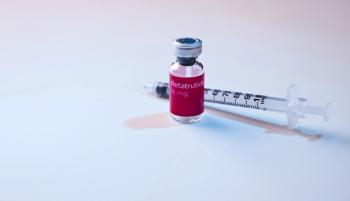
A legal fight over a single amino acid could set retatrutide's exclusivity window, its Medicare negotiation clock, and its competitive future.
The past year has seen multiple changes in the HIV space that have long-term effects when it comes to ending the epidemic.
Since HIV was
Challenges to HIV Care Define the Year
When the Trump administration took office in January of 2025, sweeping changes to how HIV was addressed came swiftly. Notably, the Trump administration
“[The cuts to PEPFAR] immediately destabilized HIV treatment and prevention programs in the 55 countries, the PEPFAR-supported countries, that had been making such progress against HIV as a public health threat over the last couple of decades,” said Kimberly Powers, PhD, associate professor of epidemiology at the UNC Gillings School of Global Public Health.
Powers explained that, although life-saving treatment was exempted from the hold on funding quickly, the widespread disruption in services and infrastructure has caused irreparable harm to progress made in HIV. Continued cuts to PEPFAR have proven to be detrimental to foreign countries, with a study finding that deaths related to HIV could rise by 601,000 in South Africa alone should
The cuts to USAID also have a major effect on PEPFAR, according to Marshall Glesby, MD, PhD, associate chief of the Division of Infectious Diseases and director of the Cornell HIV Clinical Trials Unit at the Weill Cornell Medical College.
“USAID has historically funded the infrastructure needed to implement PEPFAR, and the near elimination of USAID has led to disruption in the provision of HIV diagnostic, prevention, and treatment services throughout the world,” he said. “[PEPFAR] is the U.S. government's initiative to help save the lives of people with HIV globally, and it supports around 20 million people in over 50 countries throughout the world by providing antiretroviral therapy and essential services to people from vulnerable populations. PEPFAR has saved an estimated 26 million lives.”
Pausing or ending funding for research grants, including those that addressed HIV, has also led to disruptions in both care and research into potential areas of expansion in HIV.
Glesby stated that disruptions to the NIH funding will likely have widespread effects in HIV, “For example, funding for HIV vaccine research will likely be significantly reduced just at a time when studies of newer approaches using mRNA technology are gaining traction.”
Powers noted that her own grant for research was paused due to cuts to research, a study that had enrolled more than 3000 people. “We did successfully get funding reinstated and were able to restart re-enrolling participants, but only a fraction has returned. The loss of important scientific knowledge that could have been gained is pretty devastating,” she explained.
Advancements Keep Hope for Elimination Alive
Despite some setbacks in HIV in the US, there were some bright spots in HIV this year, most notably in the FDA approval of lenacapavir (Yeztugo; Gilead Sciences), a long-acting injectable form of pre-exposure prophylaxis (PrEP) that only needs to be taken twice per year, a significant reduction in injections compared with cabotegravir, which needs to be taken 6 times per year bimonthly. The
“We’ve had long-acting injectable HIV medications for approximately 5 years now. The original combination regimen of injectable cabotegravir and rilpivirine was approved as monthly injections and then ultimately bimonthly injections,” explained Glesby. “While this combination has become a popular option for some patients, there are logistical challenges to scaling up the administration of the intramuscular injections in clinical settings.”
Lenacapavir, he said, represents a significant advancement in that it only needs to be taken every 6 months. Powers agreed, stating that it was an exciting advance that adds to the toolkit of addressing HIV to help overcome barriers related to oral PrEP. However, she noted that the disruptions in care could prove a significant barrier to distributing the treatment.
“But of course, how it can play out in a system that has become more dysfunctional is a question. And it’s concerning to think about…will it really see the promise that it holds with the infrastructure and the system being so hampered right now?” she questioned.
Despite potential challenges in getting lenacapavir to those who would most benefit, the promise of the drug to curb the incidence of HIV is encouraging and could provide a jumping-off point for future research into long-acting injectables, including looking into even longer periods between each injection.
Looking Forward to 2026 and Beyond
The future of HIV, both in treatment and prevention, is still looking promising despite the setbacks faced over the past year.
In particular, Glesby noted that drug development in HIV is exciting in the present day, with small studies testing the efficacy of once-yearly lenacapavir, once-weekly oral pills, and even monoclonal antibodies injected every 6 months. Powers noted that she finds solace in the fact that the existing forms of treatment are still available, as well, for the millions who have HIV.
However, both noted that challenges are still on the horizon for HIV, with Glesby saying that the Trump administration is
“I do think that, while there have certainly been some bright spots and some reversals of lost funding, it’s hard to feel like we’re out of the woods or that the situation is likely to remain anything other than difficult for the foreseeable future,” said Powers. “But I think people working in this space tend to be resourceful and persistent, so it’s my hope that ultimately the situation will improve.”
References