Rosacea is likely missed, not rare, in skin of color, as low suspicion and hard-to-see redness delay diagnosis, said Hilary Baldwin, MD.
In case you missed it: the top 5 highlights from the Menopause Society's 2025 Annual Meeting.
The
Here are the top 5 highlights from the 2025 annual meeting.
Rebecca C. Thurston, PhD, FABMR, FAPS, assistant dean for women’s health research and Pittsburgh Foundation chair in women’s health and dementia, University of Pittsburgh, presented extensive evidence showing that trauma, especially sexual violence and childhood abuse, is both widespread among women and strongly shapes health during the menopausal transition. Across cohorts like SWAN and MS-Heart, women with trauma histories experienced more hot flashes, sleep disturbances, sexual dysfunction, and depression. Trauma also accelerated cardiometabolic and neurologic aging, with links to thicker carotid artery walls, poorer endothelial function, greater plaque burden, higher risks of heart attack and stroke, more white matter hyperintensities, and faster epigenetic aging, independent of standard risk factors. Adequate sleep may buffer some vascular effects. Thurston urged clinicians to routinely assess trauma histories, use trauma-informed care, address sleep and mood symptoms, and recognize trauma prevention as essential to supporting women’s health and safety.
Susan R. Davis, PhD, MBBS, AO, FRACP, professor and head of the Monash University Women’s Health Research Program in Melbourne, Australia, presented a comprehensive review showing that despite growing interest in testosterone therapy for midlife women, current evidence does not support its use for any common menopausal concerns. She emphasized that measuring testosterone in women is imprecise, “normal” reference ranges are unclear, and no syndrome of testosterone deficiency exists. Across clinical trials and observational studies, testosterone has shown no consistent benefit for muscle mass, strength, bone density, fracture prevention, mood, anxiety, vitality, cognition, or cardiovascular health, even at supraphysiologic doses. Many studies are small, inconsistent, or inconclusive, and observational findings may reflect unrelated health factors rather than hormone effects. Davis warned clinicians against misinformation circulating on social media and stressed that, as of 2025, testosterone is not a justified treatment for menopausal or premenopausal women outside of specific, evidence-based indications.
In an interview, Stephanie S. Faubion, MD, MBA, FACP, MSCP, IF, medical director of The Menopause Society and director of the Mayo Clinic Center for Women’s Health, emphasized that hormone therapy remains the most effective treatment for hot flashes, night sweats, and other vasomotor symptoms affecting up to 80% of menopausal women, but its safety depends heavily on timing, dose, formulation, and individual risk. She explained that therapy is best suited for women younger than 60 years or within 10 years of menopause onset who lack contraindications such as estrogen-sensitive cancers, prior stroke, clotting disorders, or severe liver disease. Faubion highlighted the “timing hypothesis,” noting that starting therapy earlier offers greater symptom relief and cardiovascular benefits, while later initiation may reduce effectiveness. She advised against compounded hormones due to safety concerns and variability, instead recommending evidence-based, individualized regimens—often favoring transdermal estrogen for its lower impact on clotting, blood pressure, and metabolic factors. Because most midlife women have chronic conditions like hypertension, obesity, or diabetes, Faubion stressed tailoring treatment and monitoring accordingly, acknowledging that there is no fixed age for discontinuing therapy and that long-term use may be appropriate for some women.
Elinzanetant (Lynkuet; Bayer), a newly approved nonhormonal therapy for moderate to severe menopausal vasomotor symptoms, demonstrated strong 1-year safety and consistent efficacy across multiple Bayer-sponsored trials presented at The Menopause Society 2025 Annual Meeting. In pooled US data from nearly 700 women, adverse events were comparable to placebo, mostly mild, and showed no signs of liver toxicity, a key distinction from other nonhormonal options. Beyond reducing hot flashes, elinzanetant also improved sleep, with more than half of the benefit occurring independently of vasomotor symptom relief, suggesting additional neuroendocrine effects. A broader pooled analysis of almost 1900 women across 4 trials confirmed reliable reductions in hot flash frequency and severity and improved sleep quality in diverse groups, including women with surgically induced menopause and those experiencing therapy-induced symptoms during breast cancer treatment.
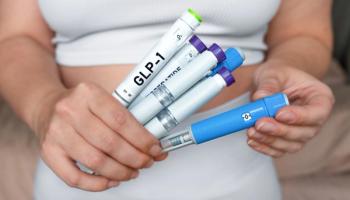
Emerging research suggests that combining menopause hormone therapy with tirzepatide, a dual GLP-1/GIP receptor agonist, may enhance weight loss outcomes in midlife women. In a recent analysis presented at The Menopause Society 2025 Annual Meeting, postmenopausal women using hormone therapy alongside tirzepatide achieved nearly 20% total body weight loss—comparable to pre- and perimenopausal women—while postmenopausal women not on hormone therapy lost about 15%. Researchers propose several explanations, including improved adherence due to reduced vasomotor symptoms, a “healthy user” effect, and preclinical evidence that estrogen may amplify GLP-1s' appetite-suppressing effects. Although these findings are promising, further studies are needed to confirm mechanisms and determine whether the combination provides a direct synergistic benefit.