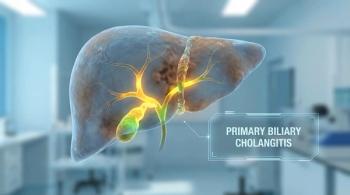
Elafibranor and seladelpar normalized ALP in most patients with primary biliary cholangitis whose ALP was below the usual escalation threshold.
First-line IVF produced more live births than IUI within 7 months in couples with unexplained infertility.
First-line in vitro fertilization (IVF) produced more live births than intrauterine insemination (IUI) with ovarian stimulation within 7 months among couples with unexplained
The FIIX trial (ACTRN12619001003167; Fertility and IVF and IUI Trial for Unexplained Infertility) was an open-label, pragmatic, randomized trial conducted at 6 fertility clinics in New Zealand. Investigators randomly assigned 737 couples 1:1 to up to 4 cycles of IUI with oral ovarian stimulation (clomiphene citrate or letrozole) or 1 complete IVF cycle with transfer of all embryos. The Health Research Council of New Zealand and other funders supported the trial.
After 7 months, couples without a live birth or ongoing pregnancy could proceed to stage 2, in which the IUI group could undergo up to 2 IVF cycles and the IVF group 1 additional cycle. The primary outcome was the cumulative live-birth rate from stage 1, meaning the share of couples with a live birth across all treatment cycles. IUI would count as noninferior only if its rate fell no more than 10 percentage points below that of IVF.
Couples had a median infertility duration of 63 months and a median predicted 12-month chance of unassisted conception of 18%.
The primary analysis included 585 couples after investigators omitted those whose stage 1 treatment fell within COVID-19 lockdown periods. The cumulative live-birth rate was 31% (89 of 288 couples) with IUI and 55% (164 of 297 couples) with IVF, an adjusted risk difference of −24 percentage points (95% CI, −31 to −16). These results excluded noninferiority of IUI.
The time from randomization to the treatment cycle that led to a live birth appeared shorter with IVF, at a restricted mean (an average over the follow-up window) of 143 days vs 174 days with IUI.
The authors noted that the IVF rate exceeded those in earlier trials. They attributed this partly to counting all embryo transfers from a complete IVF cycle, unassisted conceptions (14% of live births in the IVF group), and improvements in IVF success over time.
By the end of both stages, the gap had disappeared. Among all couples who underwent randomization and provided consent, cumulative live-birth rates were 70% (257 of 365) with IUI followed by IVF and 71% (265 of 371) with first-line IVF (adjusted risk difference, 0 percentage points; 99% CI, −9 to 8).
Across both stages, 6 serious adverse events occurred in the IUI group and 14 in the IVF group, mostly related to ovarian hyperstimulation or complications of oocyte retrieval. Ectopic pregnancy occurred in 2% (8 of 365) of couples assigned to IUI and 1% (2 of 371) assigned to IVF in stage 1. Multiple pregnancy occurred in 3% (10 of 365) and 1% (5 of 371), respectively, by 20 months.
The American Society for Reproductive Medicine calls 3 or 4 cycles of oral ovarian stimulation with IUI, then IVF if unsuccessful, the best initial therapy for most couples with unexplained infertility.2 The European Society of Human Reproduction and Embryology deems IUI with ovarian stimulation first-line.3 In contrast, March 2026 guidance from the UK's National Institute for Health and Care Excellence advises clinicians to consider up to 4 cycles of IUI with gonadotropin stimulation before IVF, or to offer IVF directly.4 The FIIX investigators wrote that their finding “calls into question current international guideline recommendations.”1
Cost-effectiveness, access to care, patient preferences, treatment burden, and safety should also guide the choice of first-line treatment, the authors wrote. Separate analyses of cost-effectiveness and treatment acceptability are planned.
Results may not generalize to couples with shorter infertility durations; the trial's definition of unexplained infertility was broader than the most widely used one, and blinding was not feasible.
References