Medicare drug price negotiations lowered out-of-pocket costs for some beneficiaries, but those reaching the annual Part D cap saw no direct savings.
Oral Wegovy reshapes GLP-1 costs: cash pay can be cheaper, insurance pricing often matches shots, and coverage hinges on employer benefits and coding.
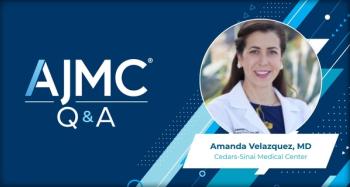
As the first oral version of semaglutide (Wegovy) for weight loss reaches the market, patients and employers alike are grappling with the implications for the cost of glucagon-like peptide-1 (GLP-1) therapy. In this
Levin also explores the broader outlook for oral GLP-1s, including how increased competition and potential policy changes could reshape pricing and access in the years ahead.
This transcript has been lightly edited for clarity.
AJMC: With the new oral Wegovy pill now available, how can patients maximize savings compared with injectable GLP-1s?
Levin: Such a complicated question that I wish I had an easy answer to. In theory, they should be cheaper; they are easier to manufacture, they don't need a cold supply chain, [and] there are lots of reasons at the moment. They are cheaper on a cash-pay basis. If someone buys directly from the manufacturer or one of the other companies that sell a cash-pay version, it is less expensive by a couple hundred dollars than the injectable. However, on insurance, it's basically the same price. So today—and this can change; it's a rapidly evolving market—it really is the same expense, whether you get the injectable [or] the oral, typically, when you're buying with insurance.
AJMC: What are the most effective ways for patients to navigate insurance coverage and cash-pay options to lower their GLP-1 costs?
Levin: The first issue is, can you get covered on your insurance? We do know that about 60% of large companies and maybe about 30% of small companies do offer coverage. There's a chance you may have some form of coverage; you should check to see if your company has put in place a partnership. There are a lot of companies out there now that have basically carved out weight-loss solutions or weight-loss and diabetes solutions, and they may have better pricing, and that also could be the way that you have to go about it. You need to look for that; you need to understand your insurance coverage.
The last thing on insurance is—and it's really for the doctor—what are you writing it for? Someone who's overweight may have comorbidities, for example, sleep apnea, and it will be covered for sleep apnea; it won't be covered for weight loss. Depending on what you write the prescription for and how you code, it could have an impact on whether or not it's covered by insurance. On the insurance side, those are the issues.
Outside of insurance, cash pay is still cheaper for the most part. Buying direct from the manufacturer or from any of the other companies that have gotten into that business, whether it's GoodRx or some of the other large names that you may have heard of—Hims, Ro—they do have better prices than if you're buying direct from a traditional pharmacy, typically, and paying cash, navigating that. The last thing I’d say is, if there are income issues, most major pharmaceutical companies do offer income-based assistance. If you just simply can't afford it and can pass an income-based test, that might be an option as well.
AJMC: For patients switching from an injectable GLP-1 to an oral option, what strategies can help minimize both cost and disruption?
Levin: Cost-wise, going back to some of the items we talked about, it may or may not be the same. If it's on insurance, it might be very similar. If it's not on insurance, it's probably a couple of hundred dollars cheaper every month, which is nice for the most part, though it does mean restarting what you're doing, and that can be highly disruptive. We saw that when CVS went through the formulary change, they dropped Zepbound [tirzepatide] and only covered Wegovy. People had to titrate down [and] then titrate back up again; it can cause a disruption to the treatment plan, requires some patience, and the patient may see some of those early side effects again that they thought they had gotten past. [Side effects] come back in the oral form while they're getting used to that again. Unfortunately, it's not ideal.
AJMC: What are some practical steps patients can take to understand their insurance coverage as it relates to the price of GLP-1 medications?
Levin: You can always reach out to your own HR [human resources] department, assuming we're talking about employer-based insurance; that's typically what we're dealing with here—Medicare [and] Medicaid don't cover [drugs] for weight loss today, so it's probably not coming in that area. You should be able to speak to your HR department. They'll give you some guidance. Your PBM, which, for most people, looks like their health insurance or pharmacy health insurance, can also give you some guidance on what to do there.
Typically, it's pretty straightforward, though it's either covered or it isn't, and if it isn't, then you're looking for next steps. Does my employer have any other plan they put in place? If they haven't, now you're on the cash-pay market, and there, what we just really recommend is making sure it's a credible source. You want to buy directly from one of the manufacturers, from a reputable, large corporation, not from a med spa, not from some company you haven't heard of. There's just too much risk in that.
AJMC: As more oral GLP-1s enter the market, what trends or opportunities should patients and employers watch for to improve affordability and access?
Levin: The hope here is that the trend is good, the price is going to go down, and it's looking like it should—it may take some time. The first oral has come on the market, and as I mentioned, it's basically selling through insurance for the same price as the injectable. There'll be more coming on the market over the next 18 months. Competition does tend to change these things, so I would assume that prices will come down, particularly on the oral medications.
There is also potential with government purchasing. Some of what TrumpRx has talked about is potentially opening up coverage in the Medicare [and] Medicaid space. It's not confirmed yet, but if they do, obviously that's a lot of demand. A lot of demand means costs come down, and there'll be a negotiated price, so that could also come into play.
Overall, what we expect is that, as we look forward, most people would rather have a pill, if they can take a pill, than have to have a shot. Most people don't want to have to deal with a cold supply chain and having to transport, and all that. Pill form is likely to take over in the long term, and that should bring prices down over time. But, it being the pharmacy market, nothing is guaranteed. Because costs are lower doesn't necessarily mean prices are going to be lower. The demand for these products is creating so much pressure and, I think, so much potential for a large-scale business that it’s highly likely prices will come down over time, and more and more people will use these medications.
Most doctors and pharmacists I talked to are predicting this may well look like the statin market in 5 to 10 years—almost everybody is going to be on some form of GLP-1. The health benefits are huge. The benefits, in [cosmetic] terms, are huge. That seems to be the direction we're heading in. Obviously, once that happens, prices should come down, because otherwise the market won't be able to bear it.