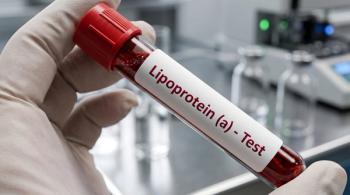
In a Japanese registry of 1235 patients with AMI treated with PCI, Lp(a) of 24 mg/dL or higher independently predicted MACE and HF hospitalization.
A new analysis finds up to a 98.8% probability that liberal transfusion lowers 30-day death or myocardial infarction risk vs restrictive care.
A Bayesian reanalysis of the MINT (
“This post hoc analysis reexamines the MINT trial using a bayesian framework to better quantify the potential benefit associated with a liberal strategy on the composite outcome of death or MI and its potential harm from
The original MINT trial, published in 2023, compared a restrictive transfusion strategy (transfusing when hemoglobin fell below 7 to 8 g/dL) against a liberal strategy (maintaining hemoglobin above 10 g/dL) in patients hospitalized with MI and anemia. The original trial found a higher incidence of the composite outcome with the restrictive strategy than with the liberal strategy (risk ratio, 1.15; 95% CI, 0.99-1.34; P = .07), although the difference did not reach conventional statistical significance. Because Bayesian methods combine prior assumptions with observed trial data to estimate the probability that one treatment is superior, investigators reanalyzed the MINT data to quantify the likelihood of benefit and harm under several plausible prior beliefs.
This post hoc analysis included 3504 participants (1755 randomized to the liberal strategy and 1749 to the restrictive strategy) from the original MINT trial, conducted at 144 sites in 6 countries between April 2017 and April 2023. Investigators modeled 3 prior belief distributions—noninformative, liberal-strategy-superior, and restrictive-strategy-superior—and combined each with the trial's observed data to generate Bayesian posterior probabilities for 30-day death or MI and for heart failure.
Across all 3 prior distributions, the posterior probability that the liberal strategy reduced the risk of 30-day death or MI ranged from 89.1% to 98.8%. The probability that the liberal strategy prevented at least 1 additional death or MI event per 100 patients treated ranged from 62.7% to 90.4%, corresponding to numbers needed to treat of 42 to 74, depending on the prior used. Conversely, the liberal strategy carried a 60.6% to 80.0% probability of increasing heart failure risk, but the probability that this translated to at least 1 additional heart failure event per 100 patients treated was considerably lower, at 13.3% to 29.3%.
Under a noninformative prior, the authors estimated that adopting a liberal strategy across 200 treated patients would prevent approximately 5 deaths or MIs while causing approximately 1 additional heart failure event—a trade-off the authors characterized as net favorable. Results for death alone and for the composite of death, MI, or heart failure followed a similar pattern, with the restrictive strategy consistently associated with higher posterior risk estimates.
However, the researchers acknowledged several limitations. The authors noted that this analysis was not prespecified, which may introduce bias, and that the chosen prior distributions and minimal clinically important difference thresholds may not reflect the values of all clinicians or patients. The study also did not capture detailed peritransfusion volume-management data, such as diuretic use, which could influence heart failure outcomes. Importantly, because this was a post hoc Bayesian reanalysis of a single randomized trial, the findings depend in part on the choice of prior distributions and should be interpreted as a complementary analysis rather than independent confirmation of efficacy.
The findings arrive as the 2025 Association for the Advancement of Blood and Biotherapies (AABB) International Clinical Practice Guidelines already recommend a liberal red blood cell transfusion threshold (hemoglobin < 10 g/dL) for patients with acute MI, a conditional recommendation informed in part by the original MINT trial and a related patient-level meta-analysis.2
For organizations and health systems developing transfusion protocols or utilization pathways, this Bayesian reanalysis offers a probabilistic framework that may be more actionable than the original trial's borderline P-value, providing additional support for guideline-concordant liberal transfusion thresholds while highlighting a modest, quantifiable trade-off in heart failure risk that may warrant monitoring in patients at elevated risk for volume overload. Because the underlying evidence base remains low-certainty, the guideline panel itself has stressed that transfusion decisions should weigh clinical context and blood supply conservation alongside the hemoglobin threshold, not rely on it in isolation.
“Taken together, these findings suggest that a liberal transfusion strategy may result in a lower risk of 30-day death or MI, outweighing the increased risk of heart failure,” wrote the researchers. “This finding supports recent guideline recommendations that a liberal transfusion strategy may be reasonable in this population.”
References