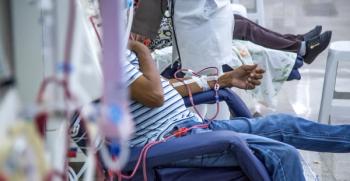
Jennifer Flythe, MD, MPH, discusses individualizing dialysis volume management and why guideline-directed therapy use lags in advanced CKD.
Obstructive sleep apnea may increase Parkinson disease risk, but early CPAP treatment could significantly reduce this risk.
Obstructive sleep apnea (OSA) may be associated with an increased risk of developing Parkinson disease, although early treatment with continuous positive airway pressure (CPAP) could help mitigate that risk, according to a large electronic health record–based cohort study of US veterans, published in
Researchers analyzed data from more than 11 million veterans receiving care in the Veterans Health Administration between January 1, 1999, and December 30, 2022. With a mean follow-up of nearly 5 years, the study is one of the largest and longest investigations to date examining the relationship between OSA and incident Parkinson disease, as well as the potential modifying role of CPAP therapy.
OSA is a common
To address these gaps, investigators conducted a retrospective cohort study using Veterans Affairs electronic health records. Veterans with a Parkinson disease diagnosis at baseline or incomplete records were excluded. OSA was identified using administrative diagnostic codes, whereas CPAP use was determined from semistructured medical interview fields within the health record.
The final analytic cohort included 11,310,411 veterans, of whom nearly 1.11 million (9.8%) were women. The mean age was 60.5 years, and 13.7% of participants, more than 1.55 million veterans, had a diagnosis of OSA. The primary outcome was cumulative incidence of Parkinson disease, calculated while adjusting for the competing risk of death and balancing for age, sex, race, and smoking status.
Across the cohort, OSA was associated with a higher risk of developing Parkinson disease. At 6 years following OSA diagnosis, veterans with OSA experienced a modest but statistically significant increase in Parkinson disease incidence, with an absolute excess risk of 1.61 cases per 1000 individuals (95% CI, 1.13–2.09). This association persisted after further adjustment for body mass index, vascular comorbidities, psychiatric conditions, and relevant medications, suggesting that OSA was an independent risk factor rather than a marker of overall illness burden.
Notably, the magnitude of the association was greater among female veterans, a finding that may warrant further investigation given the historical underrepresentation of women in veteran-focused research. While the mechanisms underlying sex-specific differences remain unclear, the authors suggested that hormonal, biological, or diagnostic factors could play a role.
Importantly, the study also found evidence that OSA treatment modifies Parkinson disease risk. Veterans who were treated early with CPAP had significantly fewer Parkinson disease cases compared with those whose OSA was untreated or treated later in the disease course. CPAP is the criterion standard therapy for OSA and works by maintaining airway patency during sleep, thereby reducing hypoxia and sleep disruption—mechanisms that have been hypothesized to contribute to neurodegeneration.
Taken together, the findings suggest that OSA may represent a modifiable midlife risk factor for Parkinson disease. Given the high prevalence of OSA and the progressive, incurable nature of Parkinson disease, the public health implications could be substantial. Effective screening for OSA, along with protocols that promote early initiation and consistent adherence to CPAP therapy, may offer a practical opportunity to support long-term brain health.
The authors emphasized that although observational data cannot establish causality, the scale of the cohort and the robustness of the analyses strengthen the evidence for a meaningful association. Future studies are needed to clarify biological mechanisms and to determine whether similar risk reductions are seen in non-veteran populations.
References