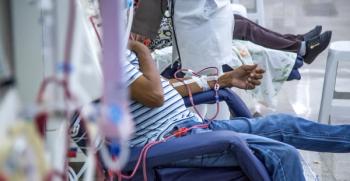
Jennifer Flythe, MD, MPH, discusses individualizing dialysis volume management and why guideline-directed therapy use lags in advanced CKD.
Interviews with patients living with generalized myasthenia gravis (MG) in the US revealed areas of increased burden in these patients.
The burden of generalized
MG is a rare autoimmune disorder that causes muscular and ocular weakness in those who it affects. gMG can develop within 2 years of initial symptoms and happens when symptoms extend beyond the eyes and into the muscles. This can occur in nearly half of all people diagnosed with MG.2 Severe adverse effects brought on by both the condition and the treatment are possible once it has progressed. However, there are few studies that evaluate the total disease impact on both the patient and their caregiver. This study aimed to quantify these impacts of gMG based on interviews with patients with gMG and caregivers.1
Participants were included in the study if they had documented acetylcholine receptor gMG or if they were a caregiver who was providing support to the patient without pay. These patients and caregivers needed to participate in semistructured interviews to be included. Caregivers were aged 18 years or older, self-reported that they had provided informal care to a patient with gMG who was aged 18 years or older for at least 3 months, and were currently living in the US. Being a caregiver could not be their paid profession.
Interview guides were created after a literature review, with any reported impacts not measured by the Myasthenia Gravis Activities of Daily Living (MG-ADL) or Myasthenia Gravis Quality of Life 15-item-Revised (MGQOL15r) further analyzed. Impacts were classified as quantifiable, possibly quantifiable, and nonquantifiable. Participants were asked to rate each impact element on a scale of 0 to 5 and rank the domains by importance.
All interviews were conducted between July 19 and September 1, 2022, with 16 patients and 12 caregivers included in the final analysis. There were 84 impact experiences that were identified and categorized into 25 impact elements in the 8 domains of occupation, finance, emotional health, physical health, sleep, social, planning and autonomy, and safety.
Caregivers reported impacts in 5 of the 8 domains, specifically in occupation, emotional health, physical health, sleep, and social. However, more patients reported impacts in the planning and autonomy, and safety domains compared with caregivers. Financial impacts were universally reported. Most of the impact experiences from patients and caregivers were economically nonquantifiable, including emotional health, social aspects, and planning and autonomy. Financial and occupational impacts had the highest reporting of the quantifiable experiences, with 88% and 92% of patients and caregivers reporting occupational impacts and 100% of both groups reporting financial impacts.
Participants reported budgeting their limited energy for their own health, the feeling of powerlessness due to physical decline in gMG, and safety concerns related to treatment. Financial burden due to high costs of treatment was reported by both caregivers and patients, as well as withdrawal from social activities. Patients reported feeling that their lives revolved around their condition, whereas caregivers had feelings of guilt about their emotional well-being declining due to caring for the patient with gMG.
A survey was also conducted with 239 patients with gMG and 81 caregivers. Patients had an MG-ADL score of 12 or lower, had an informal caregiver, were receiving treatment, and had commercial insurance as their primary coverage. Relevant domains for patients were physical health, financial, and planning and autonomy, whereas caregivers gave financial, sleep, and planning and autonomy the highest relevance scores. Both patients and caregivers reported financial (3.8 and 3.6 mean relevance score) and physical (3.7 and 3.4 mean relevance score) domains as being among the most impactful.
There were some limitations to this study. There was a small interview sample, which could limit generalizability. Caregivers were not asked to verify the antibody status of their patients. Patient medical history was not collected. Self-selection of participants and sampling or recall bias were possible in the survey. The analyses were cross-sectional and treatment-agnostic.
The researchers concluded that gMG had a substantial burden on both patients and caregivers who live with the condition or help a patient with the condition. “These impacts, many of which cannot be quantified with a monetary value, should be considered when assessing the overall disease burden of gMG in addition to direct medical costs,” the authors wrote.
References