Follitropin delta yields cumulative ongoing pregnancy in 64.0% of patients under 35 and 43.9% of those 35 to 42 in 2 placebo-controlled IVF trials.
Postpartum navigation missed its primary goal but raised postpartum visits and primary care use among Medicaid-insured patients.
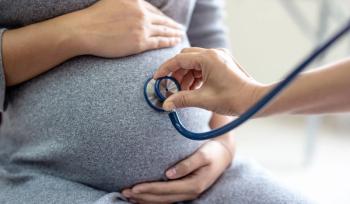
Postpartum patient navigation did not increase the share of Medicaid-insured patients who received all 6 essential care components, but it significantly improved visit completion and primary care follow-up, according to a randomized clinical trial published in JAMA Health Forum.1
“The maternal morbidity crisis in the US, which disproportionately affects patients with low incomes with medical or social complexity, demands novel strategies to reverse extant trends and improve outcomes,” the authors wrote. “Patient navigation is one strategy that may reduce gaps in care availability, accessibility, acceptability, and quality.”
The trial enrolled 405 people with Medicaid insurance who were 16 years or older, spoke English or Spanish, and were pregnant or postpartum before hospital discharge. It took place at a single large academic medical center in Chicago. Nearly half of participants (48%) reported household income below $25,000, and 37% were uninsured before pregnancy. Half were non-Hispanic Black (50%), 41% were Hispanic, and 7% were non-Hispanic White.
Participants were randomized to 1 year of navigation (n = 203) or usual care (n = 202). Two full-time bilingual lay navigators identified social needs, coordinated appointments, assisted with insurance, provided health education, and attended appointments in person. They had access to the electronic medical record and could schedule postpartum obstetric appointments directly.
The primary outcome was receipt of all 6 components of postpartum care by 12 weeks: a comprehensive postpartum visit, all indicated anticipatory guidance, a desired family planning method, depression screening and linkage to care, initiation and maintenance of breastfeeding, and all indicated vaccinations.
Only 35 participants (8.6%) achieved it, far below the rate the investigators had anticipated, and the groups did not differ significantly (9.4% with navigation vs 7.9% with usual care; P = .60). The authors wrote that the study was “underpowered to detect our hypothesized difference in the primary outcome.”
Navigation recipients did achieve a higher mean proportion of the components, at 71% vs 64% (mean difference, 7.6; 95% CI, 3.7-11.5). Three components drove the gap:
Family planning method receipt (94% vs 89%), breastfeeding (62% vs 60%), and vaccination (27% vs 32%) did not differ significantly.
At 11 to 13 months, 57% of navigation participants had attended a primary care visit vs 30% of those receiving usual care (relative risk, 1.9; 95% CI, 1.5-2.4; P < .001). More were using their desired family planning method (65% vs 43%) and had received depression screening and linkage (37% vs 21%).
Cardiometabolic screening also rose, including blood pressure evaluation (85% vs 62%) and lipid testing (28% vs 13%). Among 31 participants with gestational diabetes, 15 of 16 in the navigation group (94%) received diabetes screening vs 6 of 15 (40%) in the usual care group.
The authors said the very low frequency of meeting all 6 components limited the trial’s power and that incomplete electronic record documentation of anticipatory guidance may have biased results toward the null. The trial was conducted at one urban academic center, and navigation is highly context-dependent. It also launched shortly before the COVID-19 pandemic, which may have contributed to the null primary outcome.
The study did not assess cost-effectiveness, which the authors said future work should examine. A 2024 article published in
The National Institute of Child Health and Human Development funded the study and had no role in its design or conduct. The authors concluded that navigation improved multiple aspects of postpartum care quality in the short and long term and called it a potentially effective, sustainable, and scalable strategy.
References