The FDA approved talazoparib plus enzalutamide for HRR-mutated metastatic hormone-sensitive prostate cancer after TALAPRO-3 cut progression risk by 52%.
Scott Soefje, PharmD, outlines proactive financial screening, flexible payment models, and stronger academic-community partnerships for advanced cancer care.
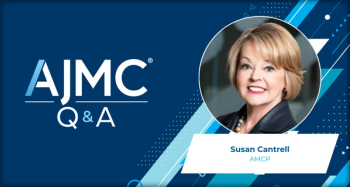
Oncology care is growing more complex—and expensive—while stakeholders across the care continuum work to improve access, affordability, and outcomes for patients. Scott Soefje, PharmD, MBA, BCOP, director of pharmacy cancer care at Mayo Clinic, discusses the urgent need for earlier identification of financial toxicity, closer collaboration between oncology practices and managed care organizations, and more flexible payment and coverage models to support biomarker-driven care.
Soefje also explores how partnerships between academic centers and community practices can help make advanced therapies and research opportunities available to rural and underserved populations.
This interview has been lightly edited for clarity.
The American Journal of Managed Care® (AJMC®): How can oncology practices and managed care organizations work together to proactively identify patients at risk for cost-related nonadherence and connect them to financial counseling or support programs earlier?
Soefje: I would love to see a world where every patient gets financial counseling, whether they need it or not, and it just becomes part of your overall assessment as a patient. I think that's going to be an essential component. With the cost of some of these drugs, I mean, I couldn't afford some of these drugs, and I make a good income. So, how do we do that with patients who are underinsured or completely uninsured? Those are things we have to work with. Payers and managed care organizations are going to have to get together and talk about how we are going to maximize the outcomes. How are we going to get these patients the best? I do believe there's some financial toxicity data out there that suggest which patients are at highest risk for financial toxicity. And I think you can use some of that data to start saying, “Hey, is this someone I should screen, or is this someone I should talk to?”
And then, why don't we start doing more patient-reported outcomes? I think the managed care organizations could really help with this. This can become a required component of your care, to answer a survey asking things like, “Are you having food insecurity because you're spending all your money on cancer drugs?” or “Are you feeling anxious about your financial situation due to your therapies?” It doesn't have to be an 80-question survey. It can be 1 or 2 questions that trigger someone to go look at it. I would love to see that become standard practice. I think more providers are starting to do this or starting to ask the question, “Are you having concerns about the cost of your care? Are you having problems?” “Are you having food insecurities?” is one that's popular these days. Those kinds of questions are important. And it's going to take the oncology practices and the managed care organizations getting together to say, “To achieve the best outcomes, we must have this level of adherence. And this level of adherence is going to cost this amount of money. How do we assure people are able to get through that whole process?” If we can solve that, I think we can make real impacts in cancer care.
AJMC: As oncology care shifts toward more personalized regimens, how do you think payment models need to adapt to support individualized therapy—especially for biomarker-driven and small-population indications?
Soefje: I hope that as we get more biomarker-driven therapy, it actually helps get costs under control, because the most expensive drug in the world is the one that doesn't work. If we can do a test and show that this drug is going to work versus that drug, that's the best way to go, and I think it gives us the best opportunity to get the best outcomes. We also need more data on the significance of specific biomarkers in specific disease states. Does a biomarker predict response, or is it just there? Those are the kind of things I think we have to really work through to say, “If we have this biomarker, this is the drug we want to use, because we know we get outcomes.”
Payers are also going to have to get a little more flexible, because if I have a biomarker that we know drives a tumor, but the drug that hits that biomarker isn't approved in that tumor type, we can still get good outcomes, and you need to let us use that drug. We're seeing more denials because of that, which then maybe pushes pharma to stop being tumor-specific and do more tumor-agnostic type trials where you can show if it's in that biomarker, this drug works regardless of where that tumor is. I think that will help us a lot.
With smaller populations, it's really making medicine complicated these days. I'm old enough to remember when lung cancer was small cell or non–small cell, and everybody got treated the same way. Now it's these subdivisions and subdivisions and subdivisions, and it really kind of drives you into what your first-line therapy is, and then sometimes even second-, third-, and fourth-line therapies. I think that's making it a lot harder sometimes to make sure you have all of the information you need to make the right decision. Hopefully, AI [artificial intelligence] and some of the other things will step in and say, “Hey, this patient has this profile and these characteristics; this is the best drug for that patient.” I think we're a way away from that. I don't think we're as far away as people think we are, but we're not quite there yet.
AJMC: What systemic changes are needed to ensure rural and underserved populations have equal access to guideline-concordant cancer care and advanced therapies?
Soefje: This is a tough question, because I think there are 2 components to it. The first question is, are there certain therapies that maybe shouldn't be in rural communities and maybe should only be in larger academic centers because of the complexity of the therapy, how it's delivered, the toxicity, the management, and all of those kinds of things? And I think we have to be careful not to race everything out into the community and out into the rural practice, because it might not be appropriate. My example is you don't go get your pancreatic surgery at your local hospital. You go get your pancreatic surgery at the place where there's a certified pancreatic surgeon, because it's a complicated, complex process. Are there some of these advanced therapies that need to be the same way? Maybe it's more cost-effective to have the patient go to the Centers of Excellence for some of these advanced therapies. That being said, I also believe there are some of these—particularly like the bispecifics and some of these other things that we are now understanding how to use and have gotten a little further along and understand what happens—that can be pushed down into the community practice and made available where that patient is.
I think the other question becomes how rural community and academic hospitals partner together to develop relationships that say, “Hey, send us this patient for this part of the procedure, and then we'll send them back to you for administration.” There's always this fear from the community that you send them to the academic center, and the academic center is going to steal them and not send them back. But academic practices need community practices, because we need the patient populations to do the clinical research. If we develop this partnership and we have this trust going both ways, then when the community practice runs out of the therapies they're comfortable giving, they can say, “I'm going to refer you to someone I know who has access to the trials I don't have access to.” The last part is, how do we take some of the simpler trials and get them out into the community? It's not just the standard of care practice we need to be looking at. It's what can we move out in the community that is research-based and really begin to broaden the type of patients and the population that gets enrolled in these trials? I think it's a lot of complicated, complex processes, but we're looking forward to how we can partner with communities. We're talking about how we can ensure that they can start therapy in their community practice and how we help them do that and get started. We have some community practices in our system, and it's like we don't have the capacity to treat everybody that they want to send to us.