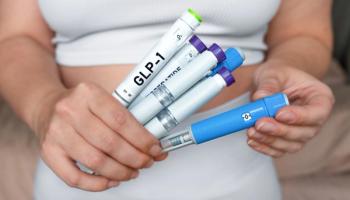
A legal fight over a single amino acid could set retatrutide's exclusivity window, its Medicare negotiation clock, and its competitive future.
Smart pill bottles may boost adherence to oral breast cancer therapies through daily reminders and tracking, though cost and technology barriers remain, says Steven Manobianco, MD.
Steven Manobianco, MD, explains that
Manobianco shared these findings at last month's
This transcript has been lightly edited for clarity; captions were auto-generated.
Transcript
Why do you think smart pill bottles had such a significant impact on adherence?
I think that the smart pill bottle did a couple of things. First of all, I think that a daily reminder was a way to kind of nudge that patient every day to take their medication. I also think it was an opportunity to collect data that perhaps the patient themselves was maybe not even aware of; electronic patient-reported outcomes are inherently patient-facing.
In other words, that patient has to say, "I feel this symptom, and I'm going to report it to my care team." With the smart pill bottle, we're collecting that data, whether or not a patient is feeling something different in their body, so maybe there was an opportunity to kind of preemptively act on that information before someone was even aware that there was a problem.
How could smart pill bottles be integrated into routine clinical practice? What are potential barriers to adoption?
I think that this is a technology that really could be used widely. I think that it could have use in a number of different medications, especially, as we're going to hear in San Antonio, the number of oral therapies that are being used across the breast cancer landscape.
I think some of the barriers are, A., financial. Certainly, there's a cost to these bottles and monitoring them, so that has to be considered. I would also say that this does require someone to be somewhat tech savvy. This requires a smartphone or a device that uses text messaging and, of course, the infrastructure on the enterprise side, or the health care practice side, to actually monitor adherence.
What further research is needed based on your findings? Could this approach be applied to other oral therapies?
I think that endocrine therapy is a very unique type of treatment with its own unique side effects. I don't think that we can generalize these results to every treatment that we have for breast cancer. A real hot topic today is the use of adjuvant CDK4/6 inhibitors, so things like abemaciclib or ribociclib, along with that endocrine therapy in early-stage breast cancer.
That's a study that we in the Sidney Kimmel Comprehensive Cancer Center are actively looking to develop in coordination with our team.