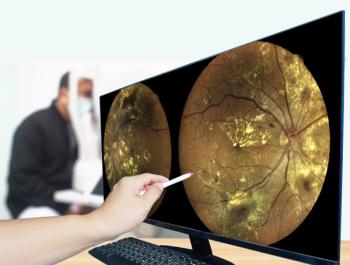
The meeting covered several topics in eye care, including how artificial intelligence (AI) can play a part in eye care.
New research reveals that total social media use does not significantly impact adolescents' body image concerns, challenging previous assumptions.
Total time spent on social media may not have an adverse impact on
Highlighting mixed results from previous research, including that
Participation was close to equal between genders, with 74 female participants (47.7%) and 68 male participants (43.9%). In addition, 7.1% (n = 11) did not specify their gender identity, and 1.3% (n = 2) left this response blank. For self-identified race and ethnicity, most (54.2%) were White (n = 84), followed by Black or African American (14.2%; n = 22), multiracial (12.9%; n = 20), Asian (8.4%; n = 13), Hispanic or Latino (7.7%; n = 12), American Indian or Alaska Native (1.9%; n = 3), and unreported (0.6%; n = 1).
Following consent to participate, data for analysis were collected through the Stanford Screenomics app. Most parents of the participants had a master’s or doctoral degree (39.3%; n = 61) or a bachelor’s degree (29.0%; n = 45).
Overall, the adolescent participants provided 217,612 total hours of smartphone data and 769 reports of weight concerns and dieting. Their median (IQR) daily hours of reported social media use were 1.35 (0.40-2.94), and these were broken down as follows, with most median time (in minutes) spent on Instagram and least time spent on Twitter:
Total social media use came in at 80.97 minutes (24.20-176.65) (range, 0.00-520.52).
Weight concerns and dieting frequency were both scored on a scale of 1 to 3, with higher total points indicating more instances of both. The study authors did not see any significant relationships for their within-person and between-person analyses:
However, suggested relationships were seen for between-person associations with weight concerns and Snapchat (γ, 0.29; 95% CI, 0.01-0.58), Twitter (γ, 0.49; 95% CI, 0.01-0.96), and TikTok (γ, 0.49; 95% CI, 0.01-0.96) following exploratory analyses.
There are potential limitations to these findings, including that the only participants were adolescents who used an Android device, use of other smart devices was not considered, and the total sample size (N = 155) may not have been sufficient to identify heterogeneous associations among certain subgroups.
“Future studies should use larger and more nationally representative samples,” the authors concluded. “We recommend that future studies obtain objective measures of individual app use and specific content experienced by adolescents to understand the role of digital media environments in body image–related issues among adolescents.”
References