Phentolamine 0.75% (Ryzumvi) won FDA approval for presbyopia based on the phase 3 VEGA-2 and VEGA-3 trials.
The future of treating glaucoma relies on ophthalmologists and optometrists personalizing therapy to their patient, says Manjool Shah, MD.
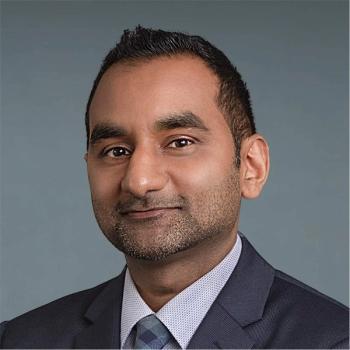
Manjool Shah, MD, clinical associate professor of ophthalmology and visual sciences for the Kellogg Eye Center, discussed how he believes ophthalmologists and optometrists can address glaucoma in their patients as well as how he sees the future of treating glaucoma progressing and evolving.
This transcript is lightly edited for clarity; captions are auto-generated.
Transcript
How should ophthalmologists and optometrists approach treating their patients with glaucoma?
We're in an interesting world right now where we've had this huge advancement, huge revolution in a lot of our glaucoma therapies. Glaucoma intervention, shall we say, whether it's medications or surgeries or everything in between, has continued to evolve. We've seen a big, rapid evolution over the last decade or so. And so nowadays, we're really starting to be more refined in how we approach glaucoma. We have this broader set of tools, these little microscopic, small-scale interventions that we can use in a very nuanced manner to really kind of personalize treatment for patients. And we have to recognize that glaucoma is a chronic disease. We don't yet have a cure. We can just manage it and control it so that it doesn't affect people's lives. And so we want to really be mindful of the fact that sometimes the treatments can be more of a burden than the disease. And so we want to make sure we tailor our treatment to minimize its impact on patients' lives while also protecting them from the glaucoma itself causing problems.
What is the future of glaucoma and glaucoma treatment?
I think there's sort of 2 stages. I think this most immediate stage of the future of glaucoma is indeed this personalized, nuanced management of glaucoma, in which we don't depend on the patient to do the heavy lifting: that we're able to tailor our microsurgeries or lasers or sustained drug delivery in an effort to control the pressure, control symptoms, and allow patients to lead their lives without having to constantly be worried about their eyes. Most people live their lives just seeing, not thinking about their eyes. I think everyone has that right. And so that's the sort of immediate future.
And there is a push to this sort of concept of interventional glaucoma, which is, again, as opposed to this passive process of waiting for things to get worse and then saying, “Oh, look, we've got an advanced therapy,” it's identifying the right patients and applying the therapy upfront in a manner that doesn't burden the patient, so that they can continue to live their lives symptom free, disease free, or disease controlled. So that's sort of the here and now reality, and this concept, which is a frame shift compared to how we used to manage glaucoma, that's building steam and taking over. I'm hopeful that more and more of our patients will be able to derive value from this interventional mindset.
And then certainly the future is really, really personalized therapy, where we dig deep into the genetics and the nitty-gritty of how an individual's glaucoma affects their eye and, again, target therapies and even regenerate what's been damaged. Part of that is also understanding an improvement in our diagnostic capacity. We can really dig into what patients are at risk of getting worse, and at what situation in what context, so we can again apply therapies in a targeted manner and be more efficient for everyone.