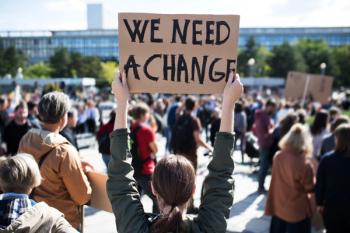
At IDWeek 2026, IDSA and HIVMA leaders and clinician advocates outline how stories, relationships, and bipartisan outreach shape ID and HIV policy.
The Ugandan MInistry of Health closed their border with the DRC in response to the rise in Bundibugyo cases and deaths.
The Ugandan Ministry of Health ordered the closure of its border with the Democratic Republic of the Congo (DRC) on Wednesday in response to the growing outbreak of a rare strain of Ebola, despite the World Health Organization’s (WHO) objections.1
The Ebola disease was determined to be the cause of the Bundibugyo virus, currently confined to the DRC and Congo; however, interstate conflicts threaten public health efforts. On May 17, 2026, the WHO declared the outbreak a public health emergency of international concern as the infection rate and death toll continued to climb.2 This marks the 17th Ebola outbreak in the DRC, which is currently keeping pace with previous Bundibugyo outbreaks in 2007 and 2012, where the fatality rate ranged between approximately 30% and 50%.2
As of May 26, 2026, there are 121 confirmed cases and over 1000 suspected cases of the Bundibugyo virus in the DRC, according to the WHO’s most recent report, yet only 7 confirmed cases and 1 death in Uganda.3 Despite significantly fewer cases of the Bundibugyo virus confirmed in Uganda, the country’s Ministry of Health closed its borders.
A spokesperson from the WHO said in an article with AP News that this act was “implemented out of fear” and has “no basis in science.” Closing the borders only encourages people and the movement of goods across informal borders where the virus isn’t monitored, thus increasing the risk of disease spread.1
The first suspected case of the Bundibugyo virus was believed to be a health worker who began exhibiting symptoms such as fever, hemorrhaging, vomiting, and intense malaise on April 24, 2026. The patient later died at a medical center in Bunia.2 The “dry” symptoms of the disease resemble those of other diseases, often leading to misdiagnosis, which further instigates the spread of the virus.4
The initial cases of the virus were isolated to the Ituri Province, but the virus continues to spread throughout 3 health zones within the province, Mongbwalu, Bunia, and Rwampara, and into North and South Kivu, all bordering Uganda.
Although emergency response measures have begun deploying resources and aid, the densely populated region is facing an increase in armed conflict.4 Rebel and militant group attacks have been steadfast in the DRC’s Eastern region, making health care access and aid difficult to supply to those in need.1,2 The humanitarian crisis in the province has displaced nearly 300,000 people, and a total of 1.9 million people are in need.2
This particular northeast region of the DRC is also a major hub for commercial transport and migrants. If border screenings are inadequate, the risk of cross-border transmission could increase.2,4
Currently, there is no licensed vaccine or therapy against the Bundibugyo virus. Although there are 2 approved vaccines and treatments for the Zaire strain of Ebola, the targeted genes in each differ significantly.4
There are several potential vaccines in development, but preclinical data are limited as they have not been tested on humans. The most promising vaccine candidate for the Bundibugyo virus is one loosely based on an approved vaccine for the Zaire strain, according to a WHO official. But it will likely take 6 to 9 months before the doses are ready for clinical trials.4
Until then, the WHO, in partnership with the Ministry of Public Health, Hygiene and Social Welfare of the DRC and the Ministry of Health of Uganda, is continuing to implement public health measures. These include coordinating responses to the outbreak, rigorous surveillance of suspected and probable cases, managing ongoing cases, and scaling up laboratory resources within designated health zones.
References
1. Muhumuza R. Uganda closes its border with Congo as cases of a rare Ebola type surge. AP News. May 27, 2026. Accessed May 27, 2026.
2. Ebola disease caused by the Bundibugyo virus — Democratic Republic of the Congo. World Health Organization. May 21, 2026. Accessed May 27, 2026.
3. Alert and response. World Health Organization. May 26, 2026. Accessed May 27, 2026.
4. McKay B. Ebola outbreak is now third largest in history. Here’s what to know. The Wall Street Journal. May 26, 2026. Accessed May 27, 2026.