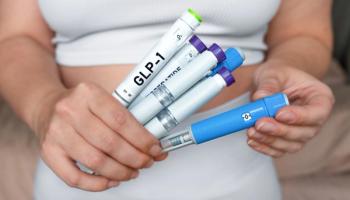
Amanda Velazquez, MD, discusses GLP-1 formulary strategies, overcoming prior authorization hurdles, and building scalable obesity care infrastructure.
A new blood test for adults as young as 40 years arrives as employers and insurers still treat Alzheimer disease as an old-age condition.
Early-onset Alzheimer disease tends to be dismissed as burnout or depression, which leaves many patients misdiagnosed or diagnosed much later, inhibiting them from receiving proper care.1 Globally, the number of people under 70 years old living with dementia more than doubled between 1990 and 2021, from 5.91 million to 13.14 million. Adjusted for population growth, the rate rose too, from about 115 cases per 100,000 people in 1990 to roughly 178 per 100,000 in 2021, a 54% jump in the age-specific prevalence rate.2
This year’s World Alzheimer’s Day theme is “The Earlier You Know, The More You Can Do: A Dementia Diagnosis Matters,” observed September 21, 2026, bringing attention to the disease and the importance of early diagnosis.3
“Needing to keep advocating for yourself and your family and pushing is something that’s essential to get to the diagnosis,” John Showalter, MD, MSIS, chief operating officer at Linus Health, told The American Journal of Managed Care® when asked what about young-onset Alzheimer disease deserves more attention.
“Physicians are trained to assume common causes before rare ones,” Showalter said.
In a primary care exam room, cognitive complaints in a patient in their 40s or 50s read first as depression, sleep deprivation, or perimenopause, because statistically, Showalter estimates roughly 6 to 10 people per 100,000 develop early-onset Alzheimer disease, compared with 10,000 to 15,000 per 100,000 who develop depression in their 40s and 50s. This gap is broadly consistent with CDC survey data showing 18.4% of adults aged 45 to 64 reported depression symptoms in a recent 2-week period.4 Published estimates specific to young-onset Alzheimer run higher than Showalter's figure, at roughly 41 per 100,000 for adults aged 30 to 64.5,6
What flips the working diagnosis toward Alzheimer disease, Showalter said, is functional breakdown: trouble navigating job duties or filing taxes isn’t typical of ordinary depression, but it’s a hallmark once Alzheimer symptoms emerge. Until then, there is no symptomatic way to tell the 2 apart.
The stakes shift once a diagnosis lands. A pilot with early Alzheimer needs different workplace accommodations than a manager does, Showalter said, but a patient misread as depressed rarely gets matched to the right solution. Lifestyle changes and disease-modifying therapies also work best when started early, so a delay of years can mean missing the treatment window entirely.
Employers and insurers are still largely built around the assumption that Alzheimer is a disease of old age. Run the incidence rate against a workforce, though, and a large employer with tens of thousands of workers aged 40 to 60 years statistically carries tens of employees with early-onset Alzheimer disease, most of them unidentified, Showalter said. Coverage gaps cluster in 4 areas: neuropsychological testing, digital cognitive assessments, blood-based biomarkers, and imaging, turning diagnosis into an expensive, multi-thousand-dollar pathway that can drive preventable emergency department visits and hospital stays when it goes uncovered.
The FDA cleared PrecivityAD2, made by C2N Diagnostics, on August 20, 2026, the first blood-based Alzheimer biomarker test approved for adults as young as 40.7,8 The single-draw test measures amyloid pathology and p-tau217 and is meant to be used alongside a clinical workup rather than as a standalone screen. In the clearance research, it raised primary care clinicians’ diagnostic accuracy from 65% to 93%.7
Showalter proposes a routine cognitive baseline for every adult, captured the same way physicians already track blood pressure. New digital cognitive assessments can do this in about 2.5 minutes, he said, and he believes routine baselining could eventually shorten the diagnostic delay by years, though he was clear that estimate reflects his own clinical opinion rather than published research.
For now, Showalter’s advice to patients and families remains the one he has given for years: keep advocating, and keep pushing, until the diagnosis matches what is actually happening.
References