




A phase 1 trial evaluating the safety and tolerability of PRN2246, a Bruton's tyrosine kinase inhibitor, found the drug having no serious medication-related adverse events in healthy volunteers while also being able to reach the brain.

Disease-Modifying Therapies Decrease Number of Patients With, Not Onset Toward, Secondary Progressive MS
A phase 1 trial evaluating the safety and tolerability of PRN2246, a Bruton's tyrosine kinase inhibitor, found the drug having no serious medication-related adverse events in healthy volunteers while also being able to reach the brain.

A recent study analyzed the role of purinergic receptor P2X4 in microglia/macrophages during autoimmune inflammation, finding that P2X4 receptors modulate microglia/macrophage inflammatory responses and identify allosteric modulator ivermectin (IVM) as a potential candidate to promote the repair of myelin damage.

Current therapy management mainly comprises of attempting to delay disease progression in neurodegenerative diseases but have been unable to reverse the myelin damage already done.

Multiple sclerosis (MS) involves the progressive loss of the protective layer of nerve fibers, myelin, and its loss, called demyelination, results in symptoms of MS. Blocking the protein receptor, muscarinic type 3 (M3R), may be effective in promoting remyelination in patients with MS, based on the results of a study published by the Journal of Neuroscience.

A study published in the journal Radiology has found that lower susceptibility in the thalamic and higher susceptibility in the basal ganglia, measured using quantitative susceptibility mapping, was associated with patients with MS and MS disease progression.
A recent study published in Radiology found that evaluating the differences in iron accumulation in the deep gray matter of the brain using a magnetic resonance imaging (MRI) technique may help to identify patients with multiple sclerosis (MS) that are at greater risk for disease progression and disability.

A recent study published in the European Journal of Clinical Nutrition found that healthcare professionals are downplaying the importance of patients with multiple sclerosis (MS) following national dietary guidelines.

Recently, 2 studies investigated pain experienced in patients with multiple sclerosis and how the disease is treated, overall.
Psychological stress and emotional well-being are important targets for multiple sclerosis (MS) research and clinical care. Mood disorders can adversely impact functioning, quality of life, and treatment adherence, and increase the risk of suicide.

A recent study evaluated the annualized relapse rate of patients with relapsing multiple sclerosis (MS) who were treated with ozanimod—an oral once-daily immunomodulator that selectively targets sphingosine 1-phosphate receptors 1 and 5—in the RADIANCE Part B study.
Two recent studies presented at the 4th Congress of the European Academy of Neurology examined the different effects and aspects of progressive multiple sclerosis.

Two recent clinical trials evaluated the efficacy of the investigational drug ozanimod for treating patients with relapsing multiple sclerosis (MS).
A new study conducted at the Karolinska Institutet in Sweden has discovered an epigenetic regulatory mechanism of the human leukocyte antigen (HLA) region of the DNA, which can lead to an increased risk of multiple sclerosis.

In a recent study presented at the European Academy of Neurology Annual Meeting held in Lisbon, Portugal, from June 16 to 19, researchers found that the levels of neurofilament light chain (NfL) can be a reliable predictor of disease worsening in relapsing-remitting multiple sclerosis (RRMS) patients.

A recent study looked to improve the monitoring of treatments for patients with multiple sclerosis (MS) by quantifying gait characteristics and gait deficits in laboratory and daily life conditions.

Last month, a retrospective observational study was published in PLOS One that investigated the safety and efficacy of rituximab in patients with progressive MS (PMS) and relapsing-remitting MS (RRMS) in a single tertiary care center in Switzerland.
Long-term treatment of patients with secondary progressive multiple sclerosis (SPMS) with siponimod may reduce the risk of disability progression, according to findings of the phase 3 EXPAND study.

Ocrelizumab (Ocrevus) has been FDA approved for the treatment of primary progressive multiple sclerosis, and recent clinical trials with the anti-CD20 monoclonal antibody have revealed significant decreases in disease activity and disability progression in relapsing multiple sclerosis.
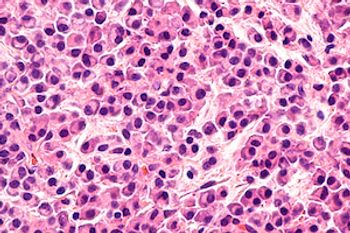
In a recent study published in the Journal of Experimental Medicine, researchers found that fingolimod (sold as Gilenya), an FDA-approved orally administered drug to treat multiple sclerosis, could reduce painful side effects of multiple myeloma treatments.
Researchers from Brigham and Women’s Hospital (BWH) have defined a new pathway that may help guide therapies for multiple sclerosis and other neurologic diseases.

There's the potential for new nonalcoholic fatty liver disease and multiple sclerosis drugs to be approved in 2019, said Aimee Tharaldson, PharmD, a senior clinical consultant in Emerging Therapeutics for Express Scripts.

Our knowledge of the human microbiome has only been developed over the past decade, according to Elaine Hsaio, PhD, assistant professor of integrative biology and physiology at the University of California, Los Angeles, at the 73rd Annual Scientific Convention of the Society of Biological Psychiatry meeting in New York City, May 10 to 12. Hsaio presented about how the microbiome influences brain function, development and behavior.

Vivor helps patients receive financial assistance by focusing on empowering the providers and making it easier for financial navigators to do their job, said Ian Manners, founder and CEO of Vivor.
At the Academy of Managed Care Pharmacy's Managed Care & Specialty Pharmacy Annual Meeting, held April 23-26, in Boston, Massachusetts, an overflow capacity crowd gathered for one of the meeting’s yearly highlights­: Specialty Pharmaceuticals in Development. Aimee Tharaldson, PharmD, a senior clinical consultant in Emerging Therapeutics for Express Scripts, talked about the key trends in the specialty drug market, including cancer drugs, new competition, and orphan drugs.

Results of a double-blind, randomized, phase 3 trial, published last week in The Lancet, show that siponimod—a selective sphingosine 1-phosphate receptor modulator—slowed the progression of disability in secondary progressive multiple sclerosis.