A wide-ranging discussion sought to bring greater urgency to achieving health equity during the 2021 American Heart Association (AHA) Scientific Sessions.
A wide-ranging discussion sought to bring greater urgency to achieving health equity during the 2021 American Heart Association (AHA) Scientific Sessions.
Ian J. Neeland, MD, FACC, FAHA, is co-director of the Center for Integrated and Novel Approaches in Vascular-Metabolic Disease for University Hospitals Harrington Heart & Vascular Institute and director of the UH Center for Cardiovascular Prevention, in the Cleveland, Ohio, area. He summarized a talk he gave at the 2021 AHA Scientific Sessions, “Disrupted Sleep in Diabetic Vascular Complications."
At the 2021 AHA Scientific Sessions, the lead author of DREAM-HF said evidence of the treatment's benefit among patients with elevated inflammation is positive news, and shows a need for further study.

Despite ample trial evidence that empagliflozin is effective across a broad spectrum of chronic heart failure, some doctors had been reluctant to prescribe in an acute hospital setting for safety reasons. EMPULSE findings presented at the 2021 AHA Scientific Sessions address this concern.
Michael Dorsch, PharmD, MS, describes just-in-time adaptive interventions and microrandomized trials in mHealth, which he discussed at the 2021 American Heart Association Scientific Sessions.

A session at the American Heart Association Scientific Sessions covered the data behind concerns about mRNA vaccines for COVID-19 and myocarditis. Then, leaders from Pfizer and Moderna discussed opportunities the technology offers.

Data about prescribing preferences and protective effects of GLP-1 receptor agonists in diabetes were presented on the opening day of the 2021 American Heart Association Scientific Sessions, held in a virtual format.
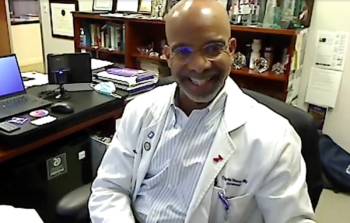
Clyde W. Yancy, MD, MSc, of Northwestern University’s Feinberg School of Medicine, explains the connections between health care equity and advances in treatment for heart failure and how the United States' policy and science agenda can address them.

Khadijah Breathett, MD, MS, FACC, FAHA, FHFSA, is an assistant professor in the University of Arizona College of Medicine--Tucson, Division of Cardiology. She is presenting a talk at the American Heart Association (AHA) Scientific Sessions, "COVID-19 as a Catalyst to Address Disparities in Cardiovascular Outcomes and Inequities in Cardiovascular Care Delivery.”
Solutions for health equity, treatments for heart failure, and the use of technology in prevention and patient care are just some of the topics on the agenda for the 2021 American Heart Association (AHA) Scientific Sessions, which will take place Saturday through Monday in a virtual format.
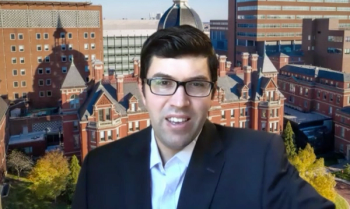
Seth Martin, MD, MHS, associate professor of medicine at Johns Hopkins University and co-director of the Center for Mobile Technologies to Achieve Equity in Cardiovascular Health (mTECH Center), gives a preview of his presentation on digital divides at the American Heart Association (AHA) Scientific Sessions 2021.
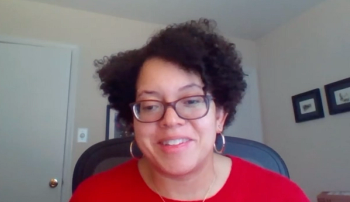
Tiffany Powell-Wiley, MD, MPH, a Stadtman investigator and chief of the Social Determinants of Obesity and Cardiovascular Risk Laboratory at the National Heart, Lung, and Blood Institute, with a joint appointment at the National Institute on Minority Health and Health Disparities, discusses ongoing trials and the American Heart Association’s Scientific Statement on social determinants of obesity and cardiovascular disease.
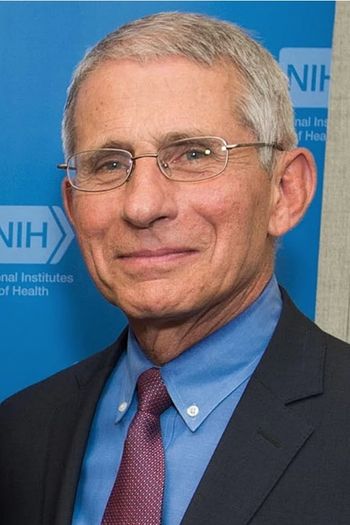
Dr. Anthony Fauci discusses the cardiovascular implications of coronavirus disease 2019 (COVID-19) at the American Heart Association Scientific Sessions.
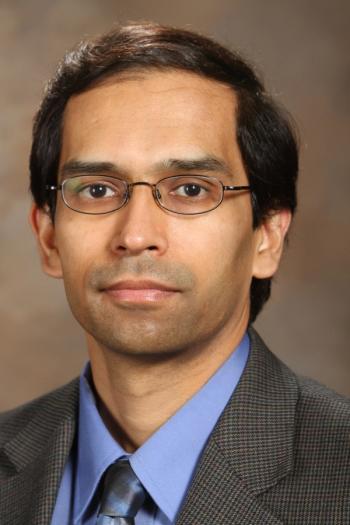
After recent setbacks, the beleaguered drug reduced cardiovascular events and may be a choice for patients with severe chronic kidney disease.
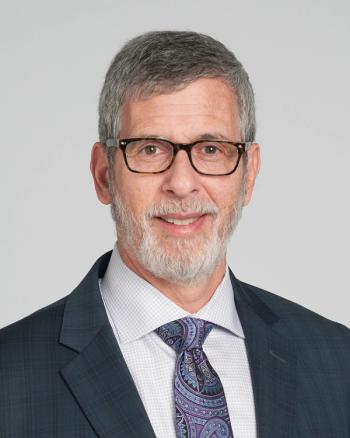
The investigator of the STRENGTH study says findings raise questions about the landmark REDUCE-IT trial, but other evidence suggests the drugs involved are different.
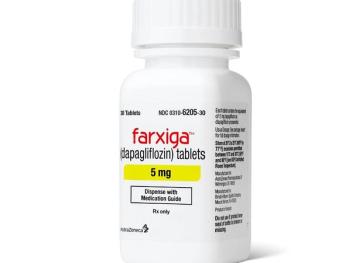
A registry study suggests 4 in 5 patients with heart failure might benefit from the SGLT2 inhibitor dapagliflozin.

Findings from the GALACTIC-HF trial presented at AHA Scientific Sessions 2020 showed that patients with heart failure (HF) with reduced ejection fraction who took omecamtiv mecarbil showed a significant 8% relative risk reduction in a composite of a HF event or death from cardiovascular causes, compared with those taking placebo.
The GUARD-AF trial will allow us to look at both the benefits and the risks of screening for atrial fibrillation and the reduction of stroke, said Roland Chen, MD, MS, vice president and head of clinical development for innovative medicines at Bristol-Myers Squibb.
We are really excited about the progress we have seen in the EXPLORER-HCM trial, and after the results are published in the first half of 2020, we will quickly begin conversations to seek FDA approval of mavacamten, said Jay Edelberg, MD, PhD, senior vice president of Clinical Development at MyoKardia.
Results of the PIONEER-OLE study has shown promising results of mavacamten for patients with obstructive HCM that will be further evaluated in our pivotal phase 3 EXPLORER-HCM trial, said Jay Edelberg, MD, PhD, senior vice president of Clinical Development at MyoKardia.
There are multiple ways in which people with diabetes can develop heart failure, which is why heightened awareness through the initiative Diabetes Can Break Your Heart is warranted, said Javed Butler, MD, MPH, MBA, professor of physiology and chairman for the Department of Medicine at the University of Mississippi.

The phase 2 ESCaPE-CMD study results exhibited a significant improvement in coronary flow reserve for patients with CMD, said C. Noel Bairey Merz, MD, FACC, FAHA, director of the Barbra Streisand Women's Heart Center.
Identifying elevated LDL-C levels in patients and treating them with evolocumab can potentially mitigate and reduce the rate of ischemic events, said Darryl Sleep, MD, senior vice president, global medical and chief medical officer at Amgen.
The GUARD-AF trial promotes heightened knowledge of stroke risk among patients with atrial fibrillation by analyzing, evaluating, and distributing important data back to practitioners, which can possibly reduce the incidence of stroke, said Roland Chen, MD, MS, vice president and head of clinical development for innovative medicines at Bristol-Myers Squibb.
The HDL PDS-2 system showed in a relatively short time its ability to affect the progression of HoFH, with a reduction in the burden of plaque overall highlighting its exciting potential, said Brian Ghoshhajra, MD, MBA, diagnostic radiologist and service chief of cardiovascular imaging in the Department of Radiology at Massachusetts General Hospital.
We've had the opportunity to evaluate the CD34+ cell in the past 20 years, and finally we have a tool that represents a potential breakthrough for patients with CMD, said Douglas Losordo, MD, FACC, FAHA, chief medical officer at Caladrius Biosciences.
Artificial intelligence has the potential to change the way physicians have monitored for conditions such as atrial fibrillation in the past 5 decades, said Brandon Fornwalt, MD, PhD, director of the Cardiac Imaging Technology Laboratory at Geisinger.
By improving detection of atrial fibrillation, more affected individuals can provide researchers with valuable information and a potential signal to treat, said Brent A. Williams, PhD, research investigator focusing on the optimal incorporation of cardiac imaging technologies in clinical practice for Geisinger.
Detecting more cases of atrial fibrillation, and at an earlier rate, is key to preventing adverse patient outcomes, said Stephen Voyce, MD, cardiologist and chief of cardiology at Geisinger Community Medical Center for the Geisinger Heart Institute and director of clinical cardiology research.
Based off the rich data available on mavacamten efficacy within subsets of patients with non-obstructive HCM, researchers have designed the next phase of study on this select group, said Stephen Heitner, MD, director of Clinical Trials and director of the Hypertrophic Cardiomyopathy Center at the Oregon Health and Science University.